
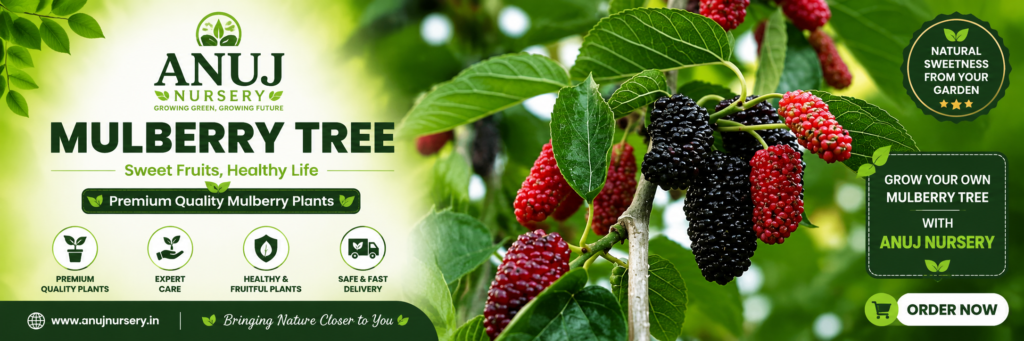
The Mulberry Tree (Morus) is a popular fruit-bearing tree known for its delicious berries, attractive foliage, fast growth, and excellent value for home gardens, farms, and orchards. Mulberries can be enjoyed fresh or used in juices, desserts, jams, and other food preparations.
For gardeners in India, growing a Mulberry Tree can be rewarding when the plant receives adequate sunlight, suitable soil, proper watering, and regular pruning. Whether you are a beginner or an experienced gardener, this guide explains Mulberry Tree care, benefits, watering, sunlight, soil, fertilizer, pruning, and growing tips.
What is a Mulberry Tree?
The Mulberry Tree belongs to the genus Morus. Different mulberry species and cultivars are grown around the world, with Morus alba, Morus nigra, and Morus rubra among the better-known types.
Mulberry Trees can vary considerably in size, fruit color, growth habit, and climate preference depending on the species or cultivar. The fruits may be white, red, purple, or almost black when mature.
Because different cultivars have different characteristics, check the plant’s exact variety and expected mature size before purchasing.
Mulberry tree care is simple when the plant receives plenty of sunlight, well-drained soil, and regular watering. Water deeply during dry periods, especially when the tree is young. Add organic mulch around the base to retain moisture and control weeds. Prune damaged or overcrowded branches during winter to encourage healthy growth and better fruit production.
Mulberry tree care is easy with proper sunlight, regular watering, and well-drained soil. Water the tree deeply during dry weather, especially in its early growth stage. Apply organic mulch around the base to retain moisture and prevent weeds. Prune dead or crowded branches regularly to maintain healthy growth and encourage better fruit production.
Benefits of Growing Mulberry Tree
1. Delicious Fruit
The most popular benefit of growing a Mulberry Tree is its tasty fruit. Ripe mulberries can be eaten fresh or used in homemade recipes.
2. Suitable for Home Gardens
Many mulberry varieties can be grown successfully in spacious home gardens when provided with enough sunlight and room for root and canopy development.
3. Attractive Foliage
Mulberry Trees have attractive green leaves that provide useful ornamental value and natural greenery.
4. Fast-Growing Tree
Many mulberry varieties establish and grow relatively quickly under suitable conditions, making them appealing to gardeners who want a productive tree.
5. Useful for Farms and Orchards
Depending on the variety, mulberry can be grown in farms, orchards, and larger agricultural landscapes.
6. Long-Term Garden Value
A healthy, well-maintained Mulberry Tree can provide fruit and greenery for many years.
Mulberry Tree Care Guide
Sunlight Requirements
Mulberry Trees generally grow best in full sunlight. Aim to provide around 6–8 hours of direct sunlight each day.
Good sunlight supports healthy foliage, vigorous growth, and fruit production.
Choose an open location rather than a heavily shaded area. If planting a young nursery plant, gradually acclimatize it to strong sunlight if it was previously grown under shade.
Watering Requirements
Young Mulberry Trees need regular watering while their roots become established. Water deeply when the top layer of soil begins to dry.
Once established, many mulberry trees become relatively tolerant of short dry periods. However, consistent moisture during active growth and fruit development can support healthy performance.
Avoid keeping the soil permanently wet. Good drainage is essential for healthy roots.
Soil Requirements
Mulberry Trees prefer fertile, well-drained soil. Loamy soil enriched with organic matter can provide a good growing environment.
Before planting, mix well-decomposed compost or organic manure into poor soil.
Avoid locations where water remains stagnant after irrigation or rainfall.
Fertilizer
Apply organic compost or well-decomposed manure around the root zone during the growing season.
If additional feeding is required, use a balanced fruit-tree fertilizer according to the manufacturer’s instructions. Avoid excessive nitrogen because it can encourage excessive leaf growth.
Pruning
Pruning is an important part of Mulberry Tree maintenance. Remove dead, damaged, weak, or crossing branches.
Pruning can also help maintain the tree’s size and shape and improve access to fruit. The best pruning approach depends on the cultivar and whether the tree is grown primarily for fruit or other purposes.
Common Mulberry Tree Problems
Yellow Leaves
Yellow leaves can result from overwatering, poor drainage, nutrient deficiencies, root stress, or natural leaf aging. Check the soil before increasing fertilizer.
Poor Fruit Production
Insufficient sunlight, unsuitable variety, poor nutrition, environmental stress, or excessive pruning can affect fruit production.
Leaf Damage
Check leaves regularly for insects or disease symptoms. Remove severely damaged plant material and maintain good air circulation around the tree.
Best Places to Grow Mulberry Tree
Mulberry Trees can be suitable for:
- Home gardens
- Farmhouses
- Orchards
- Farms
- Large terraces
- Fruit gardens
- School and institutional gardens
- Landscape projects
Always consider the mature size of your chosen variety and provide adequate spacing from buildings, walls, pathways, and other trees.
Mulberry Tree Care & Benefits include growing the tree in full sunlight, fertile well-drained soil, and providing regular watering during establishment. Mulberry trees are valued for their delicious fruits, attractive foliage, shade, and suitability for home gardens and farms. Regular pruning and proper nutrition encourage healthy growth, better fruit production, and a strong, productive tree.
Frequently Asked Questions
What is the botanical genus of Mulberry?
Mulberry Trees belong to the Morus genus. Different species and cultivars are available.
How much sunlight does a Mulberry Tree need?
Most Mulberry Trees perform best in full sun, with approximately 6–8 hours of direct sunlight daily.
How often should I water a Mulberry Tree?
Young trees require regular watering during establishment. Mature trees generally need irrigation according to soil moisture, rainfall, temperature, and growing conditions.
Can Mulberry Trees grow in India?
Yes. Several mulberry species and cultivars can be grown in suitable regions of India. Choose a variety appropriate for your local climate.
Can Mulberry Trees be grown in pots?
Some dwarf or smaller varieties can be grown in large containers. A large pot with good drainage is essential, and regular pruning may be needed to control size.
When should I prune a Mulberry Tree?
Pruning timing depends on the variety and local climate. Remove dead or damaged branches whenever necessary, while major structural pruning should be carried out at an appropriate time for the specific cultivar.
Conclusion
The Mulberry Tree (Morus) is an excellent choice for gardeners who want a productive fruit tree with attractive foliage and long-term garden value. Its delicious berries, relatively fast growth, and versatility make it suitable for home gardens, farms, orchards, and larger landscapes.
For healthy growth, provide full sunlight, fertile well-drained soil, appropriate watering, balanced nutrition, and regular pruning. Choosing the right Mulberry variety for your local climate is equally important.
If you are looking to buy a healthy Mulberry Plant online in India, visit AnujNursery.in and explore quality fruit plants for your home garden, farmhouse, orchard, or landscaping project.
Order your Mulberry Plant from Anuj Nursery today and grow fresh, delicious mulberries in your own garden!