Choosing the right tree for your garden is an important decision because a tree can remain in the same location for many years. The tree that looks small when you buy it may eventually develop a large canopy, extensive roots and significant height. That is why choosing a tree based only on its appearance or price can create problems later.
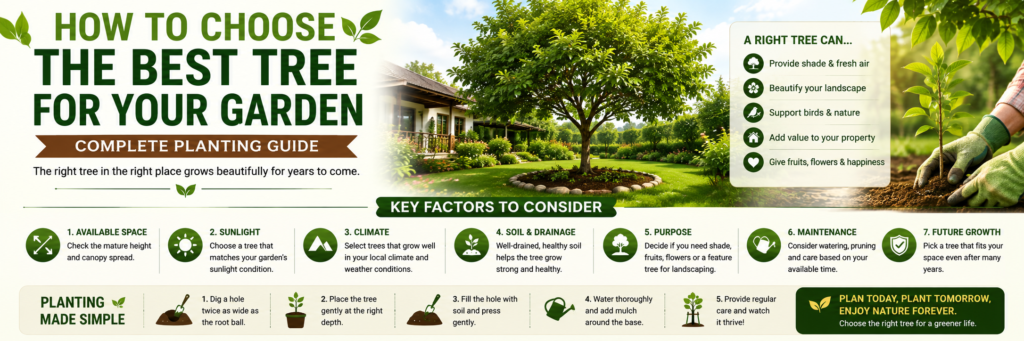
If you are wondering how to choose the best tree for your garden, consider your available space, local climate, sunlight, soil, watering requirements, mature size and maintenance needs.
Whether you want a fruit tree, flowering tree, shade tree or ornamental tree, selecting the right variety for the right location is the foundation of successful gardening.
Why Choosing the Right Tree Matters
Trees are long-term additions to a landscape. Unlike seasonal flowers or small plants, many trees can grow for years and become major features of your property.
The wrong tree can become difficult to manage if it grows too close to buildings, walls, power lines or other plants. A tree that requires more water than your garden can provide may also struggle to grow properly.
Choosing the right tree from the beginning can help you create a healthier, more attractive and easier-to-maintain garden.
1. Check Your Available Space
The first step is to measure the area where you want to plant the tree.
Do not consider only the size of the plant when you purchase it. Check its expected mature height and canopy spread.
For a small garden, choose trees with a manageable mature size. Large trees such as Rain Tree, Banyan or other broad-canopy varieties generally need much more space.
Also consider the distance from:
- House foundations
- Boundary walls
- Roads and pathways
- Underground pipes
- Power lines
- Other trees
- Buildings and structures
Planning for the tree’s mature size can prevent future problems.
2. Consider Your Local Climate
India has a wide range of climates, from hot and dry regions to humid and high-rainfall areas. Not every tree performs equally well everywhere.
Before buying a tree, check whether the species is suitable for your local temperature, rainfall and seasonal conditions.
For example, some fruit trees prefer warm conditions, while other ornamental trees may perform better in specific climates.
A locally suitable tree generally has a better chance of establishing successfully when provided with proper care.
3. Understand Sunlight Requirements
Sunlight is one of the most important factors affecting tree growth.
Many fruiting and flowering trees require plenty of sunlight. If you plant a sun-loving tree in a heavily shaded location, its growth and flowering may be affected.
Before planting, observe the garden throughout the day and determine how much direct sunlight the location receives.
Choose the tree according to its specific sunlight requirements rather than assuming that every tree needs the same amount of light.
4. Check the Soil and Drainage
Healthy roots require suitable soil and drainage.
Before planting, check whether the soil remains wet for long periods after watering or rainfall. Poor drainage can create unfavorable conditions for many trees.
If the soil is compacted, improving the planting area with suitable organic matter may help, depending on the tree species and soil condition.
Avoid planting a tree in a location where water consistently collects unless the selected species is specifically adapted to those conditions.
5. Think About the Purpose of the Tree
Ask yourself why you want to plant the tree.
Different trees serve different purposes.
For Shade
Consider trees with naturally broad canopies if you have enough space. Neem, Rain Tree and other suitable shade trees can become useful landscape features as they mature.
For Fruit
If you want fresh fruit, consider Mango, Guava, Lemon, Pomegranate, Amla or Jamun depending on your local conditions.
For Flowers
Gulmohar, Amaltas, Palash, Kachnar and other flowering trees can add seasonal color to a landscape.
For Landscaping
Ornamental trees can be selected based on their foliage, flowers, shape and overall appearance.
Defining the purpose first makes it much easier to narrow down the right tree.
6. Consider the Tree’s Growth Rate
Fast-growing trees can provide size and shade relatively quickly, but fast growth is not automatically an advantage.
Some fast-growing trees eventually become very large and may require more space and maintenance.
Before selecting a fast-growing tree, check:
- Expected mature height
- Canopy spread
- Root development
- Pruning requirements
- Water requirements
- Distance from buildings
Choose a growth rate that matches your available space and long-term gardening plans.
7. Consider Maintenance Requirements
Every tree requires some level of care, especially during its early growth stage.
Consider how much time you can spend on:
- Watering
- Pruning
- Fertilization
- Pest monitoring
- Cleaning fallen leaves
- Protecting young plants
If you have limited time for gardening, select a tree known to be suitable for your conditions and relatively manageable in your available space.
8. Choose a Healthy Plant
Once you have selected the right tree variety, the next step is choosing a healthy plant.
When buying a tree from a nursery or online, look for:
- Healthy green foliage
- Strong stems
- No obvious pest damage
- No major disease symptoms
- A healthy root system
- Suitable plant size for transportation and planting
Avoid selecting a plant simply because it is the largest one available. A healthy, well-established plant of the correct variety can be a better choice.
How to Plant a Tree Correctly
After selecting the right location, prepare the planting area before removing the plant from its container.
Dig a hole that is wider than the root ball and deep enough to position the plant correctly. Avoid planting the tree excessively deep.
Carefully remove the plant from its container and place it in the hole without unnecessarily disturbing the roots.
Fill the hole with suitable soil and water thoroughly after planting.
A layer of mulch can help retain soil moisture and reduce weed growth. However, keep mulch away from direct contact with the tree trunk.
Tree Care After Planting
The first stage after planting is particularly important.
Water the tree regularly according to its species, soil type, temperature and rainfall. Newly planted trees generally need consistent moisture while their roots establish.
Do not assume that more water is always better. Excessive watering can create root problems, particularly in poorly drained soil.
Monitor the plant regularly for pests, damaged leaves and signs of stress.
As the tree grows, prune only when necessary and according to the natural growth pattern of the species.
Common Mistakes to Avoid
When choosing a tree for your garden, avoid these common mistakes:
Choosing only by appearance: A beautiful tree may not be suitable for your climate or garden size.
Ignoring mature size: A small nursery plant can become a very large tree.
Planting too close to buildings: Roots and branches can eventually interfere with structures.
Ignoring sunlight: A tree planted in an unsuitable light condition may grow poorly.
Overwatering: More water does not always mean faster or healthier growth.
Choosing a tree without considering maintenance: Some varieties require more pruning and care than others.
How to Choose the Best Tree for Your Garden depends on your space, climate, soil type, sunlight, growth rate, and maintenance needs. This Complete Planting Guide helps you select suitable trees for shade, flowers, fruits, or landscaping. Always consider the tree’s mature size, root spread, watering requirements, and planting location before making your cho
Frequently Asked Questions
How do I choose the best tree for my garden?
Start by checking your available space, local climate, sunlight, soil drainage and the tree’s mature size. Then select a tree based on your purpose, such as shade, fruit, flowers or landscaping.
Which tree is best for a small garden?
The best tree for a small garden is one with a manageable mature height, canopy and root system. Always check the mature size before purchasing.
Which trees are best for Indian gardens?
Neem, Mango, Guava, Lemon, Pomegranate, Gulmohar, Amaltas and Jamun are popular choices, but suitability depends on your local climate and available space.
Should I choose a fast-growing tree?
Only if you have enough space for its mature size. Fast growth can be useful, but some fast-growing trees eventually require more space and maintenance.
How far should a tree be planted from a house?
The appropriate distance depends on the species and its mature size. Large trees should generally be given substantial clearance from buildings, foundations, walls and utility lines.
What is the best time to plant trees in India?
Planting time depends on the species and local climate. In many parts of India, the monsoon season can provide favorable moisture for establishing young trees, provided the planting site has suitable drainage.
Final Thoughts
Learning how to choose the best tree for your garden is about looking beyond the appearance of a young plant. The best tree is one that fits your space, climate, soil, sunlight and long-term maintenance capacity.
Before buying, check the tree’s mature height, canopy spread, root characteristics, watering needs and purpose. Whether you want a fruit tree, flowering tree, shade tree or ornamental variety, choosing the right plant for the right location can make your garden healthier and easier to maintain.
If you plan to buy trees online in India, compare varieties carefully and choose healthy plants that are suitable for your local growing conditions. Good planning at the beginning can help you enjoy the benefits of your tree for many years.