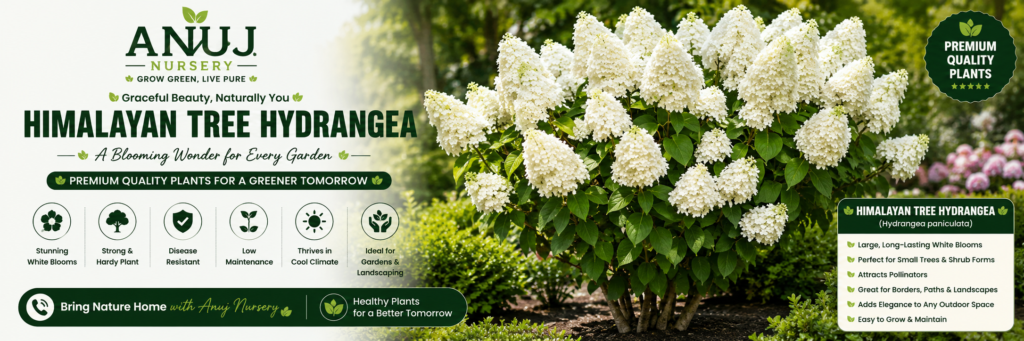
The Himalayan Tree Hydrangea is a beautiful ornamental flowering plant admired for its attractive foliage, elegant blooms, and natural garden appeal. It is a popular choice for gardeners who want to add a soft, colorful, and refreshing look to outdoor spaces.
With the right combination of sunlight, moisture, fertile soil, and regular maintenance, Himalayan Tree Hydrangea can become an attractive feature plant for gardens and landscaped areas. It is especially useful for gardeners looking for an ornamental plant with a distinctive flowering display.
🌸 Benefits of Himalayan Tree Hydrangea
1. Beautiful Garden Decoration
Himalayan Tree Hydrangea can add color and visual interest to gardens with its attractive flowers and foliage. Its ornamental appearance makes it suitable for landscape designs, home gardens, and decorative planting.
2. Excellent Landscaping Plant
The plant can be used as a feature plant, border planting, or part of a larger flowering garden. Its blooms can complement other ornamental plants and create a more vibrant landscape.
3. Attractive Seasonal Flowers
Hydrangea plants are known for their showy flower clusters. With suitable growing conditions, the plant can provide an impressive seasonal flowering display.
4. Suitable for Garden Collections
For plant enthusiasts who enjoy collecting flowering species, Himalayan Tree Hydrangea can add variety to a garden collection and provide a different texture and flowering style.
5. Supports a Beautiful Outdoor Environment
Flowering plants can contribute to a more visually appealing outdoor environment and may provide resources for insects and other garden wildlife, depending on the plant and local conditions.
☀️ Himalayan Tree Hydrangea Care Guide
Sunlight Requirements
Himalayan Tree Hydrangea generally performs best in bright light with protection from harsh afternoon sun, particularly in hot Indian climates. Morning sunlight and partial shade can be beneficial in warmer regions.
Too much intense afternoon sunlight may cause leaf stress, especially when temperatures are high.
💧 Watering
Hydrangeas prefer consistent moisture during active growth.
- Water when the upper layer of soil begins to dry.
- Keep the soil evenly moist but not waterlogged.
- Increase monitoring during hot and dry weather.
- Reduce watering during cooler or rainy periods when the soil remains naturally moist.
Good drainage is essential because continuously wet roots can lead to root problems.
🌱 Soil Requirements
Use fertile, organic-rich, well-draining soil. Adding compost or well-decomposed organic matter can improve soil structure and moisture retention.
Avoid heavy soil that remains waterlogged after irrigation.
🌡️ Temperature and Climate
Himalayan Hydrangea types are generally better suited to mild to cool conditions than extreme heat. In warmer parts of India, afternoon shade and adequate moisture can help reduce heat stress.
Before planting outdoors, consider your local climate and the specific variety you have purchased.
✂️ Pruning
Pruning requirements depend on the particular Hydrangea type. Remove dead, damaged, or weak growth as necessary and avoid heavy pruning until you know whether your variety flowers on old or new wood.
This is important because incorrect pruning can reduce flowering.
🌱 How to Grow Himalayan Tree Hydrangea
Choose a location with suitable light and good drainage. Prepare the soil with organic compost before planting and place the plant at approximately the same depth as it was growing in its nursery container.
Water thoroughly after planting and maintain consistent moisture while the plant establishes its root system.
Apply a suitable flowering-plant fertilizer according to the manufacturer’s instructions during the active growing period. Avoid excessive fertilizer, as too much nitrogen can encourage foliage growth at the expense of flowers.
🏡 Best Uses for Himalayan Tree Hydrangea
This ornamental plant can be used for:
- Home gardens
- Flower beds
- Garden borders
- Landscaping projects
- Cottage-style gardens
- Decorative outdoor spaces
- Plant collections
Its flowering appearance makes it particularly useful where you want to create a colorful and attractive garden display.
❓ Frequently Asked Questions
Is Himalayan Tree Hydrangea easy to grow?
Yes, with suitable light, regular moisture, fertile soil, and appropriate temperatures, it can be successfully grown by home gardeners.
How much sunlight does Himalayan Tree Hydrangea need?
Bright light and gentle morning sunlight are generally suitable. In hot Indian climates, protection from intense afternoon sunlight can help prevent leaf stress.
How often should I water Himalayan Tree Hydrangea?
Water when the upper soil begins to dry. The exact frequency depends on temperature, soil type, pot size, rainfall, and plant size.
Can Himalayan Tree Hydrangea grow in India?
It can be grown in suitable Indian climates, but performance varies by region and variety. In hot areas, afternoon shade and careful watering may be especially important.
Does Hydrangea need acidic soil?
Some Hydrangea varieties can respond to soil pH, particularly in flower coloration, but the ideal conditions depend on the specific species or cultivar. Always identify the variety before deliberately changing soil pH.
🌿 Buy Himalayan Tree Hydrangea from Anuj Nursery
Looking to add a beautiful flowering plant to your garden? Choose a healthy nursery-grown Himalayan Tree Hydrangea and give it the right combination of light, moisture, drainage, and nutrition.
At Anuj Nursery, you can explore a variety of flowering, ornamental, fruit, and garden plants suitable for Indian gardening conditions. Select the right plant for your climate and create a colorful, attractive outdoor space.