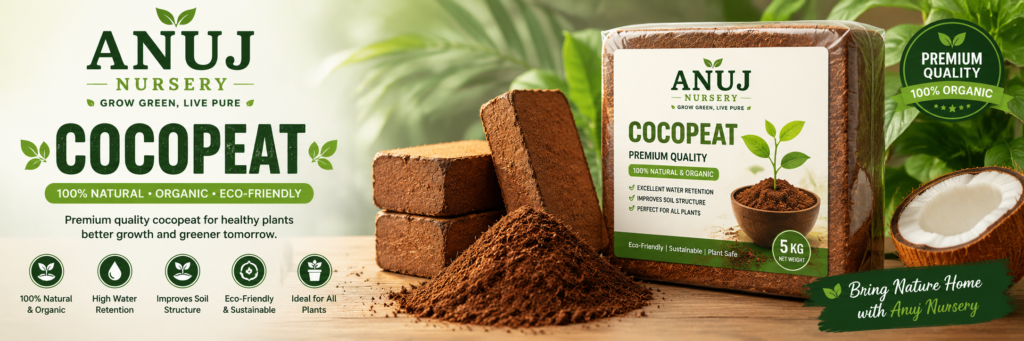
Cocopeat, also known as coco peat or coir pith, is a natural growing medium made from coconut husks. It has become one of the most popular gardening materials because of its excellent water retention, lightweight texture, and eco-friendly nature. Whether you’re growing flowers, vegetables, herbs, indoor plants, or fruit trees, cocopeat can improve soil structure and support healthy root development.
Gardeners across India use cocopeat for seed germination, potting mixes, terrace gardens, kitchen gardens, and nursery plants. Its ability to retain moisture while allowing good aeration makes it an excellent choice for both beginners and experienced gardeners.
🌱 Benefits of Cocopeat for Plants
💧 1. Excellent Water Retention
One of the biggest advantages of cocopeat is its ability to hold moisture. It helps keep the soil evenly moist, reducing the need for frequent watering and supporting healthy plant growth.
🌿 2. Improves Root Growth
Cocopeat has a soft, airy texture that allows roots to spread easily. Better root development helps plants absorb water and nutrients more efficiently.
🌎 3. Eco-Friendly Growing Medium
Made from coconut processing by-products, cocopeat is a renewable and sustainable gardening material. Using cocopeat helps reduce agricultural waste while supporting environmentally friendly gardening practices.
🍃 4. Better Soil Aeration
Unlike compact soil, cocopeat improves air circulation around plant roots. Good aeration encourages stronger root systems and healthier plants.
🌱 5. Ideal for Seed Germination
Its lightweight texture and moisture-holding capacity create excellent conditions for seed germination. Many nurseries use cocopeat to start vegetables, herbs, flowers, and ornamental plants.
🪴 6. Lightweight and Easy to Handle
Cocopeat is much lighter than traditional garden soil, making it ideal for balcony gardens, terrace gardens, hanging baskets, and container gardening.
Cocopeat Benefits for Plants include improved soil aeration, moisture retention, and better root development. Made from coconut husk fibers, cocopeat is a lightweight growing medium suitable for pots, nurseries, seed germination, and container gardening. It helps maintain consistent moisture while supporting healthy plant growth, making it a useful addition to many gardening and horticulture applications.
🌿 How to Use Cocopeat
Cocopeat should not always be used alone. It performs best when mixed with other growing materials.
A common potting mix for many ornamental plants includes:
- 40% Cocopeat
- 30% Garden Soil
- 30% Organic Compost or Vermicompost
For succulents and cacti, add coarse sand or perlite to improve drainage.
Always moisten dry cocopeat before mixing it with soil to ensure even moisture distribution.
🌞 Best Uses of Cocopeat
Cocopeat is suitable for a wide variety of gardening applications, including:
- Indoor plants
- Flowering plants
- Vegetable gardens
- Kitchen gardens
- Fruit plants
- Seed starting trays
- Nursery bags
- Terrace gardens
- Vertical gardens
- Hanging planters
Its versatility makes it one of the most widely used growing media in modern gardening.
🌍 Cocopeat for Indian Gardening (GEO SEO)
Cocopeat works well in almost every region of India, including:
- Delhi NCR
- Mumbai
- Pune
- Bengaluru
- Hyderabad
- Chennai
- Kolkata
- Ahmedabad
- Jaipur
- Lucknow
In hot climates, cocopeat helps retain moisture for longer periods. During the monsoon, ensure containers have proper drainage holes to prevent excess water from collecting around roots.
🌿 Tips for Using Cocopeat
- Always hydrate compressed cocopeat blocks before use.
- Mix cocopeat with compost to improve nutrient availability.
- Avoid overwatering, as moisture remains in the growing medium for longer.
- Replace or refresh old potting mix when repotting plants.
- Store unused cocopeat in a dry place to maintain its quality.
❓ Frequently Asked Questions (AEO Optimized)
What is cocopeat?
Cocopeat is a natural growing medium made from processed coconut husks. It is commonly used in gardening to improve moisture retention and soil structure.
Is cocopeat better than soil?
Cocopeat and soil serve different purposes. Cocopeat improves moisture retention and aeration, while soil provides natural minerals and structural support. Mixing both often produces the best results.
Can plants grow in only cocopeat?
Some plants can grow in cocopeat with proper nutrient management, but for most home gardens, mixing cocopeat with soil and compost provides better long-term growth.
How often should I water plants growing in cocopeat?
Watering depends on the plant type, weather, and container size. Check the top layer of the growing medium before watering instead of following a fixed schedule.
Is cocopeat good for indoor plants?
Yes. Cocopeat is widely used for indoor plants because it helps maintain moisture, improves aeration, and keeps potting mixes lightweight.
🛒 Buy Premium Cocopeat Online from Anuj Nursery
Looking for high-quality Cocopeat for your garden? Anuj Nursery offers premium cocopeat suitable for indoor plants, flowering plants, vegetables, fruit plants, seed germination, and terrace gardening.
Our cocopeat is clean, easy to use, and perfect for creating healthy potting mixes that support strong root development and vigorous plant growth.
Start gardening with premium-quality cocopeat from Anuj Nursery and give your plants the ideal foundation for healthy growth.