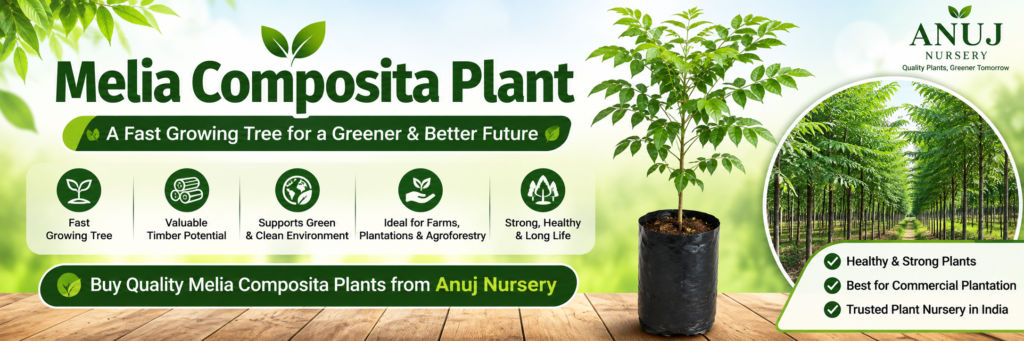
he Melia Composita plant, commonly known as a fast-growing timber tree, is becoming increasingly popular among farmers, plantation owners and people looking for productive tree species. Its attractive foliage, relatively fast growth and potential timber value make it a useful choice for agroforestry, farm plantations and large green spaces.
Melia Composita is valued for its ability to establish well under suitable growing conditions. With proper sunlight, soil, irrigation and regular care, the tree can develop into a strong and attractive plantation tree. For commercial plantation projects, selecting healthy nursery plants is one of the most important steps toward successful establishment.
Why Choose Melia Composita Plant?
One of the biggest advantages of Melia Composita is its fast-growing nature under suitable conditions. This makes it interesting for farmers and landowners who want to establish tree plantations within a reasonable time frame.
The tree can also contribute to farm diversification. Instead of depending entirely on seasonal crops, farmers may consider integrating suitable tree species into agroforestry systems. However, plantation performance depends on climate, soil, water availability, management practices and local conditions.
Melia Composita for Timber Plantation
Melia Composita is particularly known for its timber potential. Its wood is used for various applications, making the species attractive for plantation purposes. It can be considered for farm boundaries, dedicated timber plantations and agroforestry projects where sufficient land and appropriate growing conditions are available.
Before establishing a commercial plantation, growers should evaluate local climate, soil conditions, market demand, harvesting regulations and expected plantation costs. Good planning is more important than simply choosing a fast-growing tree.
How to Grow Melia Composita Plant
Choose a location with adequate sunlight and well-drained soil. Young plants need appropriate watering during the establishment period, particularly when rainfall is insufficient. Avoid prolonged waterlogging because excessive moisture can negatively affect root development.
Adding well-decomposed organic manure can improve soil conditions. Regular monitoring during the early growth stage helps identify weeds, pests, diseases or nutritional problems before they become serious.
Spacing should be planned according to the purpose of the plantation. Timber production, agroforestry and landscaping may require different spacing and management strategies.
Buy Quality Melia Composita Plants from Anuj Nursery
If you are searching for Melia Composita plants in India, start with healthy planting material from a reliable nursery. Anuj Nursery provides a range of plants for farmers, plantation owners, landscapers and gardening projects.
Healthy nursery plants can provide a stronger start, but proper plantation management remains essential for long-term results. Before purchasing large quantities, consider your land conditions, planting season and intended use.
Conclusion
The Melia Composita plant can be a valuable choice for farmers and plantation owners interested in fast-growing trees and timber-oriented agroforestry. Its growth potential and versatility make it worth considering for suitable plantation projects. With the right soil, sunlight, irrigation, spacing and maintenance, Melia Composita can become an important part of a well-planned plantation.
For quality Melia Composita plants and other plantation trees, Anuj Nursery can help you find suitable nursery plants for your project.