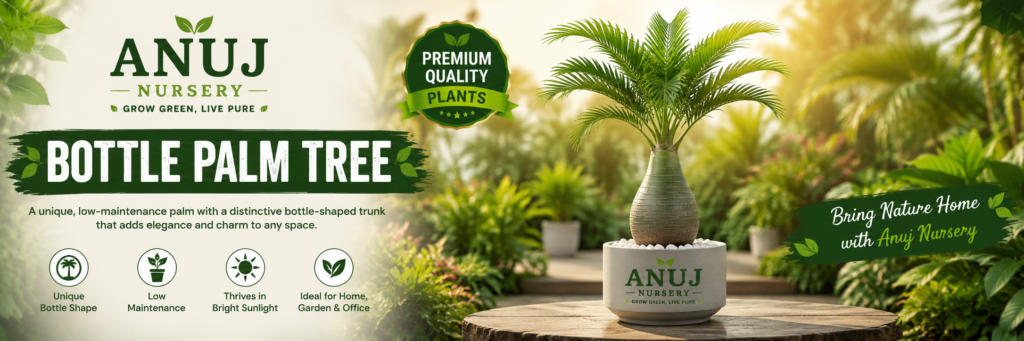
Transform your outdoor space into a resort-style paradise with one of the most visually striking trees in horticulture: the Bottle Palm Plant (Hyophorbe lagenicaulis). Hailing from Round Island, Mauritius, this distinctive tropical specimen is celebrated worldwide for its delightfully swollen, bulbous trunk that mimics the shape of a vintage glass bottle.
Whether you are designing a coastal oasis, a modern minimalist courtyard, or looking for a premier statement container plant, the bottle palm delivers unmatched architectural appeal.
Why Choose a Bottle Palm for Your Landscape?
Unlike towering coconut palms that demand massive overhead clearance, the bottle palm is compact and manageable. It typically matures to a modest height of 10 to 15 feet, growing at a delightfully slow pace. This compact scale makes it exceptionally versatile for modern yards, patios, and pool decks.
- Architectural Focal Point: The smooth, bulbous trunk acts as an organic sculpture, drawing the eye and anchoring garden beds.
- Low Maintenance: Because it produces only a handful of feathery, arching fronds at any given time (usually 4 to 8), cleanup and pruning requirements are minimal.
- Salt & Drought Tolerance: Highly resilient against coastal salt spray and capable of handling brief dry spells once established, making it a favorite for seaside properties.
The Bottle Palm tree is a popular ornamental plant known for its unique swollen trunk and graceful green fronds. It thrives in warm climates with full sunlight and well-drained soil. The Bottle Palm tree requires moderate watering and minimal maintenance, making it an attractive choice for gardens, landscapes, and outdoor decorative spaces.
Essential Care Guide for Thriving Bottle Palms
To keep your bottle palm looking pristine and vibrant, mirror its native tropical habitat by following these core requirements:
- Light Requirements: Position your palm in full sun to partial shade. It thrives best with at least 6 hours of direct daily sunlight.
- Soil and Drainage: Well-draining soil is non-negotiable. Standing water will quickly cause root rot. Sandy loam or heavily amended garden soil works best.
- Watering Routine: Water regularly during active growing seasons to keep the soil evenly moist, but always allow the top inch of soil to dry out between waterings. Reduce watering significantly during cooler winter months.
- Hardiness Zones: Perfectly suited for USDA Zones 10 through 11. If you live in a cooler climate, grow it in a large container and move it indoors or into a greenhouse before the first frost.
Design and Landscaping Ideas
- The Entrancing Entrance: Frame your front entryway or porch path with a pair of matching container-grown bottle palms.
- Poolside Paradise: Plant them near a pool cage or patio edge where their unique silhouettes can be highlighted with up-lighting at night.
- Tropical Groupings: Plant them in odd-numbered clusters (like groups of three) at varying heights for a dynamic, multi-trunk tropical visual effect.
Frequently Asked Questions (FAQ)
1. How fast does a Bottle Palm grow?
The bottle palm (Hyophorbe lagenicaulis) is a notoriously slow-growing palm species. It typically adds only a few inches of vertical height each year, eventually reaching a mature height of 10 to 15 feet over several decades. Its slow growth rate makes it an exceptional choice for containers and restricted garden spaces.
2. Can Bottle Palms survive in cold weather or frost?
No, bottle palms are strictly tropical plants native to Mauritius and are sensitive to cold temperatures. They thrive in USDA Hardiness Zones 10 and 11. If temperatures drop below 30°F (-1°C), the foliage and trunk can suffer severe or fatal damage. In colder climates, grow them in containers and bring them indoors during winter.
3. Why is the trunk of my Bottle Palm swollen?
The swollen, bottle-like trunk is a natural characteristic of Hyophorbe lagenicaulis. While young palms often have more pronounced, spherical trunks that gradually elongate as the tree ages, this bulbous shape serves as a natural water-storage adaptation to help the plant survive periods of drought in its native habitat.
4. How often should I water a potted Bottle Palm?
During the active growing season (spring and summer), water your bottle palm thoroughly whenever the top 1 to 2 inches of soil feels dry to the touch. Reduce watering frequency during autumn and winter when growth slows down, ensuring the soil never remains waterlogged to prevent root rot.
5. Are Bottle Palms safe for pets and children?
Yes, bottle palms are completely non-toxic to dogs, cats, horses, and humans. Unlike some other palm varieties, they do not produce sharp, dangerous thorns on their fronds, making them safe to plant near walkways, pools, and children’s play areas.
Ready to Elevate Your Garden?
Bring home the ultimate tropical conversation starter today! Explore our premium selection of nursery-grown, healthy bottle palms and start building your dream landscape.
[ Shop Healthy Bottle Palms Now – Click Here to Order! ]