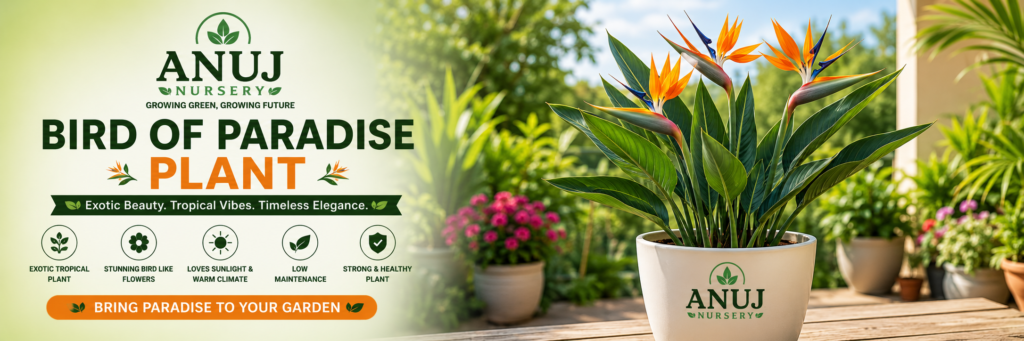
The Bird of Paradise Plant (Strelitzia reginae) is a striking tropical ornamental plant admired for its large, elegant leaves and spectacular bird-like flowers. Its bold appearance makes it a popular choice for homes, balconies, terraces, patios, offices, gardens, and landscape designs.
Although Bird of Paradise is often considered an indoor plant, it can also grow successfully outdoors in suitable warm climates. For healthy growth, it needs bright light, appropriate watering, well-draining soil, warmth, balanced nutrition, and enough space for its large leaves.
This complete guide explains Bird of Paradise plant care, benefits, sunlight, watering, soil, fertilizer, repotting, flowering, common problems, and growing tips.
What Is a Bird of Paradise Plant?
The Bird of Paradise commonly sold as an ornamental plant is Strelitzia reginae, a tropical and subtropical perennial known for its dramatic foliage and distinctive flowers.
Its flowers can resemble a colorful bird emerging from the foliage, which is the reason behind its common name.
The plant can become fairly large over time, so choose a location that provides enough room for the leaves to spread.
Benefits of Growing Bird of Paradise
1. Stunning Decorative Plant
Bird of Paradise has large, architectural leaves that can create an impressive focal point in modern and tropical interiors.
2. Excellent Landscaping Plant
In suitable climates, it can be used in gardens, patios, entrances, poolside landscapes, and tropical-style garden designs.
3. Attractive Tropical Appearance
Its large foliage adds a lush, exotic appearance to homes and outdoor spaces.
4. Long-Term Ornamental Value
With proper care, Bird of Paradise can remain an attractive plant for many years and develop into a substantial specimen.
5. Beautiful Flowers
Mature plants can produce distinctive orange-and-blue flowers under suitable growing conditions, adding extra ornamental value.
Bird of Paradise Plant Care Guide
Sunlight Requirements
Bird of Paradise generally prefers bright light.
Indoors, place it near a bright window where it receives plenty of natural light. Some plants can adapt to several hours of direct sunlight, but newly purchased or shade-grown plants should be gradually acclimatized.
Insufficient light can result in slower growth and reduced flowering.
Watering Requirements
Water thoroughly when the upper portion of the soil has begun to dry.
Avoid keeping the soil constantly saturated. Excess moisture combined with poor drainage can create root problems.
During hot weather or active growth, the plant may require more water. During cooler or lower-light periods, allow the soil to dry more before watering again.
Always adjust watering according to the soil, pot size, temperature, humidity, and light conditions.
Soil Requirements
Use a fertile, well-draining potting mix.
A good growing medium should retain some moisture while allowing excess water to drain freely. Organic matter can help improve soil quality.
For container-grown Bird of Paradise, always choose a pot with drainage holes.
Temperature & Humidity
Bird of Paradise prefers warm temperatures and generally appreciates moderate to higher humidity.
Keep it away from cold drafts and sudden temperature changes. Indoor plants can benefit from being kept away from direct air-conditioner airflow.
Fertilizer Requirements
During active growth, feed the plant with a suitable balanced fertilizer according to the manufacturer’s instructions.
Regular but moderate feeding can support healthy foliage and growth. Avoid excessive fertilizer because fertilizer salts can accumulate in the soil and damage roots or leaf edges.
Repotting
Bird of Paradise can tolerate being somewhat root-bound, but repotting may eventually become necessary when roots have filled the container or the growing medium has deteriorated.
Choose a new pot only moderately larger than the existing container and use fresh, well-draining soil.
How to Encourage Bird of Paradise Flowers
If your goal is flowering, focus on light, maturity, nutrition, and consistent care.
Provide plenty of bright light, avoid overwatering, and maintain healthy growing conditions. Young plants may take time to reach flowering maturity.
Do not assume that simply adding more fertilizer will produce flowers. Excessive fertilizer can cause problems rather than improve flowering.
Common Bird of Paradise Problems
Brown Leaf Edges
Brown edges can result from dry air, inconsistent watering, excessive fertilizer salts, direct harsh sunlight after sudden exposure, or environmental stress.
Curling Leaves
Leaves may curl because of underwatering, low humidity, excessive heat, root problems, or other environmental stress.
Yellow Leaves
Yellowing can be associated with overwatering, poor drainage, natural aging, nutrient issues, or inadequate growing conditions.
Splitting Leaves
Natural splitting can occur in Bird of Paradise leaves, especially as they mature. Wind and physical movement can also cause additional splits. It is not necessarily a sign of disease.
Lack of Flowers
Insufficient light, young plant age, unsuitable conditions, or plant stress can delay flowering.
Frequently Asked Questions
Is Bird of Paradise a good indoor plant?
Yes. Strelitzia reginae can be grown indoors when provided with plenty of bright light, suitable watering, warmth, and sufficient space.
How much sunlight does Bird of Paradise need?
It prefers bright light and can adapt to direct sunlight when gradually acclimatized. Strong natural light is particularly important for healthy growth and flowering.
How often should I water Bird of Paradise?
Water when the upper layer of soil has begun to dry. Avoid following a rigid calendar because watering requirements change with season, light, temperature, and pot size.
Can Bird of Paradise grow in India?
Yes. It can perform well in suitable warm regions of India. Indoor plants should be protected from cold conditions and provided with sufficient light.
Why are my Bird of Paradise leaves turning brown?
Possible causes include dry air, inconsistent watering, fertilizer buildup, excessive direct sunlight after sudden exposure, or general environmental stress. Check the growing conditions before changing your watering routine.
Conclusion
The Bird of Paradise Plant (Strelitzia reginae) is an excellent choice for anyone who wants bold tropical foliage and an impressive ornamental plant. With its large leaves and distinctive flowers, it can transform a home, office, balcony, terrace, patio, or suitable garden into a more vibrant green space.
For healthy growth, remember the basics: bright light, well-draining soil, controlled watering, warmth, adequate humidity, balanced fertilizer, and enough growing space.
If you’re looking to buy a healthy Bird of Paradise Plant online in India, explore the indoor and ornamental plant collection at AnujNursery.in.
Bring tropical elegance into your space—order your Bird of Paradise Plant from Anuj Nursery today!