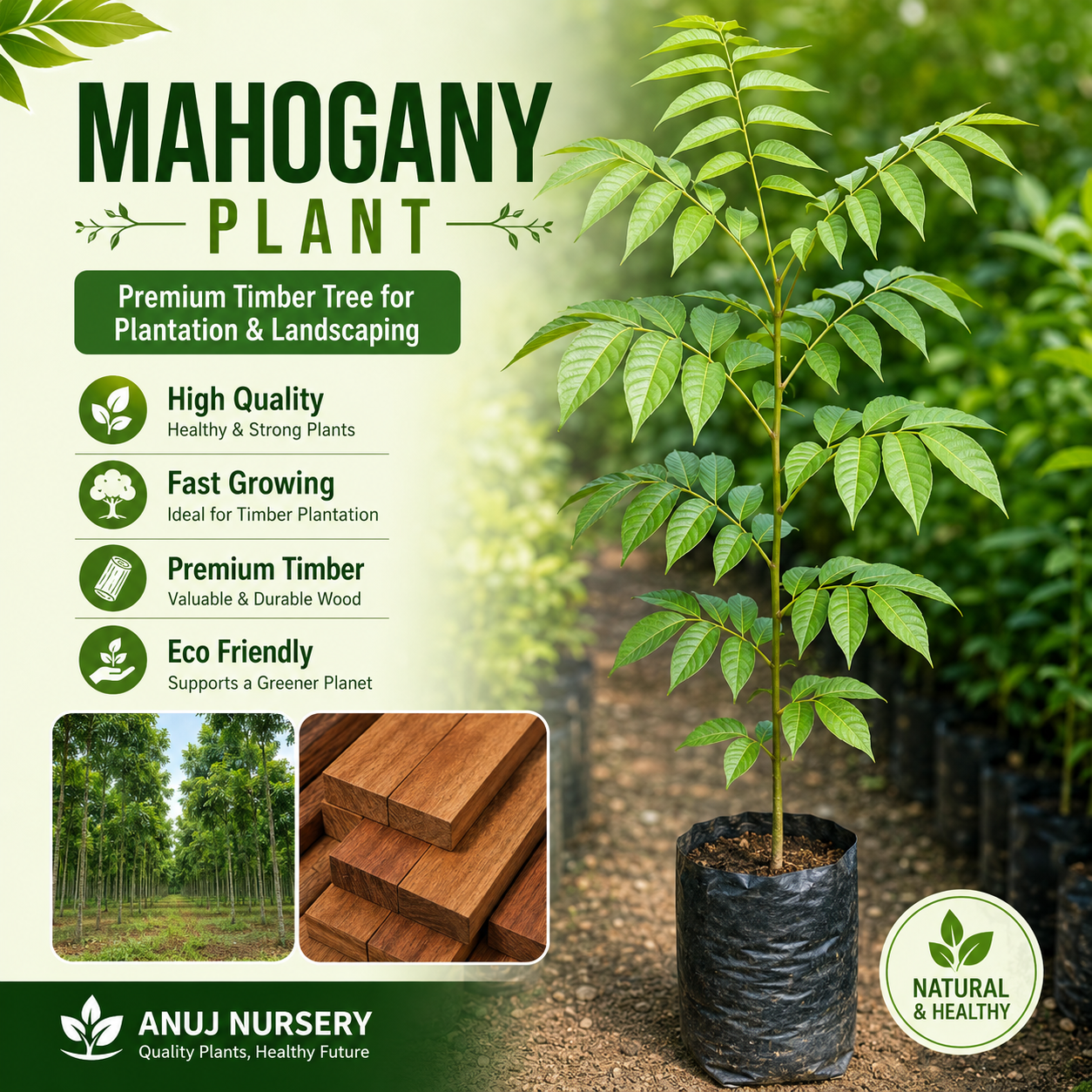
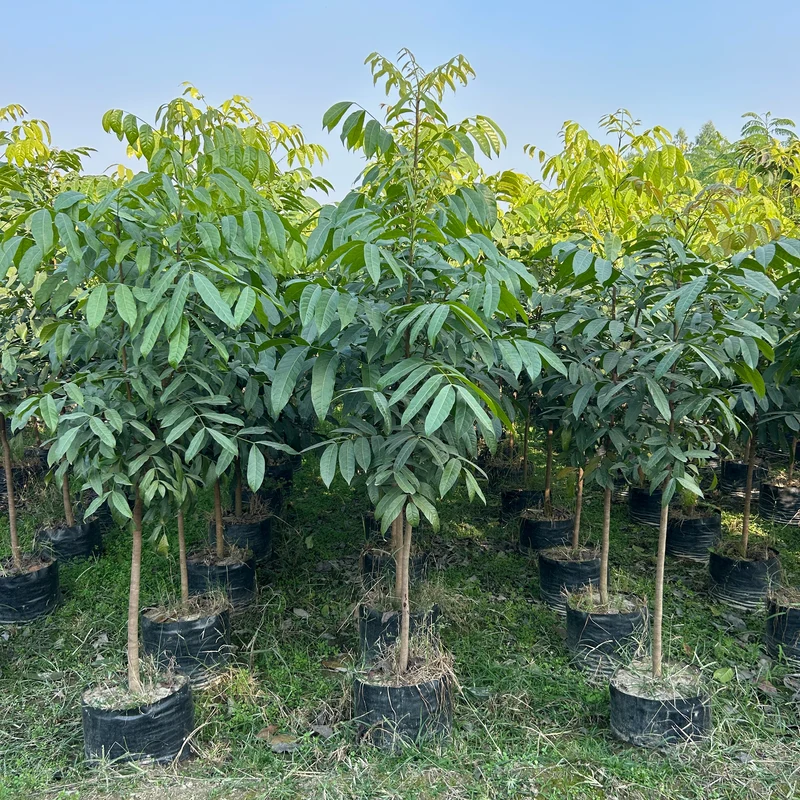
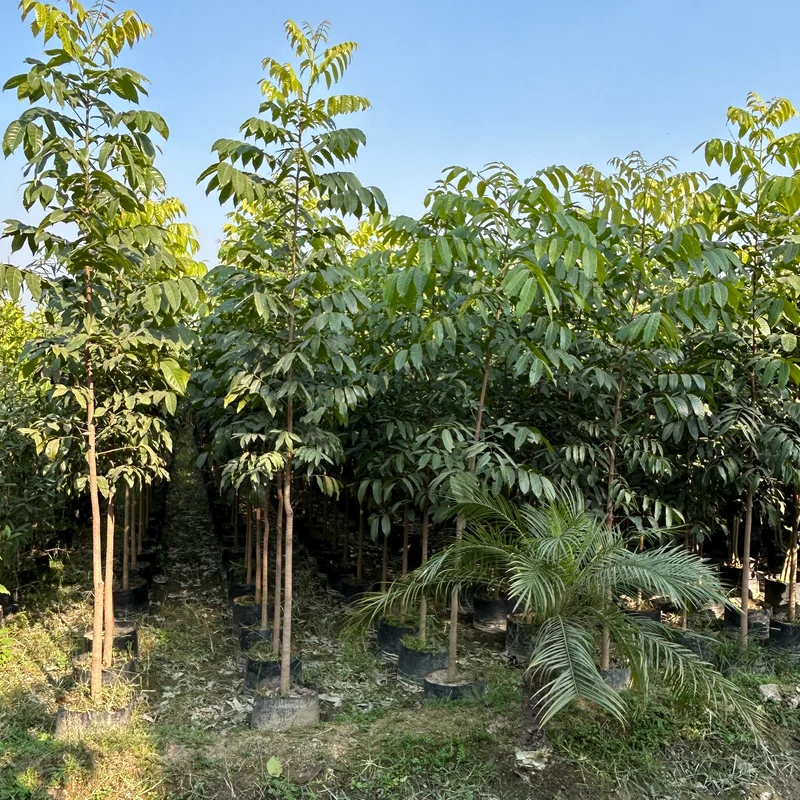
The Mahogany Plant is a popular choice for farmers, landowners, landscapers, and plantation enthusiasts looking for a valuable timber tree with attractive foliage and strong growth potential. Mahogany is widely recognized for its high-quality wood and is also planted for shade, greenery, farm development, and large landscape projects. At Anuj Nursery, we provide healthy Mahogany plants suitable for plantations, farms, gardens, and commercial landscaping projects.
Mahogany Plant Overview
Mahogany generally refers to trees in the genus Swietenia, with Swietenia macrophylla being one of the best-known species. The tree develops a strong trunk, a broad canopy, and attractive green foliage under suitable growing conditions. With proper care, adequate sunlight, and suitable soil, Mahogany can become a large and impressive tree.
For customers planning a plantation, buying healthy nursery-grown plants is important. A strong plant with a healthy root system can establish more easily after transplantation. Before purchasing, customers should also consider their local climate, soil conditions, available space, irrigation facilities, and applicable plantation regulations.
Why Choose Mahogany Plants?
Mahogany is mainly valued for its timber, but its benefits extend beyond wood production. The tree can contribute to the greenery of farms, estates, institutional landscapes, and large properties. Its attractive appearance makes it suitable for locations where a tall shade-producing tree is desired.
Mahogany plants are particularly suitable for customers interested in long-term tree plantation projects. However, buyers should understand that timber production is a long-term investment rather than a quick-return crop. Growth and eventual timber quality depend on species, planting density, soil, climate, irrigation, nutrition, pest management, and overall plantation care.
Mahogany Plant Uses
Mahogany is primarily associated with quality timber production. Mature mahogany wood is valued for furniture, interior applications, cabinetry, decorative woodwork, and other woodworking purposes. The tree is also useful for creating green spaces and improving the visual appearance of large properties.
Mahogany can be considered for:
- Timber plantations
- Farm boundaries and large agricultural properties
- Agroforestry projects
- Estate plantations
- Large gardens and open landscapes
- Institutional landscaping
- Long-term tree-growing projects
Mahogany Plant Growing Conditions
Mahogany generally performs best in warm tropical and subtropical conditions. It prefers good sunlight and well-drained soil. Waterlogging should be avoided because continuously saturated soil can negatively affect root health.
Before planting, prepare the soil properly and provide enough space for the tree to develop its canopy and root system. Regular watering is important during the establishment stage, especially when rainfall is insufficient. Once established, watering requirements will depend on local weather, soil type, and plantation conditions.
Adding suitable organic matter and maintaining good soil fertility can support healthy growth. Weed control around young plants is also important because competing vegetation can reduce access to water, nutrients, and sunlight.
How to Plant Mahogany
Select a location with adequate sunlight and sufficient growing space. Dig a suitable planting pit according to the size of the nursery plant and root ball. Place the plant carefully without damaging its roots, fill the pit with good-quality soil, and water thoroughly after planting.
Young plants may require protection from grazing animals, strong winds, weeds, and other environmental stresses. Maintaining an appropriate planting distance is especially important in commercial plantations because overcrowding can affect sunlight penetration and tree development.
Mahogany Plant Care
Good maintenance during the early growth period can help Mahogany plants establish successfully. Water the plant according to soil moisture and weather conditions rather than following a rigid schedule. Remove weeds around the plant and monitor the tree regularly for signs of pests, diseases, or physical damage.
Pruning should be carried out carefully when required to encourage a desirable tree structure. For commercial timber plantations, professional plantation management can be valuable because spacing, pruning, nutrition, and pest monitoring can influence the final quality and productivity of the plantation.
Buy Mahogany Plant Online from Anuj Nursery
If you are looking to buy Mahogany plants online, Anuj Nursery offers nursery plants for farming, plantation, landscaping, and greenery projects. We focus on supplying healthy plants suitable for different customer requirements.
Mahogany is a long-term plantation tree, so selecting the right planting material is only the first step. Customers should also plan land preparation, spacing, irrigation, maintenance, and long-term management before establishing a plantation.
For Mahogany plant availability, quantity requirements, and delivery information, contact Anuj Nursery and confirm the current plant size and stock before placing your order.
Product Highlights
- Healthy nursery-grown Mahogany plants
- Suitable for plantation and landscaping projects
- Valuable timber tree
- Attractive green foliage
- Suitable for warm climates
- Useful for farms, estates, and large landscapes
- Ideal for long-term plantation planning
- Available from Anuj Nursery, subject to stock
Reviews
There are no reviews yet.