
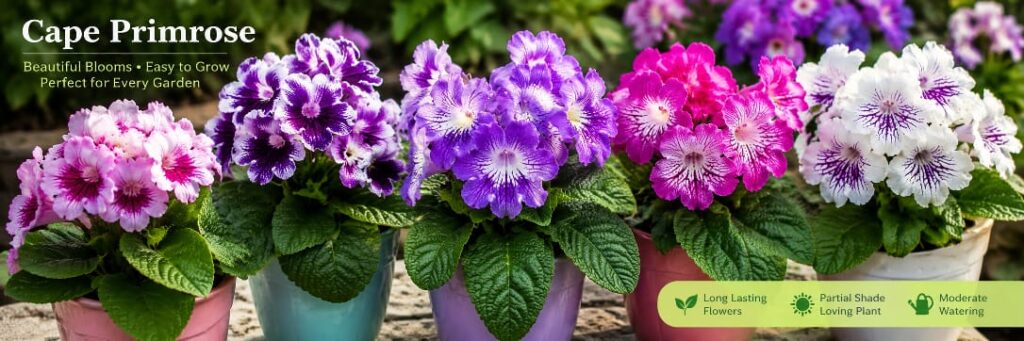
The Cape Primrose Streptocarpus is a charming flowering plant loved for its colorful, trumpet-shaped flowers and attractive foliage. Despite its common name, Cape Primrose is not a true primrose. It belongs to the Gesneriaceae family and is closely related to popular ornamental plants such as African violets.
Streptocarpus is an excellent choice for gardeners who want attractive flowers in containers, balconies, patios, shaded gardens and bright indoor spaces. Depending on the variety, its flowers can appear in shades of purple, pink, blue, white and other attractive combinations.
Its compact growth and long flowering potential make Cape Primrose particularly useful for decorative gardening.
What Is Cape Primrose?
Streptocarpus, commonly known as Cape Primrose, is a genus of flowering plants native mainly to southern and southeastern Africa. Many cultivated varieties have been developed for their beautiful flowers and attractive foliage.
The plant generally produces long, slightly textured leaves arranged around the base. During its flowering period, slender flower stalks emerge and carry colorful blooms above the foliage.
The flowers are the main attraction. Their trumpet-like shape and bright colors can provide an elegant display even when the plant is grown in a relatively small container.
Why Choose Cape Primrose Streptocarpus?
Cape Primrose offers several advantages for ornamental gardeners:
- Attractive trumpet-shaped flowers
- Available in many flower colors
- Compact growth habit
- Excellent container plant
- Suitable for balconies and patios
- Can perform well in bright indoor spaces
- Attractive foliage
- Long flowering potential under suitable conditions
- Excellent for decorative plant collections
- Suitable for shaded or filtered-light gardens
However, don’t make the mistake of treating Streptocarpus like a full-sun outdoor flowering shrub. Too much intense sunlight can damage its foliage and reduce plant quality. Light management is one of the keys to success.
Cape Primrose Streptocarpus Care
1. Light Requirements
Streptocarpus generally prefers bright, indirect or filtered light. A location receiving gentle morning sunlight can work well, while harsh afternoon sunlight should usually be avoided.
For indoor plants, place the pot near a bright window where it receives plenty of natural light without being exposed to intense direct sun for long periods.
Insufficient light can also be a problem. Plants grown in very dark locations may develop weak growth and produce fewer flowers.
The goal is simple: bright light without excessive heat and scorching.
2. Watering
Cape Primrose prefers consistent moisture but does not like permanently saturated soil.
Water when the upper portion of the growing medium begins to dry. Avoid allowing the plant to sit in standing water for extended periods.
When watering, apply water to the soil rather than repeatedly soaking the center of the plant. Good air circulation around the foliage can also help maintain plant health.
During hot weather, container-grown Streptocarpus may require more frequent monitoring.
3. Soil
Use a light, porous and well-draining potting medium. The roots need both moisture and access to air.
A compact, heavy soil that remains wet for long periods is not ideal. A quality potting mix containing suitable organic material and drainage components can provide a better environment.
Always use a container with drainage holes.
Fertilizer for Streptocarpus
Regular but moderate feeding can support healthy foliage and flowering. During active growth, a balanced fertilizer diluted according to the product instructions can be used.
Avoid excessive fertilizer. More fertilizer does not automatically mean more flowers and can potentially damage the plant’s roots.
A consistent feeding routine combined with suitable light and watering is a better strategy than heavy fertilization.
How to Encourage More Flowers
If your main objective is flowering, concentrate on the fundamentals:
Bright filtered light + proper watering + good drainage + balanced nutrition = healthier flowering.
Remove old or faded flowers to maintain a neat appearance and encourage the plant to continue producing new blooms.
Don’t overcrowd multiple pots in a poorly ventilated corner. Good spacing improves air movement and allows each plant to receive adequate light.
Propagation of Cape Primrose
Streptocarpus can be propagated using different methods depending on the variety. Some types can be propagated from leaf cuttings, while division or other propagation techniques may also be used for suitable plants.
For home gardeners, purchasing an established nursery plant is generally the easiest way to enjoy flowers sooner.
If propagating at home, use healthy plant material and a clean growing medium to reduce the risk of transferring diseases.
Cape Primrose for Indian Gardens
The Cape Primrose Streptocarpus can be grown in India, particularly when protected from extreme heat and harsh direct sunlight.
In hot regions, filtered light and a cooler protected location can be more suitable than exposed afternoon sun. During the hottest months, monitor container moisture carefully without overwatering.
For gardeners in Saharanpur, Uttar Pradesh, Cape Primrose can be grown in containers and placed in a bright, protected area. During periods of extreme summer heat or cold weather, moving the plant to a more suitable location can make maintenance easier.
This flexibility is one of the major advantages of container gardening.
Landscaping & Decorative Uses
Cape Primrose is particularly useful for smaller decorative spaces, including:
- Balcony gardens
- Patio gardens
- Indoor plant displays
- Shaded garden areas
- Window-side plant collections
- Decorative containers
- Office interiors with adequate natural light
- Hotel and resort interiors
- Flowering plant collections
- Gift plants
Its colorful flowers can create an attractive contrast against green foliage plants.
Buy Cape Primrose Streptocarpus from Anuj Nursery
If you are searching for a Cape Primrose Streptocarpus plant for sale in India, Anuj Nursery can be considered for ornamental and flowering plant requirements.
When buying a plant, don’t judge quality only by the number of flowers. Look for:
- Healthy green leaves
- Strong flower stalks
- Good overall structure
- Healthy roots
- No obvious pest infestation
- No severe leaf damage
- Proper plant identification
- Suitable size for your growing space
For customers around Nagal, Saharanpur and Uttar Pradesh, a healthy nursery-grown plant can be a convenient starting point for container gardening.
Frequently Asked Questions
What is Cape Primrose?
Cape Primrose is the common name for plants in the Streptocarpus genus. It is a popular ornamental flowering plant known for colorful trumpet-shaped flowers.
Is Streptocarpus an indoor plant?
Yes. Streptocarpus can perform well indoors when it receives bright, indirect natural light and is protected from excessive heat.
Does Cape Primrose need direct sunlight?
It generally prefers bright filtered or indirect light. Harsh afternoon sunlight can scorch the foliage, especially in hot climates.
How often should I water Streptocarpus?
Water when the growing medium begins to dry slightly. Avoid both severe drying and prolonged waterlogging.
Can Cape Primrose grow in pots?
Yes. Its compact growth makes it particularly suitable for containers, balconies, patios and indoor plant displays.
Final Thoughts
The Cape Primrose Streptocarpus is an excellent flowering plant for gardeners who want colorful blooms without needing a large outdoor space. Its attractive flowers, compact habit and suitability for containers make it a versatile ornamental choice.
For the best results, provide bright filtered light, well-draining soil, moderate watering, good ventilation and balanced nutrition. In India’s hotter regions, protecting the plant from intense afternoon sunlight is particularly important.
If you’re looking for a colorful flowering plant for a balcony, patio, indoor garden or shaded outdoor space, Cape Primrose Streptocarpus is a beautiful option that can deliver impressive floral color when given the right growing conditions.