Hemerocallis Plant Care: What Makes Daylilies Special?
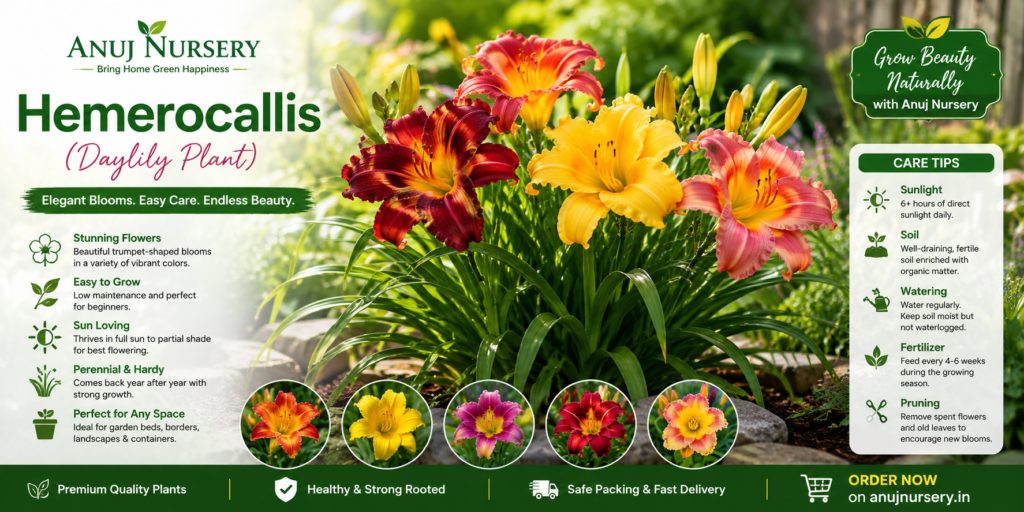
Hemerocallis, commonly known as Daylily, is a popular flowering perennial valued for its attractive foliage, colorful flowers, and relatively easy care. The name “Daylily” comes from the fact that individual flowers generally open for a limited period, often around a day, while a healthy established plant can produce many buds over the flowering period. Hemerocallis is also available in a wide range of flower colors, forms, and cultivars, making it useful for home gardens, borders, landscaping projects, and containers. The University of Minnesota Extension plant database lists numerous Hemerocallis cultivars, illustrating the remarkable diversity available within this group.
The biggest mistake beginners make is assuming that an easy-care plant can simply be planted anywhere and forgotten. Good Hemerocallis plant care still depends on sunlight, drainage, watering, nutrition, and suitable planting conditions. If you provide the plant with the right foundation, it can reward you with vigorous foliage and attractive blooms without demanding complicated maintenance. For gardeners in India, especially those dealing with hot summers, the practical approach is to pay close attention to moisture and afternoon heat rather than blindly following care instructions designed for cooler climates.
Hemerocallis Plant Benefits for Home Gardens
One of the main benefits of Hemerocallis is its ornamental value. Its grass-like foliage creates a neat green clump, while flowers add seasonal color to gardens and landscape beds. This combination makes Daylily useful when you want a flowering plant that contributes both foliage structure and blooms rather than looking attractive only when flowers are present.
Another advantage is versatility. Hemerocallis can work in garden borders, around pathways, mixed flower beds, and suitable containers. Once established, it can become a dependable perennial feature rather than a plant that needs replacing every season. Its strong visual appeal also makes it useful for creating colorful landscape sections around homes, offices, resorts, and other outdoor spaces.
However, don’t confuse ornamental benefits with medicinal claims. Daylily is primarily valued as an ornamental garden plant in this context. If you see websites making strong health or medicinal claims about Hemerocallis, don’t treat those claims as established facts without reliable scientific evidence.
Best Sunlight for Hemerocallis Plants
Sunlight is one of the most important factors in Hemerocallis care. Daylilies generally perform well with substantial sunlight, and adequate light helps support healthy foliage and flowering. A location receiving several hours of direct sunlight can be excellent, although the exact amount that works best can depend on the cultivar and local climate.
For Indian gardens, there is an important distinction between sun-loving and heat-proof. A plant may appreciate sunlight but still experience stress when exposed to extreme summer heat, especially when the soil dries rapidly. In very hot regions, morning sunlight with some protection from intense late-afternoon heat can be a sensible strategy, particularly for container-grown plants.
Watch the plant rather than following a rigid rule. Pale, weak growth and disappointing flowering can indicate insufficient light, while scorched foliage and rapidly drying soil can indicate excessive heat or inadequate moisture management.
Best Soil for Growing Hemerocallis
Hemerocallis is much easier to manage when planted in fertile, well-draining soil. The objective is simple: roots should have access to moisture and nutrients without remaining submerged in stagnant water. Poor drainage can create a completely different problem from underwatering because continuously saturated soil reduces healthy root conditions.
Before planting, improve heavy or compacted soil with suitable organic matter. A good garden mixture should remain loose enough for roots to expand while still holding sufficient moisture. Container-grown Daylilies need pots with proper drainage holes and a growing medium that does not become permanently waterlogged.
This principle is broadly important in Indian gardening. ICAR horticultural guidance across crops repeatedly emphasizes appropriate soil moisture and avoiding waterlogged conditions for healthy plant growth.
How to Water Hemerocallis Correctly
Watering Hemerocallis is about consistency, not flooding. Newly planted Daylilies need more attentive watering while their roots establish, whereas established plants can generally tolerate short periods of lower moisture better than newly transplanted plants.
During hot weather, check the soil regularly. If the upper layer is becoming dry and the plant shows signs of moisture stress, provide a thorough watering around the root zone. Avoid repeatedly giving tiny amounts of water that wet only the surface.
Morning watering is especially practical during hot weather because it allows the plant and surrounding soil to hydrate before the strongest heat arrives. Recent University of Minnesota Extension guidance also recommends early-morning watering and deeper irrigation during periods of heat stress.
The opposite mistake is equally damaging: overwatering. If the soil remains constantly wet, roots may suffer and fungal or other soil-related problems can become more likely. Your goal is moist, well-drained soil—not muddy soil.
Fertilizer for Better Hemerocallis Growth
Hemerocallis doesn’t need an unnecessarily complicated fertilizer program. Start with healthy soil containing organic matter and then use a balanced fertilizer according to the product label and the plant’s growth stage. Excessive nitrogen can encourage lush foliage without necessarily giving you the flowering performance you’re hoping for.
For plants growing in containers, nutrients can become depleted more quickly because the available soil volume is limited. A mild, balanced feeding program during active growth can therefore be useful. Always water appropriately and avoid applying concentrated fertilizer directly against the crown or roots.
A smarter strategy is to think of fertilizer as support, not a shortcut. If the plant has inadequate sunlight, poor drainage, damaged roots, or inconsistent watering, adding more fertilizer will not magically solve the underlying problem.
How to Plant Hemerocallis at Home
Choose a location with good light and drainage before bringing the plant into the ground. Dig a planting area large enough to accommodate the root system without forcing or tightly bending the roots. Place the plant at an appropriate depth, backfill with prepared soil, and water thoroughly after planting.
Don’t bury the crown excessively. The transition between the foliage and roots should remain positioned appropriately rather than being deeply submerged in soil. After planting, maintain consistent moisture while the Daylily establishes.
For landscaping, leave enough room between plants based on the expected mature size of the specific cultivar. Crowding plants too tightly may reduce airflow and make maintenance more difficult.
Hemerocallis Care in Pots and Containers
Want to grow a Daylily in a pot? You can, provided the container is large enough for the plant and has reliable drainage. Container gardening gives you greater control over soil quality and placement, which can be especially useful when dealing with poor garden soil.
Use a quality potting medium that drains freely while retaining some moisture. During Indian summers, containers can dry considerably faster than garden beds, so check them more frequently. At the same time, don’t compensate for heat by keeping the pot permanently saturated.
Position the container where the plant receives suitable sunlight but can receive some protection during periods of extreme afternoon heat if necessary. Remember that moving a container gives you flexibility—use it.
How to Encourage More Hemerocallis Flowers
If your goal is more Daylily blooms, start with the fundamentals. Adequate sunlight, healthy roots, sufficient moisture, and appropriate nutrition are more important than gimmicks. Removing faded flowers can also keep the plant looking tidy and prevent spent blooms from dominating the display.
If flowering is disappointing, don’t immediately blame fertilizer. Ask four questions: Is the plant receiving enough light? Is the soil draining properly? Is watering consistent? Has the plant become overcrowded?
That diagnostic approach is much more effective than randomly changing products. A healthy plant placed in the right environment usually has a much better chance of producing an attractive flowering display.
Common Hemerocallis Problems and Their Solutions
Hemerocallis is generally manageable, but it isn’t immune to problems. Leaf spots, rust, and other issues can occur. University of Minnesota Extension identifies leaf streak, Daylily rust, and southern blight among problems associated with Daylilies. Symptoms can include brown or yellow leaf markings, orange-colored rust spores, wilting, and deterioration around the plant base.
The best first response is diagnosis rather than spraying something randomly. Remove badly damaged plant material where appropriate, improve airflow, avoid unnecessary wetting of foliage, and make sure the growing area isn’t suffering from poor drainage.
Pests can also occasionally cause damage. Slugs, for example, can feed on Daylily foliage, particularly under cool, moist conditions.
Hemerocallis Care Guide at a Glance
| Care Factor | Recommended Approach |
|---|---|
| Sunlight | Several hours of good sunlight; protect from extreme heat when necessary |
| Soil | Fertile, loose and well-draining |
| Water | Consistent moisture without waterlogging |
| Fertilizer | Balanced feeding according to plant needs and label directions |
| Container | Use a pot with drainage holes and sufficient root space |
| Flowering | Good light, moisture, nutrition and regular maintenance |
| Pruning | Remove dead or damaged foliage and spent flowers as needed |
| Pests/Diseases | Monitor foliage and address symptoms early |
Why Buy Healthy Hemerocallis Plants from a Nursery?
Starting with a healthy nursery-grown plant can make the gardening journey much easier than beginning with weak or poorly established material. When choosing a Hemerocallis plant, look for healthy foliage, a strong root system, and no obvious signs of serious pest or disease damage.
For Indian gardeners, choosing plants suited to the local growing environment is particularly important. Don’t buy a plant simply because its photograph looks beautiful online. Consider your sunlight, summer temperature, available space, watering routine, and whether you’re growing it in a garden bed or container.
If you’re building a flowering garden, a healthy Daylily can become an attractive addition alongside other ornamental plants available from Anuj Nursery.
Conclusion
Hemerocallis plant care doesn’t have to be complicated. Give your Daylily good sunlight, fertile well-draining soil, sensible watering, appropriate nutrition, and enough room to grow, and you’ve already handled most of the important work. For gardeners in India, the biggest challenge is often managing intense heat and moisture rather than dealing with complicated maintenance.
The real secret is consistency. Don’t chase quick fixes when a plant struggles; inspect the growing conditions first. With the right location and regular care, Hemerocallis can provide attractive foliage and beautiful seasonal flowers while adding long-term value to home gardens and landscaping projects.
FAQs About Hemerocallis Plant Care
1. Is Hemerocallis easy to grow?
Yes. Hemerocallis is generally considered an adaptable ornamental perennial, but good sunlight, drainage, watering, and nutrition are still important for strong growth and flowering.
2. How much sunlight does Hemerocallis need?
Daylilies generally perform well with several hours of sunlight. In extremely hot climates, protecting plants from harsh late-afternoon heat may help reduce stress.
3. How often should I water a Hemerocallis plant?
Water when the soil begins to dry rather than following a fixed daily schedule. Newly planted and container-grown plants may require more frequent attention, especially during hot weather.
4. Can Hemerocallis grow in pots?
Yes. Hemerocallis can be grown in containers when the pot provides adequate root space, drainage holes, and a suitable well-draining growing medium.
5. Why is my Hemerocallis not flowering?
Insufficient sunlight, poor watering, overcrowding, unsuitable nutrition, or plant stress can reduce flowering. Check the growing conditions before adding more fertilizer.