
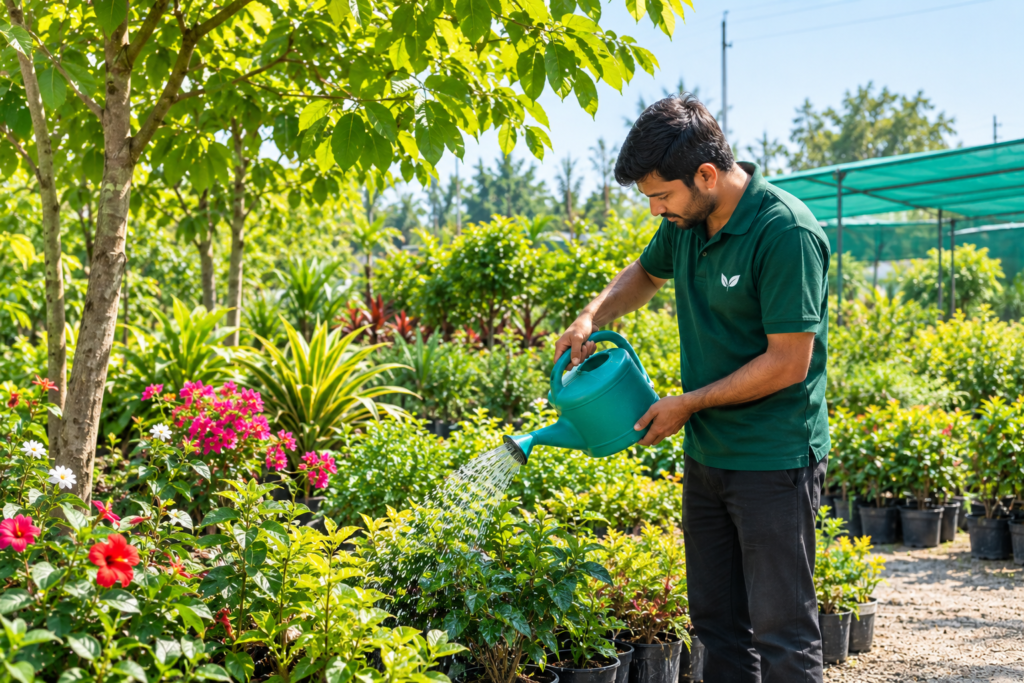
Summer can be challenging for garden plants, especially when temperatures rise and the soil loses moisture quickly. In Saharanpur, hot and dry periods can place additional stress on newly planted trees, nursery plants, flowering plants and ornamental greenery.
Following a proper Summer Plant Care Guide for Saharanpur can help plants manage heat, maintain moisture and continue healthy growth. From correct watering to mulching and shade protection, a few simple practices can make a significant difference to your garden.
Why Summer Plant Care Is Important in Saharanpur
High temperatures can cause rapid moisture loss from soil and plant leaves. Newly planted trees and nursery plants are particularly vulnerable because their root systems may not yet be fully established.
Signs of summer stress can include:
- Drooping leaves
- Dry or curling leaves
- Slow growth
- Dry soil
- Leaf scorching
- Premature leaf fall
Early attention can help reduce unnecessary plant stress.
1. Water Plants at the Right Time
Watering is one of the most important parts of summer plant care.
Early morning is generally a good time to water because temperatures are lower and plants have time to use the available moisture. Evening watering can also be useful, depending on the plant and site conditions.
Avoid relying on a fixed schedule for every plant. Check the soil moisture and consider the plant’s species, size, soil type and location.
Overwatering can also create problems, so the goal is to maintain appropriate moisture rather than keeping the soil constantly wet.
2. Give Newly Planted Trees Extra Attention
Newly planted trees require particular care during hot weather.
Their roots may not yet have spread sufficiently into the surrounding soil. Monitor them regularly and provide appropriate irrigation according to the soil and plant requirements.
Tree supports may also be useful for young trees in exposed locations.
3. Use Mulch Around Plants
Mulching is a simple way to help conserve soil moisture.
Organic materials such as suitable composted plant material, bark or other appropriate mulch can be placed around the plant’s root zone.
Mulch can help:
- Reduce evaporation
- Moderate soil temperature
- Reduce weed competition
- Protect the soil surface
Keep mulch away from direct contact with the plant stem or trunk to reduce the risk of moisture-related problems.
4. Protect Sensitive Plants From Extreme Heat
Some plants are more sensitive to intense sunlight and heat than others.
Container plants can sometimes be moved to locations with suitable afternoon protection. Shade netting may also be considered for particularly sensitive nursery plants.
However, don’t assume every plant needs shade. Many trees and outdoor plants require full sunlight for healthy growth.
5. Check the Soil Regularly
Hot weather can dry the upper soil layer quickly.
Instead of watering automatically every day, check the moisture level around the root zone. Sandy or fast-draining soil may require more frequent irrigation than heavier soil.
Improving soil structure with suitable organic matter can also help support healthy root development and moisture management.
6. Avoid Unnecessary Pruning
Heavy pruning during extreme summer conditions can place additional stress on some plants.
Remove dead, damaged or diseased growth when necessary, but avoid excessive pruning unless there is a specific horticultural reason.
For larger trees and valuable landscape plants, major pruning should be planned carefully.
7. Monitor Pests and Diseases
Heat-stressed plants can become more vulnerable to certain pest and disease problems.
Inspect leaves, stems and new growth regularly. Look for unusual spots, discoloration, insects, webbing or sudden changes in plant growth.
Early identification is easier to manage than allowing a problem to spread throughout the garden.
8. Take Care of Container Plants
Potted plants can heat up and dry out faster than plants growing directly in the ground.
During Saharanpur’s hot weather, check container moisture more frequently. Avoid placing sensitive containers on extremely hot surfaces where possible.
Make sure containers have adequate drainage so that additional watering does not result in waterlogging.
9. Keep the Garden Weed-Free
Weeds compete with plants for water, nutrients and growing space.
Regularly removing weeds around trees, shrubs and flowering plants can reduce competition during periods when water availability becomes particularly important.
Mulching can also help suppress new weed growth.
10. Prepare Plants for the Monsoon
Summer care should also prepare your garden for the approaching monsoon.
Check drainage channels, planting pits and low-lying areas before heavy rainfall begins. Waterlogged soil can damage roots, particularly when drainage is poor.
A good transition from summer to monsoon can help plants handle changing conditions more effectively.
Summer Plant Care for Different Plant Types
Different plants require different approaches.
Trees: Focus on deep and appropriate irrigation, mulch and protection for newly planted specimens.
Flowering plants: Monitor moisture and sunlight requirements carefully.
Shrubs: Maintain appropriate watering and remove damaged growth.
Container plants: Check moisture frequently and provide suitable protection for sensitive species.
Fruit plants: Maintain consistent care according to species requirements, particularly during flowering and fruit development.
AEO FAQ
How often should I water plants in Saharanpur during summer?
There is no single watering frequency for every plant. Check soil moisture and consider the plant species, soil type, container size, temperature and exposure to sunlight.
What is the best time to water plants in summer?
Early morning is generally a good time because temperatures are lower and plants have time to absorb available moisture. Evening may also work depending on local conditions.
How can I protect plants from Saharanpur’s summer heat?
Appropriate watering, mulching, suitable shade for sensitive plants, healthy soil and regular monitoring can help reduce heat stress.
Should I water plants every day during summer?
Not necessarily. Daily watering can lead to overwatering for some plants. Check moisture around the root zone and water according to the plant’s actual requirements.
How do I care for newly planted trees in summer?
Monitor soil moisture regularly, provide appropriate irrigation, use mulch around the root zone and protect young trees from extreme exposure when necessary.
Final Thoughts
A successful Summer Plant Care Guide for Saharanpur starts with understanding that every plant has different requirements. The most important practices are appropriate watering, moisture conservation, soil care, heat protection and regular inspection.
For homeowners, landscapers and gardeners, paying extra attention to newly planted trees and nursery plants during hot weather can make plant establishment easier.
If you are planning a new garden or landscaping project in Saharanpur, selecting climate-appropriate plants from a reliable nursery such as Anuj Nursery and combining them with proper summer care can help create a healthier and more attractive landscape throughout the year.