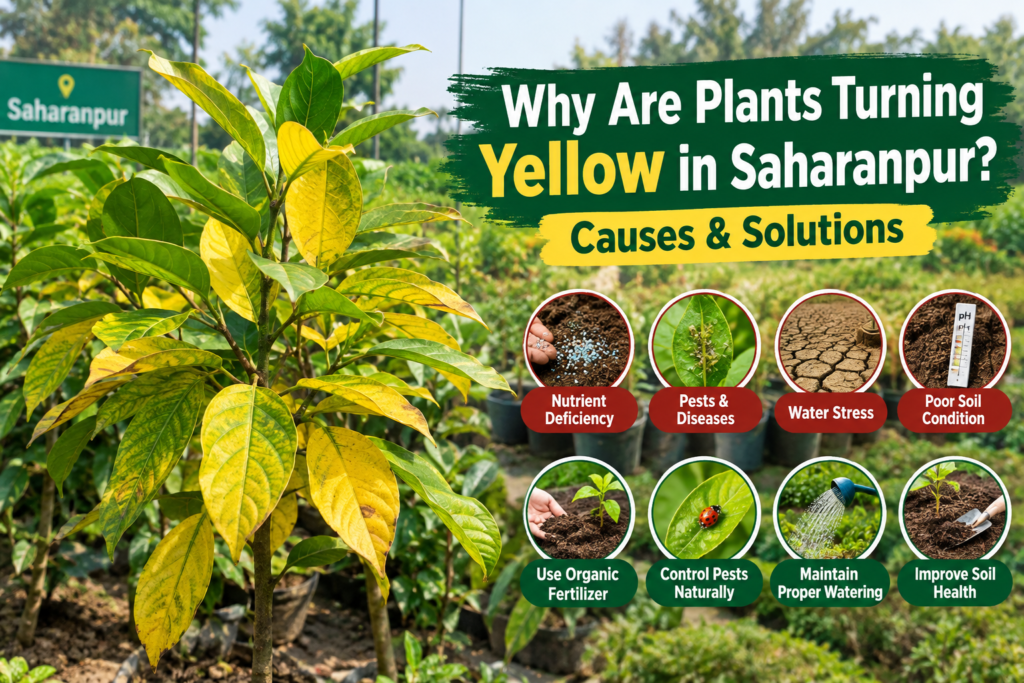
If you are wondering, “Why are plants turning yellow in Saharanpur?”, you are not alone. Yellow leaves are one of the most common problems faced by home gardeners, farmers and plant owners. Although a few yellow leaves can be a natural part of plant growth, widespread yellowing often indicates a problem with watering, sunlight, soil, nutrients, roots or pests.
Saharanpur’s changing weather conditions, including hot summers, monsoon moisture and cooler winters, can affect plant health. Understanding the cause of yellow leaves is the first step toward bringing your plants back to healthy growth.
1. Overwatering
One of the most common reasons plants develop yellow leaves is overwatering. When soil remains continuously wet, plant roots may not receive enough oxygen. Poor drainage can eventually damage the roots and cause leaves to turn yellow.
Check the soil before watering. If the upper layer is still wet, wait before adding more water. Containers should also have proper drainage holes.
2. Underwatering
Too little water can also cause yellow or pale leaves. During the hot summer months in Saharanpur, plants growing in containers or exposed locations may lose moisture quickly.
If the soil feels very dry and leaves appear weak, wilted or curled, the plant may need more consistent watering. Newly planted trees and plants require particular attention during their establishment period.
3. Nutrient Deficiency
Plants require essential nutrients for healthy leaves and growth. A deficiency of nitrogen, iron, magnesium or other nutrients can sometimes result in yellow foliage.
The pattern of yellowing can provide clues. For example, older leaves becoming pale may be associated with nitrogen deficiency, while yellowing between leaf veins can occur with certain micronutrient deficiencies.
Instead of applying fertilizer randomly, first consider the plant type, soil condition and symptoms. Excess fertilizer can also damage roots.
4. Poor Soil Drainage
Even if you follow a proper watering schedule, poorly draining soil can create problems. Heavy or compacted soil may hold excess moisture around the roots.
Improving drainage with suitable soil amendments and organic matter can help create better root conditions. For potted plants, use an appropriate growing medium instead of ordinary compact garden soil.
5. Too Much or Too Little Sunlight
Light requirements differ from plant to plant. Some plants need several hours of direct sunlight, while others perform better in partial shade.
In Saharanpur’s intense summer conditions, sensitive plants may experience heat and leaf stress when exposed to strong afternoon sunlight. On the other hand, plants kept in excessively dark areas may struggle to produce healthy foliage.
Place each plant according to its specific sunlight requirements.
6. Pest Infestation
Small insects such as aphids, mites and other sap-sucking pests can weaken plants and contribute to yellowing leaves. Check the underside of leaves and young shoots regularly.
Look for tiny insects, sticky residue, webbing, distorted leaves or unusual spots. Early identification can prevent a minor pest problem from becoming a serious infestation.
7. Root Problems
Healthy roots are essential for healthy leaves. Root damage caused by waterlogging, poor soil, pests or physical disturbance can reduce the plant’s ability to absorb water and nutrients.
If yellowing continues despite correcting watering and sunlight, inspect the root zone when appropriate. Brown, soft or foul-smelling roots may indicate serious root problems.
8. Seasonal Stress in Saharanpur
Plants naturally respond to changes in temperature and weather. During extremely hot periods, some plants may temporarily show stress. Heavy monsoon rainfall can create another challenge by increasing soil moisture.
Adjust watering and plant protection according to seasonal conditions rather than following exactly the same routine throughout the year.
How to Prevent Yellow Leaves
Prevention starts with choosing healthy plants and providing suitable growing conditions. Use healthy nursery plants, select the right location, maintain proper drainage and avoid unnecessary watering.
Regularly inspect leaves, stems and soil. Mulching can help maintain soil moisture and moderate temperature, while appropriate pruning can improve airflow.
When buying plants for your home or landscaping project, ask the nursery about sunlight, watering, soil and maintenance requirements.
Choose Healthy Plants from Anuj Nursery
Starting with healthy plants can make plant care much easier. Anuj Nursery provides nursery plants for homeowners, gardeners and landscaping requirements in and around Saharanpur.
Before purchasing a plant, consider its suitability for your location, available sunlight, soil conditions and maintenance capacity. The right plant in the right location is more likely to establish successfully and maintain healthy foliage.
For bulk plantation and landscaping projects, proper species selection is equally important. Choosing plants according to local growing conditions can help reduce unnecessary maintenance and replacement.
AEO: Frequently Asked Questions
Why are my plants turning yellow in Saharanpur?
Common causes include overwatering, underwatering, poor drainage, nutrient deficiencies, unsuitable sunlight, pests and seasonal stress.
Should I remove yellow leaves?
If a leaf is completely yellow, damaged or dead, removing it can improve the plant’s appearance. However, first identify and correct the underlying problem.
How often should plants be watered in Saharanpur?
There is no single watering schedule for every plant. Check soil moisture, plant type, container size, weather and sunlight before watering.
Can too much fertilizer make leaves yellow?
Yes. Excess fertilizer can damage roots and create nutrient or salt-related stress, which may lead to leaf discoloration.
Where can I buy healthy nursery plants in Saharanpur?
Local plant nurseries such as Anuj Nursery can help you select plants according to your landscaping requirements, growing conditions and available space.
Final Thoughts
If you are searching for “Why Are Plants Turning Yellow in Saharanpur?”, start by checking the basics: soil moisture, drainage, sunlight, nutrients and pests. Avoid treating yellow leaves without identifying the actual cause.
Healthy plants begin with good-quality planting material and proper care. By selecting suitable plants from Anuj Nursery and following the correct watering, soil and sunlight practices, you can maintain greener and healthier plants throughout the changing seasons in Saharanpur.