
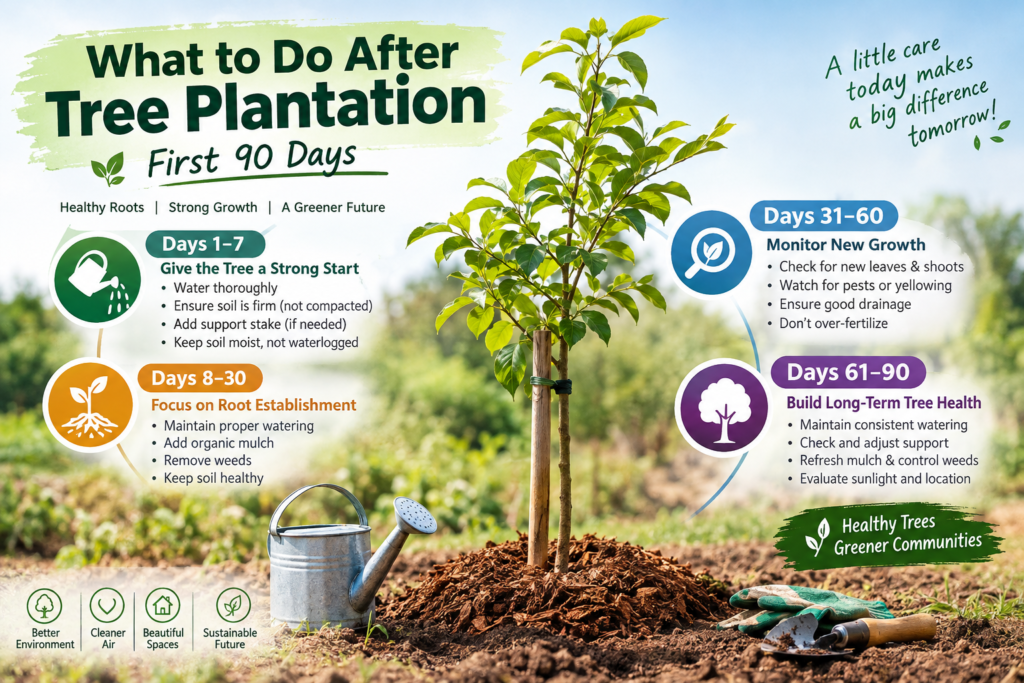
Planting a tree is only the beginning. The first 90 days after tree plantation are critical for helping a newly planted tree develop strong roots and adapt to its new environment. Proper watering, mulching, staking, soil care, and regular monitoring can significantly improve plant survival and healthy growth.
Whether you have planted trees in a home garden, commercial property, roadside area, farm, school, or landscaping project, following a simple post-plantation care routine can make a major difference.
Why Are the First 90 Days Important After Tree Plantation?
After transplantation, a tree needs time to establish its root system. The roots may be disturbed during planting, so the plant can experience transplant stress. During the first three months, the tree depends heavily on proper moisture, suitable soil conditions, and protection from environmental stress.
Good after-plantation care helps reduce transplant shock, encourages new root growth, and improves long-term tree health.
Days 1–7: Give the Tree a Strong Start
The first week requires close attention. Water the newly planted tree thoroughly after plantation so that moisture reaches the root zone. Avoid shallow watering because it may encourage roots to remain near the soil surface.
Check the soil regularly. It should remain moist but not continuously waterlogged. Excess water can reduce oxygen around the roots and may cause root problems.
Make sure the soil around the tree is firm enough to provide stability. However, avoid compacting the soil excessively.
If the tree is tall or exposed to strong winds, use a suitable support stake. The support should hold the tree upright without tightly restricting natural movement.
Days 8–30: Focus on Root Establishment
During the next few weeks, the main goal is healthy root development. Continue watering according to the plant species, soil type, weather, and local conditions.
Hot and dry weather may require more frequent watering, while rainy conditions may reduce the need for irrigation. Always check soil moisture instead of following a fixed schedule blindly.
Add a layer of organic mulch around the tree to help conserve soil moisture and reduce weed growth. Keep mulch a few inches away from direct contact with the trunk. This helps prevent excessive moisture around the bark.
Remove weeds growing close to the tree because they compete for water and nutrients.
Days 31–60: Monitor New Growth
By the second month, many healthy trees begin showing signs of establishment. Look for new leaves, shoots, or improved foliage as positive indicators.
Continue monitoring the plant for:
- Wilting or drooping leaves
- Yellowing foliage
- Dry or cracked soil
- Pest activity
- Broken branches
- Trunk damage
- Poor drainage
- Weed competition
Do not automatically add fertilizer if the tree appears weak. Fertilizing a stressed or newly transplanted tree without understanding the problem can sometimes make matters worse. First identify whether the issue is related to water, soil, pests, sunlight, or transplant stress.
Days 61–90: Build Long-Term Tree Health
During the final month of the first 90-day period, the tree should gradually become more established. Continue maintaining consistent soil moisture and inspect the plant regularly.
Check the tree support and adjust it if necessary. A stake that becomes too tight can damage the trunk as the tree grows. Remove support when the tree is stable enough to stand independently, depending on the tree and site conditions.
Refresh mulch when needed and maintain a weed-free area around the root zone.
At this stage, also evaluate the planting location. If the tree is receiving insufficient sunlight, experiencing standing water, or facing repeated physical damage, corrective action may be necessary.
Common Mistakes to Avoid After Tree Plantation
Several simple mistakes can reduce tree survival. Avoid overwatering, especially in poorly drained soil. Do not pile soil or mulch directly against the trunk. Avoid unnecessary pruning immediately after transplantation, and do not ignore signs of pest or disease problems.
Another common mistake is treating every tree the same. A fruit tree, ornamental plant, avenue tree, and native species may have different water, sunlight, soil, and maintenance requirements.
A Simple 90-Day Tree Care Checklist
For easy maintenance, follow this basic routine:
First 7 days: Water properly, check stability, and protect the tree.
Days 8–30: Maintain soil moisture, add mulch, and control weeds.
Days 31–60: Monitor new growth, pests, foliage, and soil conditions.
Days 61–90: Continue maintenance, adjust support, inspect drainage, and prepare for long-term care.
AEO: Frequently Asked Questions
What should I do immediately after planting a tree?
Water the tree thoroughly, make sure the soil is stable, and provide support if necessary. Monitor soil moisture closely during the first week.
How often should newly planted trees be watered?
There is no single watering schedule for every tree. Watering depends on the tree species, soil, temperature, rainfall, and planting location. Check the soil moisture around the root zone before watering.
Should I use fertilizer after planting a tree?
Avoid unnecessary fertilization immediately after transplantation. Focus first on root establishment, adequate moisture, and reducing transplant stress.
How long does a newly planted tree take to establish?
The establishment period varies by species, plant size, soil, climate, and planting conditions. The first 90 days are particularly important, but proper care should continue beyond this period.
GEO: Tree Plantation Care in India
Tree plantation care is especially important in Indian climates where summer heat, monsoon rainfall, and varying soil conditions can affect newly planted trees. In regions such as Saharanpur, Uttar Pradesh, selecting suitable tree species and following a local maintenance plan can improve establishment and long-term growth.
For residential gardens, commercial landscaping, institutional projects, and large plantation programs, sourcing healthy plants and following proper plantation practices can provide a stronger foundation for successful green spaces.
Conclusion
Tree plantation does not end when the tree is placed in the ground. The first 90 days are a crucial establishment period that requires proper watering, mulching, weed control, protection, and regular observation.
A consistent maintenance routine gives newly planted trees the best opportunity to develop strong roots and healthy growth. With the right care from day one, a small plantation can eventually become a valuable and lasting green landscape.