Water is one of the most valuable resources for every home, and gardens can sometimes use a significant amount of it. In India, where many regions experience hot summers, irregular rainfall, and increasing water demand, choosing a water-efficient landscape is a smart way to maintain a beautiful garden while reducing unnecessary water consumption.
Water-saving landscaping does not mean having a dry or unattractive garden. With the right plants, irrigation methods, soil preparation, and landscape design, Indian homeowners can create lush outdoor spaces that require less water and maintenance.
What Is Water-Saving Landscaping?
Water-saving landscaping is an approach to garden design that focuses on using water efficiently. It includes selecting plants that suit the local climate, improving soil moisture retention, using efficient irrigation systems, and reducing areas that require frequent watering.
The goal is simple: give plants the water they actually need without wasting it.
This approach is especially useful for homes in cities and areas where water availability can become limited during summer.
1. Choose Drought-Tolerant Plants
One of the easiest ways to reduce garden water consumption is to choose plants that can tolerate dry conditions.
Instead of selecting plants only for their appearance, consider their water requirements and suitability for your local climate. Native and climate-adapted plants are often good choices because they are better suited to local temperature and rainfall conditions.
For Indian gardens, homeowners can consider suitable trees, shrubs, ornamental grasses, palms, flowering plants, and groundcovers based on their region and soil conditions.
A good plant selection can reduce the amount of supplemental irrigation required after plants become established.
2. Use Drip Irrigation
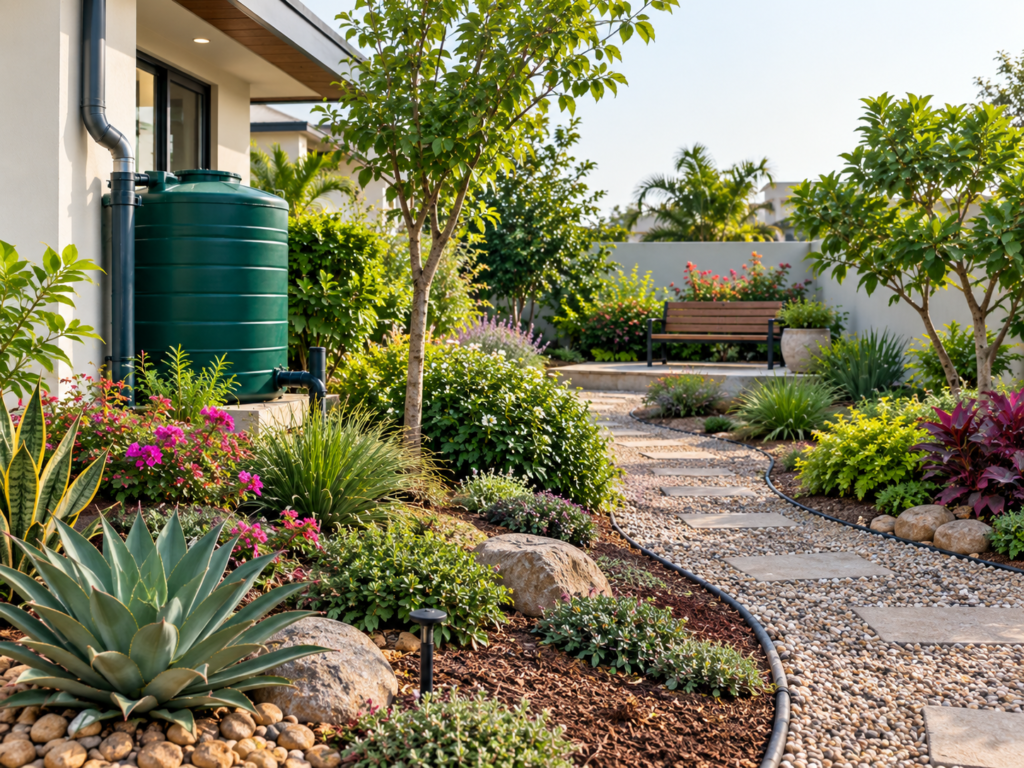
Traditional watering methods can distribute more water than necessary. Drip irrigation is a much more efficient option because it delivers water slowly and directly near the plant’s root zone.
Drip systems can be particularly useful for flower beds, hedges, shrubs, vegetable gardens, and trees. They also help minimize water loss caused by evaporation and runoff.
For larger residential landscapes, irrigation zones can be designed according to the water requirements of different plants.
3. Add Mulch Around Plants
Mulching is a simple and affordable technique for conserving moisture in the soil. Organic materials such as dry leaves, compost, bark, or other suitable mulch can be placed around plants.
A layer of mulch helps reduce evaporation, keeps the soil cooler during hot weather, suppresses weed growth, and gradually contributes organic matter as it decomposes.
Keep mulch slightly away from the direct base of tree trunks and plant stems to avoid creating excessive moisture around them.
4. Improve Soil Health
Healthy soil is an important part of water-efficient landscaping. Soil with good organic matter can hold moisture more effectively while still allowing excess water to drain.
Adding well-decomposed compost and suitable organic matter can improve soil structure. Before planting, homeowners should understand whether their garden has sandy, clay-heavy, or loamy soil and amend it appropriately.
Healthy roots are generally better able to access available moisture, helping plants cope with periods of heat and dryness.
5. Collect and Reuse Rainwater
Rainwater harvesting can be a useful addition to a water-saving landscape. During the monsoon season, rainwater can potentially be collected from suitable roof or surface runoff systems and stored for appropriate garden uses.
Before implementing a rainwater collection system, homeowners should follow local regulations and use safe storage practices.
Collected rainwater can reduce dependence on treated household water for certain non-potable gardening applications.
6. Water at the Right Time
The timing of irrigation can make a noticeable difference. Watering during the cooler parts of the day, particularly early morning, can reduce evaporation compared with watering during the hottest part of the afternoon.
Gardeners should also avoid watering automatically when the soil is already sufficiently moist. Checking soil moisture before irrigation can prevent unnecessary watering.
During rainy periods, irrigation schedules should be adjusted according to actual weather conditions.
7. Reduce Large Lawn Areas
Lawns can require regular watering, especially during hot and dry weather. If a large lawn is not necessary, consider replacing some areas with shrubs, groundcovers, ornamental grasses, trees, pathways, or decorative landscape features.
A smaller lawn can still provide an attractive open space while reducing irrigation and mowing requirements.
The best design depends on how the outdoor area will actually be used.
8. Group Plants According to Water Needs
Another smart landscaping technique is to group plants with similar water requirements together. Plants that need frequent watering should not be placed in the same irrigation zone as drought-tolerant plants.
Creating separate watering zones makes irrigation more efficient and prevents overwatering.
This method is particularly useful for larger home gardens and professionally designed landscapes.
9. Choose the Right Landscape Design
A water-saving landscape should be planned before planting begins. Consider sunlight, drainage, existing trees, soil type, wind exposure, and available water.
Trees can provide shade that helps make outdoor spaces more comfortable, while strategically placed shrubs and groundcovers can create attractive planting layers.
Using permeable pathways and suitable hardscape materials can also help rainwater move into the soil rather than becoming surface runoff.
Benefits of Water-Saving Landscaping
Water-efficient landscaping offers several long-term benefits for Indian homeowners:
- Lower garden water consumption
- Reduced irrigation costs
- Healthier plant growth
- Less frequent maintenance
- Better soil moisture retention
- Reduced water wastage
- Improved garden resilience during hot weather
- Greater use of climate-appropriate plants
- A more environmentally responsible garden
Final Thoughts
Water-saving landscaping is a practical way to create beautiful and sustainable gardens in Indian homes. From drought-tolerant plants and drip irrigation to mulching, healthy soil, rainwater harvesting, and smart garden design, small changes can make a meaningful difference.
The most effective approach is to design the landscape around the local climate and the actual needs of the plants. With thoughtful planning, homeowners can enjoy attractive green spaces while using water more responsibly.