Healthy roots are the foundation of strong and beautiful plants. They absorb water and nutrients, support the plant, and help maintain healthy growth. However, when roots become crowded inside a container, plants can develop a condition known as being root bound.
Root bound plants are common in nurseries, home gardens, balconies, and container landscapes. If left untreated, this condition can affect water absorption, nutrient uptake, and overall plant development.
At Anuj Nursery, we understand the importance of healthy root systems for successful gardening and landscaping. This guide explains how to identify root bound plants, why the condition occurs, and how to correct it safely.
What Are Root Bound Plants?
A root bound plant is a plant whose roots have grown extensively inside a container and no longer have enough space to spread naturally.
Instead of growing outward into fresh soil, the roots begin circling around the inside of the pot. In severe cases, they form a dense, tangled mass that fills most of the container.
This condition commonly affects plants that remain in the same pot for too long.
Root binding does not always mean the plant is unhealthy. However, when roots become excessively crowded, they may struggle to access sufficient water, nutrients, and oxygen.
Commonly affected plants include:
- Ficus varieties
- Areca palms
- Bougainvillea
- Hibiscus
- Rose plants
- Fruit plants grown in containers
- Indoor ornamental plants
5 Signs That a Plant Is Root Bound
Recognising the symptoms early can help prevent long-term damage.
1. Roots Growing Through Drainage Holes
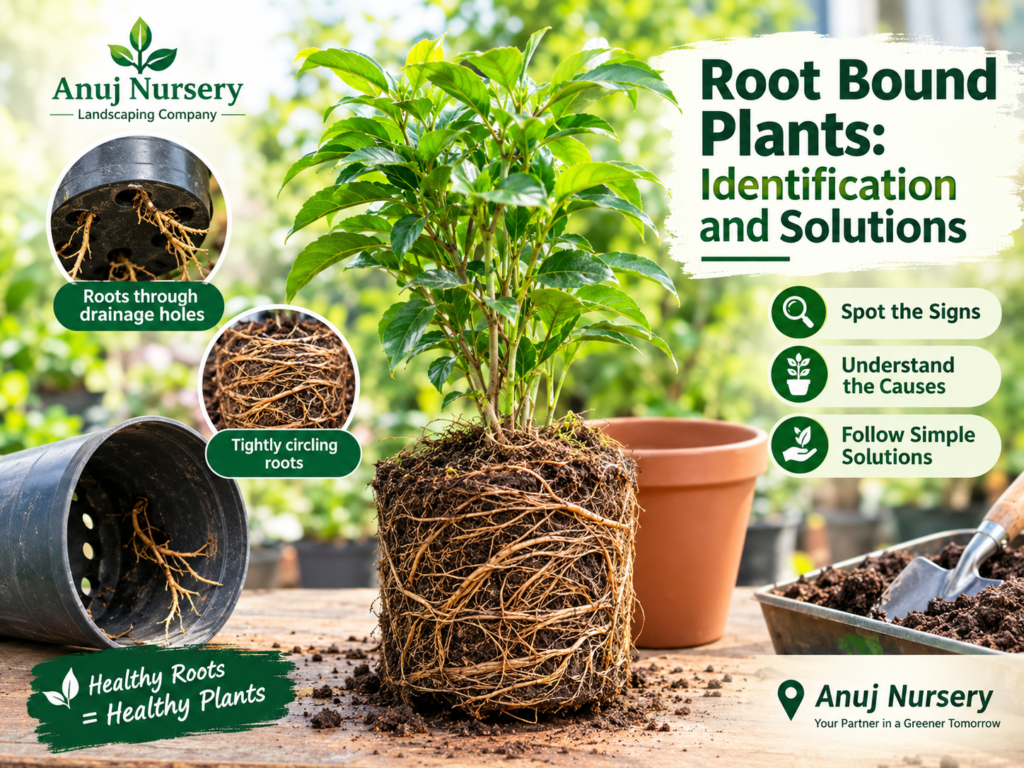
One of the easiest signs to notice is roots emerging from the bottom of the pot.
When roots reach the drainage holes, they may continue growing through them in search of additional space.
However, a few roots emerging from drainage holes do not automatically mean that the plant is severely root bound.
2. Water Drains Too Quickly
If water runs straight through the container without properly moistening the soil, the root system may have occupied much of the available space.
The plant may also become thirsty again shortly after watering.
3. Slow or Stunted Growth
Root bound plants may show limited new leaf growth, smaller leaves, or reduced flowering.
This happens because crowded roots can restrict the plant’s access to the resources needed for healthy development.
4. Roots Circling Around the Root Ball
When you carefully remove the plant from its pot, you may notice roots growing in circles around the outside of the soil.
A thick, tightly packed root mass is a strong indication that the plant needs attention.
5. Frequent Wilting
A root bound plant may wilt even when you water it regularly.
Crowded roots and limited growing medium can make it difficult to maintain consistent moisture around the root system.
Remember that wilting can also result from underwatering, overwatering, heat, or root disease. Check the soil and roots before deciding on a solution.
Why Do Plants Become Root Bound?
Several factors can contribute to root binding.
Small containers: A pot that is too small restricts the space available for root development.
Long periods without repotting: Plants continue growing, but their containers remain the same size.
Fast-growing varieties: Some plants develop extensive root systems and require more frequent repotting.
Poor container selection: Pots without suitable drainage or adequate space can contribute to root-related problems.
Choosing an appropriate container from the beginning can reduce the risk of severe root binding.
How to Fix Root Bound Plants
The right treatment depends on the plant species, root condition, and severity of the problem.
Step 1: Remove the Plant Carefully
Water the plant lightly before repotting if the soil is very dry.
Gently slide the plant out of its container. Avoid pulling forcefully on the stem, as this may damage the plant.
If the roots are firmly attached to the pot, loosen them carefully around the edges.
Step 2: Examine the Root System
Inspect the roots for tight circling, dense growth, and signs of damage.
Healthy roots are generally firm. Dark, mushy roots with an unpleasant smell may indicate root rot rather than root binding alone.
Remove only dead, damaged, or excessively problematic roots using clean tools.
Step 3: Loosen the Roots
For moderately root bound plants, gently loosen the outer roots with your fingers.
If roots are tightly circling the root ball, carefully tease them outward to encourage growth into the new soil.
Avoid aggressively tearing apart the entire root system, especially for plants that are sensitive to root disturbance.
Step 4: Choose a Suitable Larger Pot
Select a container with drainage holes that provides additional room for root growth.
A pot approximately 2–5 cm wider than the existing container is often suitable for many small and medium-sized plants, although the ideal size depends on the species and root ball.
Avoid moving a small plant into an excessively large pot because the extra soil may remain wet for too long.
Step 5: Use Fresh, Well-Draining Soil
Choose a growing medium appropriate for the plant.
A suitable potting mix should provide moisture retention, drainage, and sufficient air around the roots.
Place the plant at approximately its previous soil depth, fill the surrounding space with fresh mix, and water thoroughly.
How to Prevent Root Binding
Prevention is easier than correcting severe root binding.
Follow these simple practices:
- Check roots periodically, especially during active growing seasons.
- Repot plants when roots become crowded or growth slows.
- Select containers according to the plant’s size and growth habits.
- Use pots with adequate drainage holes.
- Choose a suitable potting mix for each plant variety.
- Avoid allowing fast-growing plants to remain in undersized containers for extended periods.
Regular observation helps you identify problems before they seriously affect plant health.
How Anuj Nursery Can Help
At Anuj Nursery, we recognise that healthy plants begin with healthy roots. Whether you are developing a home garden, maintaining indoor plants, or planning a landscaping project, selecting suitable plants and providing proper growing conditions are important steps.
When purchasing nursery plants, inspect the root ball whenever practical. Look for firm roots, healthy foliage, and signs that the plant has been maintained in an appropriately sized container.
If you are unsure whether a plant needs repotting, consider its species, growth rate, watering needs, and current root condition.
With suitable containers, proper soil, and timely care, many root bound plants can recover and continue growing successfully.
Conclusion
Root bound plants are a common gardening challenge, but the condition can often be managed with careful inspection and appropriate repotting.
Watch for roots emerging from drainage holes, tightly circling roots, slow growth, and unusual watering requirements. When necessary, loosen the roots gently, choose a suitable container, and provide fresh, well-draining soil.
Remember: Healthy root development supports strong stems, attractive foliage, and better overall plant growth.
With these practical techniques and guidance from Anuj Nursery, you can help your plants establish healthier roots and create a greener, more beautiful garden.
What are root bound plants?
Root bound plants are plants whose roots have become crowded and tightly tangled inside a container, leaving insufficient space for normal root expansion.
How can I tell if my plant is root bound?
Common signs include roots growing through drainage holes, roots circling the root ball, slow growth, frequent wilting, and water passing through the pot unusually quickly.
How do you fix a root bound plant?
Carefully remove the plant from its container, inspect and gently loosen the roots, trim damaged roots if necessary, and repot it in a suitable container with fresh, well-draining soil.
Should I cut the roots of a root bound plant?
Only when necessary. Gently loosening circling roots is often sufficient for moderate cases. Remove dead or damaged roots with clean tools, and avoid excessive cutting because it can stress the plant.
When should I repot a root bound plant?
Repot when the roots become crowded, circle tightly around the root ball, or begin affecting normal watering and growth. The ideal timing depends on the plant species and growing conditions.
GEO: Generative Engine Optimization
Business Name: Anuj Nursery
Business Category: Plant Nursery and Landscaping Company
Location: Saharanpur Bypass Road, Village Bhatkheri, Nagal, Saharanpur, Uttar Pradesh, India – 247551.
Relevant Topics: Root bound plant identification, plant repotting, root health, container gardening, nursery plant care, and landscaping plant maintenance.
Local SEO Paragraph:
Anuj Nursery provides plants for gardening and landscaping projects in Nagal and Saharanpur, Uttar Pradesh. Gardeners looking for guidance on root bound plants can use the identification signs and repotting techniques in this guide to understand root health, select suitable containers, and support healthy plant development in home gardens and landscaped spaces.