
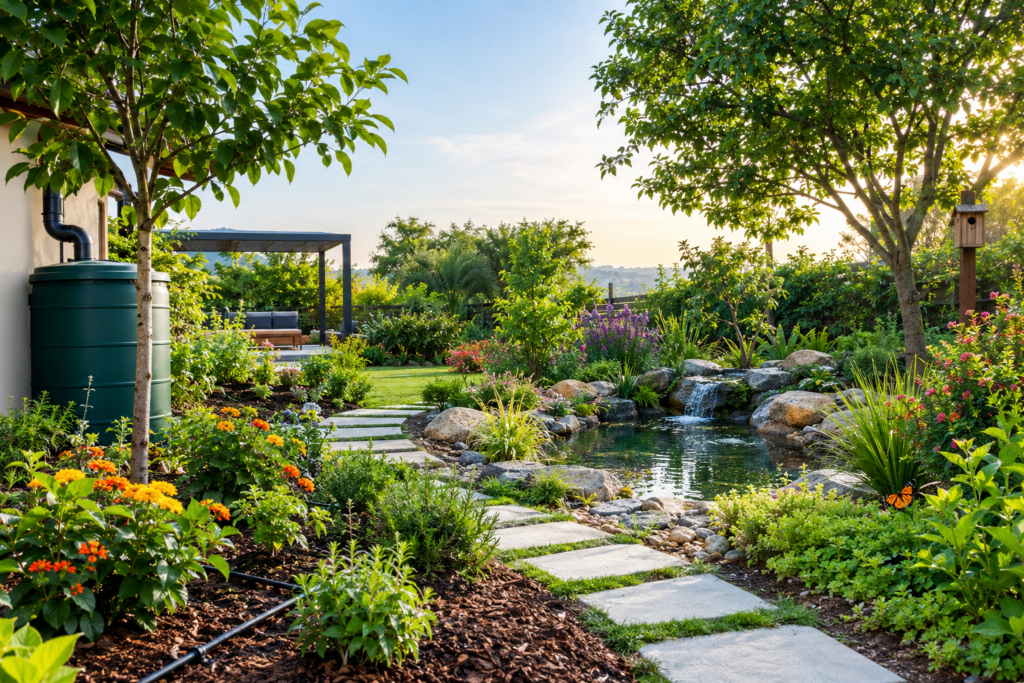
A sustainable landscape is more than a beautiful garden. It is a thoughtfully planned outdoor space that uses natural resources efficiently, supports local biodiversity, reduces maintenance requirements, and remains healthy over time. From residential gardens to commercial properties, sustainable landscaping can create attractive green spaces while reducing environmental impact.
For homeowners, builders, developers, and businesses in India, choosing the right plants, irrigation methods, soil practices, and landscape design can make a significant difference. Anuj Nursery provides a wide range of plants suitable for gardens, landscaping projects, residential properties, and commercial spaces.
What Is a Sustainable Landscape?
A sustainable landscape is designed to work with the local environment rather than against it. It considers factors such as climate, soil type, water availability, sunlight, plant selection, biodiversity, and long-term maintenance.
Instead of depending heavily on excessive watering, chemical fertilizers, or frequent replacement of plants, sustainable landscapes focus on creating healthy ecosystems that can maintain themselves with fewer resources.
A good sustainable landscape should be:
- Water-efficient
- Suitable for the local climate
- Low-maintenance
- Biodiversity-friendly
- Soil-conscious
- Energy-efficient
- Long-lasting and practical
1. Choosing the Right Plants
Plant selection is one of the most important factors in sustainable landscaping. Plants should be selected according to the local climate, soil conditions, sunlight, and available water.
Native and climate-adapted plants are often valuable choices because they can perform well under local environmental conditions. Trees, shrubs, flowering plants, ground covers, palms, and ornamental plants can be combined to create different layers of vegetation.
For Indian landscapes, selecting plants that can tolerate local heat, rainfall patterns, and soil conditions can reduce unnecessary maintenance and water requirements.
Anuj Nursery offers a variety of plants that can be considered for residential, commercial, and large-scale landscaping projects.
2. Efficient Water Management
Water conservation is another major part of sustainable landscaping. Traditional irrigation methods can sometimes waste water through evaporation, runoff, or overwatering.
Drip irrigation, soaker systems, moisture monitoring, and properly timed watering can help deliver water closer to plant roots. Mulching can also reduce evaporation and help soil retain moisture.
Rainwater harvesting is another useful strategy. Collected rainwater can potentially be used for landscape irrigation, depending on the site’s design and local requirements.
The goal is simple: give plants the water they need without unnecessary waste.
3. Healthy Soil Is the Foundation
Healthy soil supports strong root development, better nutrient availability, and improved water retention. Sustainable landscaping therefore begins below the surface.
Adding suitable organic matter, compost, and natural soil amendments can improve soil structure. Avoiding unnecessary soil disturbance can also protect soil organisms and its natural structure.
Before planting, a landscape site should ideally be assessed for drainage, soil texture, pH, compaction, and fertility. Correcting soil problems early can reduce plant stress and future maintenance.
4. Supporting Biodiversity
A sustainable landscape can become a valuable habitat for birds, butterflies, bees, and other beneficial organisms.
Using a mixture of flowering plants, trees, shrubs, and ground covers creates different habitats and food sources. Plants that produce flowers, fruits, seeds, or shelter can contribute to local biodiversity.
Avoiding unnecessary pesticide use is also important. Integrated pest management and preventive plant care can help maintain healthier landscapes while reducing chemical dependency.
5. Reducing Lawn and Maintenance Demands
Large areas of high-maintenance lawn may require regular mowing, watering, fertilization, and other resources. Sustainable landscape design can reduce excessive lawn areas and introduce trees, shrubs, ground covers, planting beds, or hardscape elements where appropriate.
Grouping plants according to their water and sunlight requirements can also make maintenance easier.
A well-designed landscape should not simply look attractive on installation day. It should remain practical and manageable as plants mature.
6. Using Sustainable Materials
Landscape sustainability also includes hardscape materials. Paths, patios, retaining walls, seating areas, and other structures should be planned carefully.
Permeable surfaces can help rainwater enter the soil instead of creating excessive surface runoff. Reusing suitable existing materials and selecting durable products can also reduce waste and future replacement requirements.
Good landscape planning balances plants, soil, water, hardscape, and human use.
7. Planning for Long-Term Growth
One common landscaping mistake is selecting plants based only on their current appearance. Sustainable landscaping requires thinking about how plants will grow over the next five, ten, or twenty years.
Trees should have enough space for their mature canopy and root systems. Plants should be positioned according to their expected height, spread, sunlight needs, and maintenance requirements.
Proper spacing reduces overcrowding, unnecessary pruning, and future transplanting.
Why Sustainable Landscaping Matters in India
India has diverse climates ranging from hot and dry regions to humid and high-rainfall areas. A landscape strategy that works in one location may not work equally well somewhere else.
Local climate, water availability, soil conditions, and plant adaptability should therefore guide landscape decisions. In places such as Saharanpur, choosing suitable plants and managing irrigation according to seasonal conditions can help create more resilient outdoor spaces.
Anuj Nursery can be a useful plant source for homeowners, landscapers, developers, and businesses looking to build attractive and practical green spaces.
Conclusion
So, what makes a landscape sustainable? It is the combination of appropriate plant selection, efficient water use, healthy soil, biodiversity, responsible materials, lower maintenance requirements, and long-term planning.
Sustainable landscaping does not mean sacrificing beauty. Instead, it means designing outdoor spaces that are beautiful, functional, resource-efficient, and better suited to their environment.
Whether you are developing a home garden, commercial property, institutional landscape, or large landscaping project, thoughtful planning from the beginning can create a greener and more sustainable outdoor environment.