
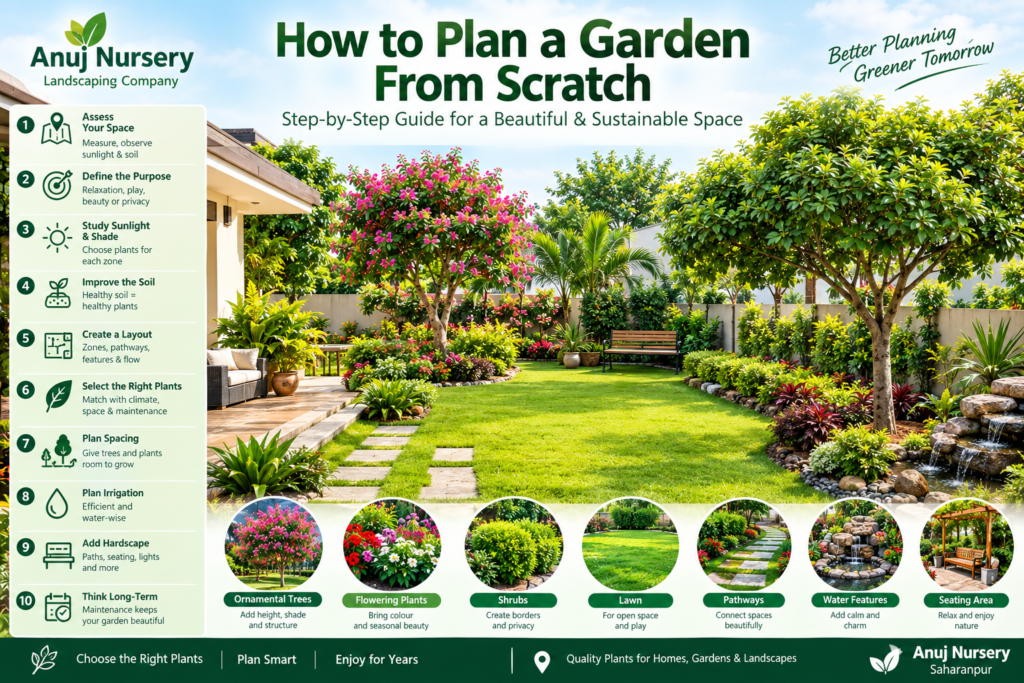
Planning a garden from scratch can transform an empty outdoor space into a beautiful, functional, and relaxing environment. However, successful garden design is not simply about buying attractive plants and placing them wherever there is space.
A good garden starts with a plan.
Before planting, you need to understand the site, sunlight, soil, drainage, available water, space requirements, plant growth habits, pathways, and maintenance needs. A well-planned garden can look attractive while remaining practical and easier to maintain over time.
This guide explains how to plan a garden from scratch, from the first site assessment to plant selection, planting, irrigation, and long-term maintenance.
Whether you are creating a small home garden, a large residential landscape, or a commercial outdoor space, these steps can help you build a more organized garden.
Step 1: Understand Your Garden Space
Start by measuring the available area.
Record the length and width of the space and identify permanent features such as:
- House walls
- Boundary walls
- Gates
- Driveways
- Existing trees
- Water points
- Outdoor structures
- Electrical areas
- Drainage points
- Pathways
Also observe the garden at different times of the day. Some areas may receive full sunlight, while others remain shaded.
Understanding the existing site will help you choose plants that are suitable for each location.
Step 2: Decide the Purpose of Your Garden
Before creating a layout, decide what you want the garden to achieve.
A garden may be designed for:
- Relaxation
- Family activities
- Children’s play
- Outdoor seating
- Privacy
- Flower displays
- Fruit production
- Shade
- Entertaining guests
- Improving property appearance
You can combine several purposes, but identifying the main objectives makes the planning process much easier.
For example, a family garden may need an open lawn, shade trees, seating, and safe pathways. A decorative garden may focus more on flowering plants, ornamental trees, shrubs, and visual focal points.
Step 3: Study Sunlight and Shade
Sunlight is one of the most important factors in garden planning.
Observe where direct sunlight falls during morning, afternoon, and evening. This information helps you divide the garden into different light zones.
Plants can then be selected according to their light requirements.
For example:
Full-sun areas can be suitable for many flowering plants, ornamental trees, palms, and sun-loving shrubs.
Partial-shade areas can support plants that prefer filtered or moderate sunlight.
Shade areas require species that can tolerate lower light conditions.
Do not select plants first and try to find suitable locations afterward. Instead, understand the site and select plants according to its conditions.
Step 4: Test and Improve the Soil
Healthy soil is the foundation of a healthy garden.
Before planting, check whether the soil is sandy, clay-heavy, loamy, compacted, or poorly drained. Soil conditions can vary considerably even within the same property.
If necessary, improve the soil with suitable organic matter and other amendments based on actual soil conditions.
Also check drainage. Water that remains around plant roots for long periods can create problems for many garden plants.
A basic soil assessment before planting can prevent many future maintenance issues.
Step 5: Create a Garden Layout
Now create a simple garden plan.
Divide the space into functional zones such as:
- Lawn area
- Flower beds
- Tree planting areas
- Shrub borders
- Vegetable or fruit section
- Seating area
- Pathways
- Privacy screening
- Feature or focal-point area
Keep frequently used areas easy to access.
Pathways should connect important parts of the garden without unnecessarily dividing the space into too many small sections.
For larger landscapes, a professional landscape plan can help determine plant quantities, spacing, irrigation routes, and hardscape requirements before installation begins.
Step 6: Choose the Right Plants
Plant selection should be based on the actual conditions of your garden.
Consider:
- Climate
- Sunlight
- Soil type
- Drainage
- Water availability
- Mature plant size
- Growth rate
- Maintenance requirements
- Flowering season
- Landscape purpose
Avoid choosing plants only because they look attractive in a nursery.
A small ornamental tree may eventually develop a wide canopy, while a compact shrub may become much larger than expected. Always consider mature size when deciding planting locations and spacing.
For gardens in Saharanpur, Nagal, and other North Indian areas, plant selection should also account for hot summers, monsoon rainfall, winter conditions, and local soil characteristics.
Anuj Nursery can be a useful source for selecting ornamental trees, flowering plants, shrubs, palms, fruit plants, and landscaping plants according to different garden requirements.
Step 7: Plan Tree and Plant Spacing
Spacing is essential for long-term garden health.
Plants placed too close together may compete for sunlight, water, nutrients, and growing space. Overcrowding can also increase pruning and maintenance requirements.
When planning spacing, consider the mature width and height of each plant.
Use larger open spaces for large trees and give smaller shrubs and flowering plants appropriate room to develop.
Layering can create a beautiful garden structure:
Tall layer: ornamental and shade trees
Middle layer: palms, shrubs, and medium plants
Lower layer: flowering plants, groundcovers, and seasonal plants
Ground layer: lawn or low-growing groundcover
This approach creates depth without making the garden look crowded.
Step 8: Plan Irrigation
Watering should be considered before planting rather than added as an afterthought.
Identify the water source and decide how different garden zones will be irrigated.
A garden may include separate irrigation requirements for:
- Lawn
- Trees
- Flower beds
- Shrubs
- Container plants
- Vegetable areas
Efficient irrigation can save water and make maintenance easier.
The watering requirements of newly planted trees and established plants can also differ, so the irrigation plan should be adaptable.
Step 9: Add Hardscape and Garden Features
A garden is not only about plants.
Hardscape elements can provide structure and functionality. Depending on the space, consider:
- Garden pathways
- Seating areas
- Pergolas
- Boundary features
- Decorative stones
- Outdoor lighting
- Water features
- Garden edging
- Small retaining structures
Keep hardscape proportional to the garden. Too much paving can reduce planting space and make a garden feel less natural.
Step 10: Plan for Maintenance
A garden should be designed according to the amount of maintenance you can realistically provide.
Maintenance may include:
- Watering
- Pruning
- Weeding
- Mulching
- Fertilization
- Lawn mowing
- Pest monitoring
- Seasonal planting
- Removing dead flowers and branches
If you have limited time, choose low-maintenance trees, shrubs, groundcovers, and irrigation systems.
A practical garden is one that continues to look good without requiring unrealistic daily attention.
Common Garden Planning Mistakes
Avoid these common mistakes when planning a garden from scratch:
Planting Without Measuring
Always measure the space before purchasing plants and materials.
Ignoring Mature Plant Size
Do not plan spacing based on the current size of nursery plants.
Choosing Plants Only for Appearance
A beautiful plant may not be suitable for your soil, climate, sunlight, or available space.
Creating Too Many Small Beds
Excessive planting borders can make a small garden look crowded and increase maintenance.
Forgetting Drainage
Poor drainage can damage roots and reduce plant health.
Planting Without an Irrigation Plan
Water access should be considered before the garden is installed.
Ignoring Future Maintenance
Every plant eventually requires some level of care. Choose a design that matches your available time and resources.
How to Plan a Garden From Scratch in India
Garden planning in India should account for regional climate, seasonal rainfall, summer temperatures, soil conditions, and water availability.
For North Indian locations such as Saharanpur and Nagal, garden designs can combine shade trees, flowering plants, ornamental shrubs, palms, seasonal flowers, and lawn areas according to site conditions.
Native and climate-adapted plants can also be considered where they fit the design objectives and maintenance requirements.
The most successful gardens are not necessarily the ones with the largest number of plants. They are gardens where plant selection, spacing, soil, water, sunlight, pathways, and maintenance work together.
Frequently Asked Questions
How do I start planning a garden from scratch?
Start by measuring the site and assessing sunlight, soil, drainage, water availability, existing structures, and available space. Then define the garden’s purpose and create a basic layout.
What should I consider before choosing garden plants?
Consider climate, sunlight, soil, drainage, mature plant size, water requirements, growth rate, maintenance needs, and the purpose of the planting area.
How do I plan a low-maintenance garden?
Choose plants suited to your local conditions, avoid overcrowding, use efficient irrigation, add appropriate mulch, and create a simple layout that is easy to access and maintain.
How much space should I leave between plants?
Spacing depends on the mature size and growth habit of each plant. Always check the expected mature height and width instead of spacing plants based only on their nursery size.
Can I plan a garden without a professional landscape designer?
Yes. Small gardens can often be planned using measurements, sunlight observations, plant information, and a simple sketch. Larger or more complex projects may benefit from professional landscape planning.
Conclusion
Learning how to plan a garden from scratch is the first step toward creating a healthy, attractive, and functional outdoor space.
Start with the site, define your goals, understand sunlight and soil, create functional zones, choose suitable plants, plan spacing and irrigation, and consider maintenance from the beginning.
A successful garden is not created by simply adding more plants. It is created by putting the right plant in the right place and designing the entire space around long-term growth and usability.
For ornamental trees, flowering plants, shrubs, palms, fruit plants, and landscaping requirements, Anuj Nursery can support garden and landscape projects in Saharanpur, Nagal, and surrounding areas.