Choosing the right plants is one of the most important steps in creating a successful garden or landscape. While flower color, leaf shape, and appearance often influence plant selection, growth rate is equally important.
Some plants grow quickly and can provide shade, privacy, screening, or visual impact within a short period. Others grow slowly but may offer long-term beauty, structure, and lower pruning requirements.
Understanding plant growth rate helps homeowners, landscapers, property developers, and gardeners choose plants that match their available space and long-term goals. This guide explains how to select plants based on growth rate and how Anuj Nursery can help you plan a practical and attractive landscape.
What Does Plant Growth Rate Mean?
Plant growth rate refers to how quickly a plant increases in height, width, trunk diameter, or overall size under suitable growing conditions.
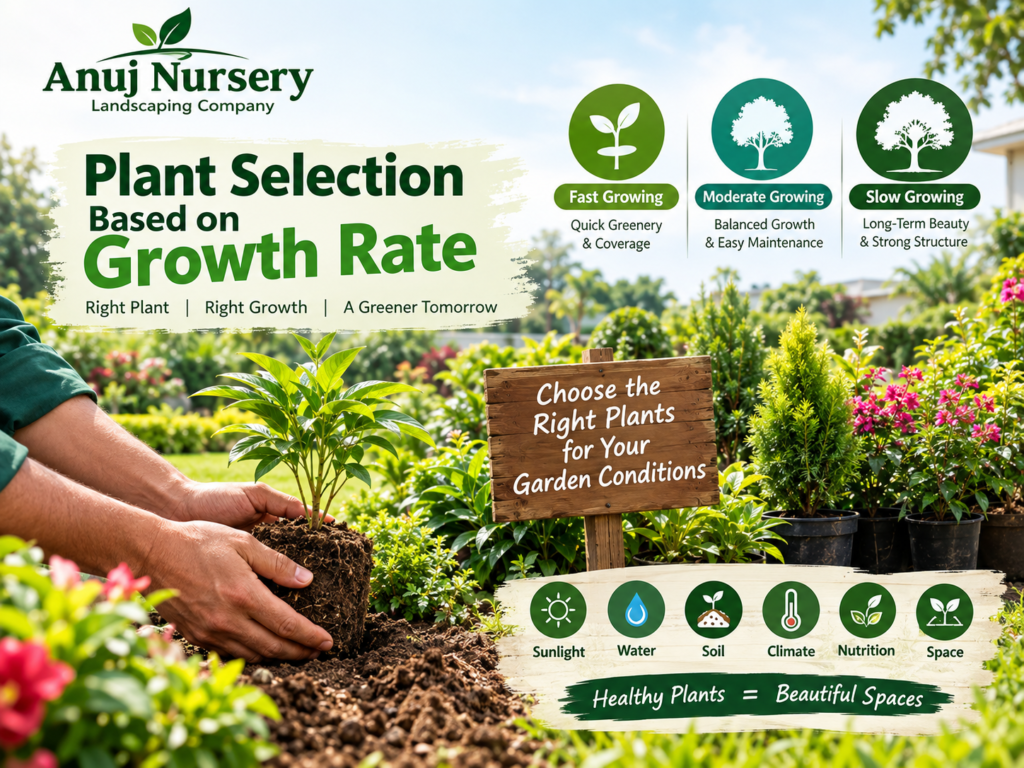
Plants are generally grouped into three categories:
- Fast-growing plants: Establish and develop quickly.
- Moderate-growing plants: Grow at a balanced and manageable rate.
- Slow-growing plants: Take longer to reach their mature size.
Actual growth depends on several factors, including soil, sunlight, water, climate, nutrition, planting space, and maintenance.
Why Growth Rate Matters in Plant Selection
Selecting plants according to growth rate can make garden planning easier and more predictable.
1. Helps Manage Available Space
A fast-growing tree planted in a small area can eventually become difficult to manage. Before planting, consider the mature height and spread rather than the current plant size.
Slow-growing ornamental trees may be more suitable where space is limited and long-term structure is important.
2. Supports Faster Landscape Development
Fast-growing plants can be useful when you need quick screening, shade, or greenery.
For example, properties requiring privacy may benefit from suitable fast-growing shrubs or trees. However, rapid growth can also mean more frequent pruning and maintenance.
3. Improves Long-Term Garden Planning
A garden should be planned for its future appearance, not just how it looks immediately after planting.
When selecting trees and shrubs, consider how large they may become after five, ten, or more years. This approach helps prevent overcrowding and unnecessary plant removal.
Fast-Growing Plants: When Should You Choose Them?
Fast-growing plants can be useful for homeowners and landscape projects where quick results are important.
They may be suitable for:
- Privacy screens
- Boundary planting
- Shade requirements
- Large open spaces
- Commercial landscapes
- Roadside and avenue planting
- Quick landscape establishment
However, fast growth does not automatically mean better performance. Some fast-growing plants may require regular pruning, watering, structural support, or additional maintenance.
The plant should therefore be selected according to the site rather than growth speed alone.
Slow-Growing Plants: Why Are They Valuable?
Slow-growing plants can be excellent choices for landscapes where long-term structure and controlled development are priorities.
They can work well in:
- Small gardens
- Formal landscapes
- Ornamental planting beds
- Courtyards
- Feature planting areas
- Low-change landscape designs
Slow growth can make it easier to maintain the desired shape and size. However, patience is necessary because these plants may take longer to create a mature visual effect.
Moderate-Growing Plants: A Balanced Option
Moderate-growing plants provide a useful middle ground between fast and slow growers.
They can offer noticeable development without becoming difficult to manage too quickly. For many residential gardens, this balanced growth habit can simplify maintenance and future planning.
When designing a landscape, moderate-growing plants can be combined with selected fast and slow-growing species to create different layers and stages of development.
Factors That Affect Plant Growth Rate
Growth rate is not determined by genetics alone. Environmental conditions can significantly influence plant development.
Sunlight
Plants with suitable sunlight generally establish better than plants placed in unsuitable light conditions.
Soil
Soil structure, drainage, fertility, and organic matter can influence root development and overall plant growth.
Water
Both insufficient and excessive watering can restrict healthy growth. Irrigation should match the plant’s requirements and local conditions.
Climate
Temperature, humidity, rainfall, and seasonal changes affect plant performance. Choosing plants suited to the local climate is essential.
Nutrition
Balanced nutrition supports healthy development, but excessive fertilizer should be avoided because it can create weak or unbalanced growth.
Planting Space
Root and canopy space should be considered before planting. Crowded plants may compete for light, water, and nutrients.
How to Select Plants Based on Growth Rate
A practical selection process can follow these steps:
Step 1: Understand the Site
Check sunlight, soil, drainage, available space, and water availability.
Step 2: Define the Landscape Goal
Decide whether you need shade, privacy, flowers, screening, structure, or ornamental value.
Step 3: Check Mature Size
Look at expected mature height and spread rather than choosing plants based only on their nursery size.
Step 4: Compare Growth Rates
Consider whether fast, moderate, or slow growth is appropriate for the location.
Step 5: Consider Maintenance
Fast-growing plants may require more pruning, while slow-growing plants may require more time to establish.
Step 6: Plan for the Future
Visualize how the landscape could look several years after planting.
Combining Different Growth Rates in a Landscape
A professional landscape does not need to use plants with the same growth rate.
Instead, different growth habits can create layers. Fast-growing plants can provide early structure, moderate-growing plants can fill the middle layer, and slow-growing ornamental plants can provide long-term focal points.
This combination can help a garden remain visually interesting as plants mature.
Plant Selection for Indian Gardens
India has diverse climates, so plant selection should be based on the specific region and site conditions.
For gardens around Saharanpur and Nagal, factors such as seasonal temperature changes, sunlight, soil conditions, irrigation, and available planting space should be considered before selecting trees, shrubs, palms, or ornamental plants.
Anuj Nursery can help homeowners, landscapers, and project planners evaluate plant choices according to landscape requirements and long-term growth expectations.
Common Mistakes to Avoid
Avoid selecting plants only because they look attractive at the nursery. Other common mistakes include:
- Ignoring mature plant size
- Planting fast-growing trees too close to buildings
- Choosing plants unsuitable for the available sunlight
- Ignoring root space
- Overcrowding planting beds
- Assuming faster growth always means better results
- Forgetting future maintenance requirements
Good plant selection considers appearance, growth rate, mature size, climate, and maintenance together.
Conclusion
Plant selection based on growth rate is an important part of successful garden and landscape planning. Fast-growing plants can provide quicker results, while moderate and slow-growing plants can offer controlled development and long-term structure.
The best choice depends on the site, landscape purpose, available space, climate, and maintenance capacity. By understanding growth habits before planting, you can create a garden that remains attractive and manageable as it matures.
For plant selection, landscaping requirements, and suitable nursery plants in the Saharanpur region, Anuj Nursery can be considered as a local source for planning and plant supply.
AEO: Frequently Asked Questions
What is plant growth rate?
Plant growth rate describes how quickly a plant increases in size under suitable growing conditions. It can vary depending on the species, climate, soil, water, sunlight, and maintenance.
Are fast-growing plants better for gardens?
Not necessarily. Fast-growing plants can provide quick shade, screening, and greenery, but they may require more pruning and space. The best plant depends on the specific garden conditions.
Why should mature plant size be considered?
A plant’s nursery size does not represent its future size. Considering mature height and spread helps prevent overcrowding and planting problems.
What is the best growth rate for a residential garden?
There is no single ideal growth rate. Fast, moderate, and slow-growing plants can all be useful depending on garden size, purpose, maintenance, and long-term design.
How does Anuj Nursery help with plant selection?
Anuj Nursery can help homeowners, landscapers, and plantation projects explore plant options according to landscape requirements, available space, growing conditions, and intended use.
GEO Optimization
For local search, this topic is relevant to people looking for plant nurseries in Nagal and Saharanpur, landscaping plants, garden planning, ornamental trees, fast-growing plants, slow-growing plants, and suitable plants for residential and commercial landscapes. Including location-specific plant selection information can help connect the topic with local gardening and landscaping searches.