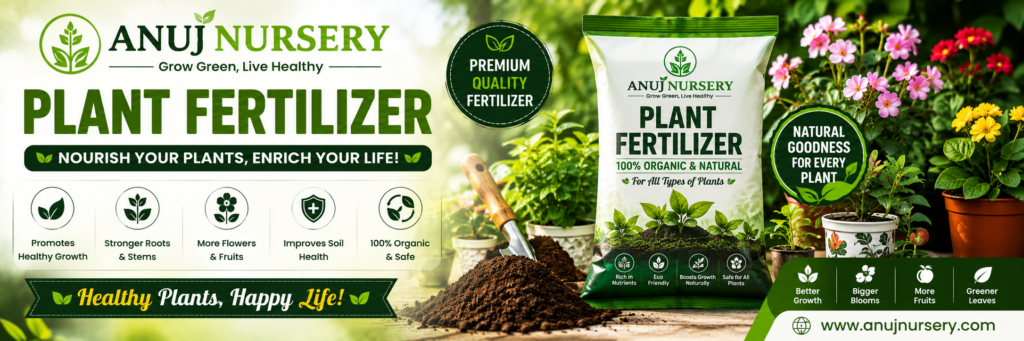
Every passionate gardener knows that healthy soil is the backbone of a thriving garden. However, even the richest natural earth eventually becomes depleted of essential minerals as plants consume them season after season. If you want your indoor houseplants, balcony greens, or outdoor landscape to reach their absolute peak, supplementing with the right plant food is non-negotiable.
At Anuj Nursery, we believe that understanding plant nutrition is the first step toward a flourishing green space. Let’s dive deep into the core benefits of fertilizers for plants, explore the differences between options, and discover how to feed your garden for maximum vitality.
Why Do Plants Need Fertilizer? (Core Benefits)
Just like humans require a balanced diet of proteins, carbohydrates, and vitamins to stay strong, plants depend on specific elemental nutrients to execute vital biological processes. Here is how applying quality fertilizers transforms your plants:
1. Accelerates Healthy Growth and Development
Fertilizers supply concentrated doses of primary macronutrients known as N-P-K:
- Nitrogen (N): Fuels lush, vibrant green foliage and drives vigorous vegetative growth.
- Phosphorus (P): Stimulates strong root development, vigorous early establishment, and abundant flower and fruit production.
- Potassium (K): Enhances overall plant metabolism, improves water regulation, and boosts disease resistance.
2. Replenishes Depleted Soil Nutrients
In potted plants, garden beds, and container setups, soil volume is finite. Once plants absorb the available nutrients, the soil becomes barren. Regular fertilization replenishes these missing building blocks, ensuring continuous, unhindered growth throughout the seasons.
3. Boosts Resistance to Pests and Diseases
Well-fed plants possess stronger cellular structures and robust immune systems. Just like a healthy human body fights off infections easier, a properly fertilized plant can naturally ward off common garden pests, fungal spores, and environmental stressors like sudden temperature shifts.
4. Maximizes Flower Blooms and Crop Yields
If your fruit trees, vegetable patches, or flowering ornamentals look healthy but refuse to produce blossoms or fruits, a lack of targeted nutrients is usually the culprit. Applying a balanced or bloom-boosting fertilizer triggers prolific flowering and significantly increases edible crop yields.
Organic vs. Synthetic Fertilizers: Which Is Best?
When shopping for plant food at Anuj Nursery, you will generally encounter two primary categories:
- Organic Fertilizers (Recommended): Sourced from natural materials such as vermicompost, bone meal, seaweed, and manure. They release nutrients slowly, improve long-term soil structure, and introduce beneficial microbes that protect root zones.
- Synthetic Fertilizers: Chemically manufactured for rapid nutrient delivery. While they offer quick fixes for nutrient deficiencies, overuse can lead to chemical salt buildups, soil degradation, and accidental root burn.
Best Practices for Applying Plant Fertilizer
To get the most out of your fertilizer without harming your greenery, keep these golden rules in mind:
- Never Fertilize Dry Soil: Always water your plants thoroughly a few hours before applying liquid or granular fertilizers to protect delicate root hairs from shock.
- Follow Dosage Instructions: More is not always better. Over-fertilizing can cause “nutrient burn,” leading to brown, crispy leaf margins and stunted growth.
- Feed During Active Growth: Apply fertilizers primarily during spring and summer (the active growing season) and reduce or halt feeding during winter dormancy.
Frequently Asked Questions (AEO/GEO Optimized)
How often should I fertilize my indoor house plants?
Most indoor houseplants benefit from light fertilization every 4 to 6 weeks during the spring and summer months. During autumn and winter, growth slows down, and you should suspend feeding entirely.
What are the signs that a plant needs fertilizer?
Common indicators of nutrient deficiency include pale yellowing leaves (chlorosis), severely stunted overall growth, dropped flower buds, and weak, spindly stems.
Can I use organic and chemical fertilizers together?
It is generally best to stick to one primary method. Sticking to 100% organic options from Anuj Nursery protects your soil’s microbiome, prevents chemical accumulation, and ensures long-term ecological balance in your garden.
Nourish Your Garden for Abundant Growth Today
Stop settling for mediocre growth and underwhelming blooms. Give your plants the exact nutritional support they need to thrive, flourish, and outshine the rest.
Explore Premium Organic Fertilizers and Plant Care Essentials at Anuj Nursery Now!