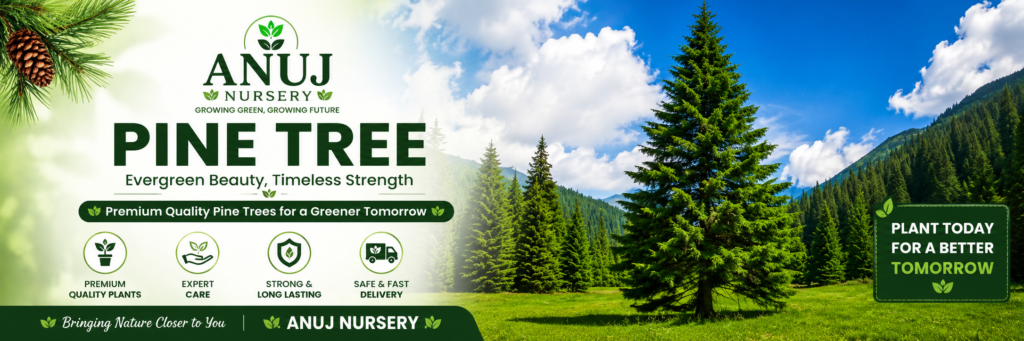
The Pine Tree is one of the most recognizable evergreen trees in the world, valued for its attractive needle-like foliage, distinctive shape, and year-round greenery. Pine trees belong to the Pinus genus, which includes many species suited to different climates and growing conditions.
For gardeners, landscapers, and plant enthusiasts in India, choosing the right pine species for the local climate is the first step toward successful cultivation. With appropriate sunlight, well-drained soil, proper watering, and regular maintenance, a suitable pine tree can become a beautiful long-term addition to a garden or landscape.
This guide explains Pine Tree care, benefits, sunlight, watering, soil, fertilizer, pruning, planting, and maintenance tips in a simple and practical way.
What is a Pine Tree?
Pine trees are evergreen conifers belonging to the Pinus genus and the Pinaceae family. They are recognized by their needle-like leaves, woody cones, and evergreen foliage.
Different pine species can vary significantly in mature size, growth rate, climate tolerance, and appearance. Some are suitable for cooler mountainous regions, while others can tolerate warmer conditions.
Therefore, before buying a Pine Tree, check the exact species, botanical name, expected mature size, and climate requirements. This is especially important when choosing a pine plant for an Indian garden.
Benefits of Growing Pine Trees
1. Year-Round Greenery
Most pine trees remain evergreen, providing attractive green foliage throughout the year.
2. Excellent Landscape Appeal
Their distinctive conical or spreading forms can add structure and visual interest to gardens, parks, resorts, farmhouses, and large landscapes.
3. Long-Term Garden Value
When planted in a suitable environment, many pine trees can become long-lived landscape features.
4. Natural Shade and Shelter
Larger pine trees can provide shade and shelter as they mature, although the amount depends on the species and planting location.
5. Attractive Coniferous Appearance
Pine trees can give gardens a cool, natural, woodland-inspired appearance and work well with other ornamental plants.
6. Suitable for Different Landscape Designs
Depending on the species, pine trees can be used as specimen trees, background plants, boundary features, or components of larger landscape projects.
Pine Tree Care Guide
Sunlight Requirements
Most pine trees prefer bright sunlight or full sun. However, sunlight requirements can vary between species.
Choose a location where the particular pine variety receives adequate daily light. Avoid heavily shaded locations unless the selected species is known to tolerate partial shade.
Young nursery-grown plants should be gradually acclimatized when moved from shade to strong outdoor sunlight.
Watering Requirements
Newly planted pine trees need regular watering while their root systems become established. Water deeply when the upper soil begins to dry.
Once established, many pine species become more tolerant of short dry periods. However, watering requirements vary with climate, soil, rainfall, tree age, and species.
Avoid excessive irrigation and permanently waterlogged soil. Good drainage is essential for healthy pine roots.
Soil Requirements
Pine trees generally perform best in well-drained soil. The exact preferred soil type and pH depend on the species.
Before planting, improve compact or poor soil with suitable organic matter while ensuring that excess water can drain away efficiently.
Fertilizer
Established pine trees usually do not require excessive fertilizer. Young plants may benefit from organic compost or a suitable slow-release fertilizer when nutrient levels are low.
Use fertilizer according to the specific species and soil condition. Avoid over-fertilization, particularly around young roots.
Pruning
Pine trees generally require less pruning than many ornamental trees. Remove dead, damaged, or hazardous branches when necessary.
Avoid cutting indiscriminately into old, bare wood because many pines have limited ability to regenerate new shoots from such areas.
For large mature trees, professional pruning may be safer and more appropriate.
Common Pine Tree Problems
Browning Needles
Browning can result from drought stress, unsuitable climate, root problems, pests, diseases, or natural aging of older needles. Check the entire growing environment before applying treatment.
Yellowing Foliage
Yellow foliage may indicate watering problems, nutrient issues, root stress, or environmental conditions.
Slow Growth
Slow growth can be normal for some pine species. Insufficient sunlight, unsuitable climate, poor soil, transplant stress, or restricted roots can also affect development.
Pest or Disease Problems
Inspect your pine regularly for unusual discoloration, damaged needles, insects, resin changes, or abnormal growth. Early identification makes management easier.
Best Places to Grow Pine Trees
Depending on the species, pine trees can be suitable for:
- Home gardens
- Hill gardens
- Farmhouses
- Parks
- Resorts
- Institutional landscapes
- Large gardens
- Commercial landscaping
- Botanical collections
Always check the mature height and spread before planting near buildings, roads, overhead wires, walls, or other trees.
Frequently Asked Questions
What is the botanical genus of Pine Tree?
Pine trees belong to the Pinus genus.
How much sunlight does a Pine Tree need?
Most pine species prefer full sunlight, but the exact requirement varies by species and climate.
How often should I water a Pine Tree?
Young trees need regular watering during establishment. Established trees generally need irrigation according to rainfall, soil moisture, temperature, and local climate.
Can Pine Trees grow in India?
Yes, but not every pine species is suitable for every part of India. Select a species adapted to your local climate, especially temperature and humidity conditions.
Can Pine Trees be grown in pots?
Some smaller or dwarf pine varieties can be grown in large containers. Large-growing species are generally better suited to open ground.
Do Pine Trees need pruning?
Most pine trees require only limited pruning. Remove dead or damaged branches and avoid unnecessary cutting into old wood.
Conclusion
The Pine Tree (Pinus) is an attractive evergreen choice for gardeners who want year-round greenery and a distinctive coniferous appearance. However, successful pine cultivation depends heavily on choosing a species that matches your local climate.
For healthy growth, provide adequate sunlight, well-drained soil, appropriate watering, balanced nutrition, and enough space for mature development. Avoid overwatering and choose the correct pine species before planting.
If you are looking to buy a healthy Pine Plant online in India, visit AnujNursery.in to explore plants for suitable gardens, landscaping projects, farmhouses, and green spaces.
At Anuj Nursery, choose plants according to your location, available space, and growing conditions for better long-term results.
Order your Pine Plant from Anuj Nursery today and add beautiful evergreen greenery to your landscape!