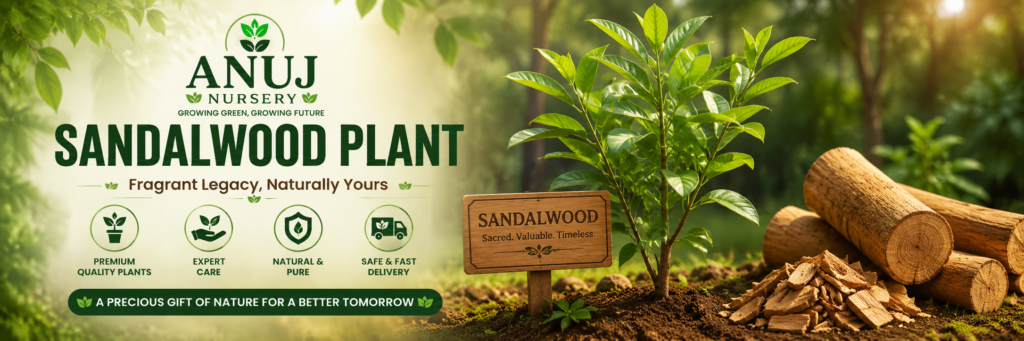
The Sandalwood Plant (Santalum album) is a highly valued evergreen tree known for its fragrant heartwood and distinctive natural aroma. Also called Indian Sandalwood, it has a long cultural and traditional association with India and is widely recognized for its aromatic wood.
Growing sandalwood successfully requires more than simply planting a tree and watering it. Santalum album is a hemiparasitic plant, meaning it obtains some nutrients and water through connections with the roots of suitable nearby host plants. Therefore, selecting an appropriate planting environment is an important part of sandalwood cultivation.
This complete guide explains Sandalwood Plant care, sunlight, soil, watering, host plants, benefits, maintenance, and growing tips for gardeners and plant enthusiasts in India.
What is a Sandalwood Plant?
The Sandalwood Plant, scientifically known as Santalum album, is an evergreen tree belonging to the Santalaceae family. It is commonly known for its fragrant heartwood, which develops as the tree matures.
One important characteristic of sandalwood is its hemiparasitic growth habit. Unlike ordinary plants, sandalwood can obtain part of its nutritional requirements by connecting its roots to suitable host plants.
This means that simply placing a sandalwood plant in an isolated pot may not provide ideal long-term growing conditions. A suitable host plant and healthy soil environment can be important for successful establishment.
Benefits of Growing Sandalwood Plant
1. Highly Fragrant Wood
Sandalwood is famous for the distinctive fragrance of its mature heartwood. This aromatic quality is one of the tree’s most recognized characteristics.
2. Attractive Evergreen Tree
Sandalwood can provide year-round greenery when grown under suitable climatic conditions, making it useful for gardens and landscape projects.
3. Cultural Importance
Indian Sandalwood has deep cultural and traditional significance in India and has historically been associated with ceremonies, crafts, fragrance, and traditional practices.
4. Useful Aromatic Resource
Mature sandalwood heartwood is valued for its aroma and has applications in traditional products, perfumery, incense, and other aromatic uses.
5. Long-Term Tree Value
A healthy sandalwood tree can become a valuable long-term addition to an appropriate landscape or plantation setting.
Sandalwood Plant Care Guide
Sunlight Requirements
Sandalwood generally performs well in bright sunlight to partial shade, depending on the local climate and growing conditions.
Choose a location with good natural light and avoid extremely shaded areas. Young plants may benefit from some protection during periods of extreme heat.
Soil Requirements
Sandalwood prefers well-drained soil. Good drainage is essential because prolonged waterlogging can damage roots.
A fertile soil containing organic matter can support healthy establishment. Before planting, improve poor soil with mature compost or suitable organic manure.
The soil should allow both water and air to move around the root zone.
Watering Requirements
Young sandalwood plants require regular watering while establishing. Water when the soil begins to dry rather than keeping it continuously wet.
During hot and dry weather, irrigation may need to be increased. During periods of heavy rainfall, reduce additional watering to prevent waterlogging.
Once established, watering should be adjusted according to rainfall, soil type, temperature, and plant age.
Host Plant Requirement
One of the most important facts about growing Santalum album is its hemiparasitic nature.
Sandalwood can form root connections with nearby host plants. These host relationships can help provide water and nutrients required for healthy growth.
For this reason, growers should consider a suitable host-plant arrangement rather than treating sandalwood like a completely independent tree.
Fertilizer
Use well-decomposed organic compost to improve soil quality. If additional fertilizer is needed, use a balanced product according to soil conditions and professional growing recommendations.
Avoid excessive fertilizer because overfeeding can damage roots and disturb healthy plant development.
Pruning
Young sandalwood plants generally require only light maintenance pruning. Remove dead, damaged, or diseased branches when necessary.
Avoid unnecessary heavy pruning, particularly when the tree is young and developing its natural structure.
Climate and Planting Location
Sandalwood prefers warm tropical and subtropical conditions. Select a location that provides suitable temperatures, good sunlight, and well-drained soil.
Before planting, consider the mature size of the tree and provide adequate space away from buildings, electrical lines, and other large structures.
For commercial or large-scale cultivation, growers should also check the applicable local forestry, ownership, harvesting, transport, and sale regulations because rules can vary by state and situation in India.
Common Sandalwood Plant Problems
Yellow Leaves
Yellowing may result from overwatering, poor drainage, nutrient problems, transplant stress, or environmental conditions. Check the soil and root zone before applying fertilizer.
Slow Growth
Sandalwood may grow slowly during establishment. Inadequate sunlight, unsuitable host plants, poor soil, insufficient moisture, or unfavorable climate can also affect growth.
Root Problems
Waterlogged soil can create serious root problems. Always provide good drainage and avoid excessive irrigation.
Frequently Asked Questions
What is the botanical name of Sandalwood?
The botanical name of Indian Sandalwood is Santalum album.
Does Sandalwood need a host plant?
Yes. Santalum album is hemiparasitic and can form root connections with suitable host plants to obtain part of its water and nutrients.
How much sunlight does Sandalwood need?
Sandalwood generally prefers good sunlight, although young plants may benefit from some protection in extremely hot conditions.
How often should I water Sandalwood?
Water young plants when the soil begins to dry. Adjust irrigation according to rainfall, temperature, soil drainage, and plant age.
Can Sandalwood be grown in India?
Yes. Indian Sandalwood is naturally associated with the Indian subcontinent and can be cultivated in suitable climates. Local growing conditions and applicable regulations should be checked before planting for commercial purposes.
Conclusion
The Sandalwood Plant (Santalum album) is a unique and highly valued evergreen tree with distinctive aromatic heartwood and significant cultural importance. Its special hemiparasitic growth habit makes it different from many ordinary garden trees, so proper host-plant planning is an important part of cultivation.
For healthy growth, provide suitable sunlight, well-drained soil, appropriate watering, organic nutrition, and compatible host plants. Choose a location suited to the local climate and allow sufficient space for long-term development.
If you are looking to buy a healthy Sandalwood Plant online in India, visit AnujNursery.in and explore the available plant collection. Choose plants according to your climate, garden space, and cultivation requirements.
Order your Sandalwood Plant from Anuj Nursery today and add a beautiful, aromatic, and culturally significant tree to your green space!