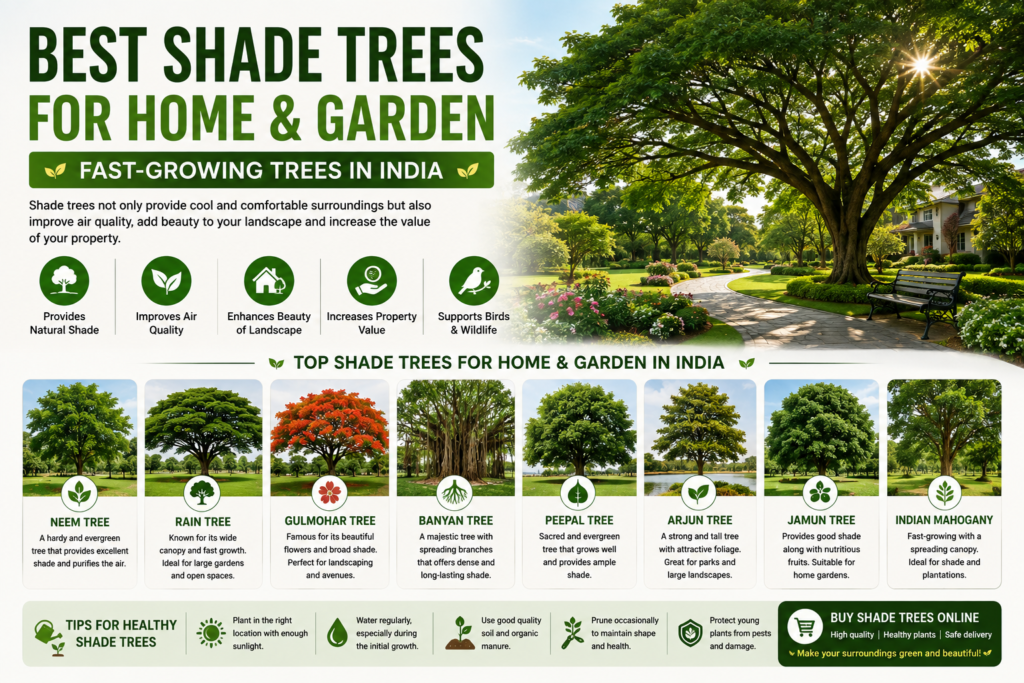
Choosing the best shade trees for home and garden can transform an outdoor space into a cooler, greener and more attractive environment. In India, where summers can be hot in many regions, trees with broad canopies can provide valuable natural shade while improving the overall appearance of a garden or landscape.
However, choosing a shade tree should not be based only on how quickly it grows. You should also consider the tree’s mature size, canopy spread, sunlight requirements, root growth, soil conditions and the amount of space available.
Best shade trees for home garden include red maple, red oak, tulip tree, and eastern redbud. These provide dense canopy cover that cools outdoor spaces and homes, lowering energy costs while adding seasonal beauty with vibrant foliage or spring blooms. Red maple offers reliable fall color and adapts well to varied soils, red oak delivers broad, long-lasting shade, tulip tree grows quickly for faster results, and redbud suits smaller yards with dappled light. Choose based on your climate, soil, and space for low-maintenance, wildlife-friendly results that enhance comfort and curb appeal for decades.
What Are the Best Shade Trees for Indian Gardens?
The best shade tree depends on your location, garden size and purpose. Some trees are suitable for small residential gardens, while large varieties are better for farms, parks and spacious properties.
Popular shade trees for Indian conditions include:
- Neem Tree
- Rain Tree
- Gulmohar Tree
- Banyan Tree
- Peepal Tree
- Arjun Tree
- Indian Mahogany
- Jamun Tree
Before planting any large tree near your home, check its expected mature height and canopy spread.
1. Neem Tree
Neem is one of the most popular trees in India and can be an excellent choice for spacious gardens, farms and open landscapes. It develops a broad canopy as it matures and can provide substantial shade.
Neem generally prefers plenty of sunlight and well-drained soil. Because it can become a large tree, provide sufficient space between the plant, buildings, walls and utility lines.
2. Rain Tree
Rain Tree is a large, spreading tree known for its wide canopy and strong shade potential. It is particularly suitable for large gardens, farms, parks and landscape projects.
Because of its eventual size, Rain Tree is not usually the best choice for a very small residential garden. Give it plenty of room to develop naturally.
3. Gulmohar Tree
Gulmohar is popular for both shade and its attractive flowers. During its flowering season, its bright blooms can make a landscape visually striking.
It is better suited to larger gardens and open areas where the tree has enough space to develop its canopy. Regular care during the early growth stage can help establish a healthy plant.
4. Arjun Tree
Arjun is a large Indian tree commonly used in landscaping and plantations. Its attractive foliage and mature canopy make it a potential option for larger outdoor spaces.
When planting an Arjun tree, choose a location with adequate sunlight and sufficient room for long-term growth.
5. Jamun Tree
Jamun is a popular Indian fruit tree that can also provide useful shade once mature. It can be a good option for larger home gardens, farms and orchards.
One advantage of choosing a fruit-bearing shade tree is that it can provide both an attractive canopy and fruit when grown under suitable conditions.
Fast-Growing Shade Trees in India
If you want shade quickly, it can be tempting to choose the fastest-growing tree available. But faster growth is not always better.
Fast-growing trees may require more space, pruning and long-term management. Before buying a fast-growing shade tree, consider:
- Mature tree height
- Canopy width
- Root development
- Distance from buildings
- Water availability
- Local climate
- Soil drainage
The goal should be to choose a tree that will remain suitable for your property even after many years.
Discover the Best Shade Trees for Home & Garden to create cooler, greener, and more comfortable outdoor spaces. Fast-Growing Trees in India such as Neem, Arjun, Rain Tree, and Kadam can provide excellent shade and enhance landscapes. Choose suitable species based on available space, sunlight, soil conditions, climate, and maintenance requirements for healthy growth.
Best Shade Trees for Home & Garden include fast-growing trees such as Neem, Rain Tree, Gulmohar, Arjun, Jamun, and Amaltas. These trees provide valuable shade, improve the outdoor environment, and enhance garden beauty. Choosing the right shade tree depends on available space, soil, sunlight, water requirements, and the local climate of your area in India.
How to Choose a Shade Tree for Your Home
Consider Your Garden Size
Small gardens should generally use smaller or narrow-growing tree varieties. Large spreading trees can become difficult to manage when planted in restricted spaces.
Check Sunlight Requirements
Most shade trees require good sunlight during their growth period. Select a location where the plant receives suitable light according to its species.
Consider the Root System
Avoid planting large trees too close to foundations, walls, underground pipes or other structures. Always consider the tree’s mature root and canopy development.
Think About Maintenance
A tree may look small when you purchase it, but it can become much larger over time. Consider future pruning, watering, leaf fall and general maintenance.
How to Plant a Shade Tree
Choose a location with adequate sunlight, good drainage and enough room for future growth. Dig a hole wider than the plant’s root ball and place the tree carefully at an appropriate depth.
Fill the hole with suitable soil and water thoroughly after planting. A layer of organic mulch around the planting area can help maintain soil moisture, but avoid placing mulch directly against the tree trunk.
Water regularly during the establishment period. As the tree grows, adjust watering according to the species, soil and local weather conditions.
Benefits of Shade Trees for Home & Garden
Shade trees can provide several practical and visual benefits:
- Create cooler outdoor areas
- Improve garden appearance
- Provide habitat for birds and insects
- Add greenery to residential landscapes
- Support attractive landscape design
- Provide shade for outdoor seating areas
- Some varieties can provide fruits or flowers
A mature tree can become a long-term feature of your property, so selecting the right species is important.
The best tree for shade in India depends on your climate and available space, but species like neem, banyan, rain tree, and peepal are excellent choices. These trees provide dense shade, improve air quality, and help reduce heat. With proper care, they create a cool, comfortable, and eco-friendly outdoor environment.
Banyan Tree Care
Banyan tree care requires plenty of sunlight, well-drained soil, and regular watering during the early growth stage. Once established, the tree is relatively low-maintenance and can tolerate dry conditions. Provide enough space for its extensive roots and aerial branches to develop. Regular pruning can help maintain its shape and prevent unwanted growth near buildings or pathways.
Buy Shade Trees Online in India
If you want to buy shade trees online in India, choose a nursery that provides clear information about plant varieties, size, growing requirements and delivery.
Before ordering, check whether the selected tree is appropriate for your climate and available space. A healthy plant of the right variety is more important than simply choosing the largest or cheapest plant.
For home gardens, consider the tree’s mature size before purchasing. For farms and larger landscapes, you can consider broader-canopy varieties that have sufficient room to grow.
Frequently Asked Questions
Which is the best shade tree for a home garden?
Neem, Jamun and suitable ornamental trees can be good options depending on garden size, climate and available space. Large trees such as Rain Tree are better suited to spacious properties.
Which trees grow fast and provide shade in India?
Rain Tree, Neem and some other suitable species can develop substantial canopies as they mature. Growth speed depends on the variety, climate, soil, water and care.
Which shade tree is best for a small garden?
For a small garden, choose a tree with a manageable mature size rather than simply selecting a fast-growing large tree. The available space should determine your choice.
Can I plant a shade tree near my house?
It depends on the tree species and planting distance. Large trees should generally be kept away from foundations, walls, power lines and underground utilities because their canopy and root systems can expand significantly.
How often should a newly planted shade tree be watered?
Newly planted trees generally need consistent moisture while their roots establish. The exact watering frequency depends on the tree species, soil type, temperature and rainfall.
Final Thoughts
The best shade trees for home and garden are those that match your available space, local climate and long-term landscaping goals. Neem, Rain Tree, Gulmohar, Arjun and Jamun are popular choices for different types of Indian landscapes.
Don’t choose a tree only because it grows quickly. Consider its mature size, root system, maintenance requirements and suitability for your property before planting.
With the right tree, proper planting location and regular early care, you can create a greener and more comfortable outdoor space for years to come.