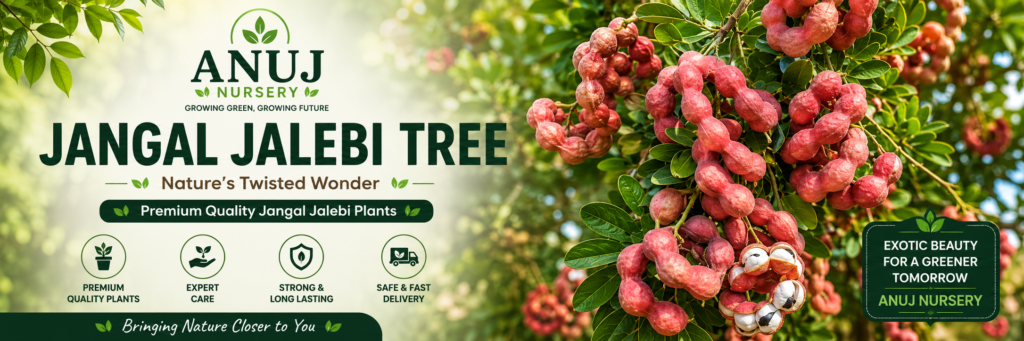
The Jungle Jalebi Tree (Pithecellobium dulce) is a fast-growing, attractive tree known for its distinctive curled seed pods, edible pulp, thorny branches, and ability to adapt to warm climates. Also known as Manila Tamarind, this tree is commonly grown in tropical and subtropical regions and can be a useful choice for farms, large gardens, roadsides, and open landscapes.
For gardeners and plant lovers in India, the Jungle Jalebi Tree can provide greenery, shade, and natural habitat while requiring relatively simple maintenance after establishment. However, because it can develop into a sizeable tree, proper planting location and regular early care are important.
This complete guide explains Jungle Jalebi Tree care, benefits, sunlight, watering, soil, fertilizer, pruning, planting, and maintenance tips in an easy-to-understand format.
What is a Jungle Jalebi Tree?
The scientific name of Jungle Jalebi is Pithecellobium dulce. It is commonly known as Jungle Jalebi, Manila Tamarind, Madras Thorn, and Monkeypod-related regional names in different locations.
The tree belongs to the Fabaceae family and can grow into a spreading tree with small leaves and characteristic pods. When mature, its pods contain a soft pulp surrounding the seeds.
The name “Jungle Jalebi” comes from the curled or twisted appearance of its seed pods, which can resemble jalebi.
Benefits of Growing Jungle Jalebi Tree
1. Fast-Growing Shade Tree
Jungle Jalebi can develop a broad canopy and provide shade, making it suitable for spacious outdoor areas.
2. Attractive Seed Pods
Its distinctive twisted pods give the tree ornamental interest and make it easy to recognize.
3. Edible Fruit Pulp
The mature pods contain edible pulp that is traditionally consumed in some regions. The taste can vary from sweet to mildly acidic.
4. Supports Biodiversity
The tree can provide shelter and food resources for insects, birds, and other organisms, contributing to local biodiversity.
5. Adaptable Tree
Jungle Jalebi is known for tolerating warm and relatively dry conditions once established, making it suitable for many appropriate Indian climates.
6. Useful for Large Landscapes
Its growth habit makes it suitable for farms, farmhouses, parks, roadsides, and large open landscapes.
Jungle Jalebi Tree Care & Benefits include planting it in a sunny location with well-drained soil and providing regular watering during establishment. This hardy tree is valued for its attractive foliage, shade, and edible, curled fruits. It is suitable for gardens, farms, roadsides, and larger landscapes, offering greenery and beauty with proper care and maintenance.
Jungle Jalebi Tree Care Guide
Sunlight Requirements
Jungle Jalebi grows best in full sunlight. Select an open location where the tree can receive several hours of direct sunlight each day.
Good sunlight supports healthy foliage, strong growth, and canopy development.
Avoid heavily shaded planting locations if you want vigorous growth.
Watering Requirements
Young Jungle Jalebi plants require regular watering while they establish their root systems. Water deeply when the upper layer of soil begins to dry.
Once established, the tree can tolerate relatively dry conditions. However, additional watering may be useful during prolonged periods of heat and drought.
Avoid excessive irrigation and standing water because poor drainage can cause root problems.
Soil Requirements
Jungle Jalebi can adapt to different soil conditions but performs best in well-drained soil.
Before planting, improve poor soil with mature compost or well-decomposed organic manure. Avoid areas where water remains stagnant after rainfall.
Good drainage is particularly important for young plants.
Fertilizer Requirements
Young trees can benefit from organic compost or well-decomposed manure during the growing season.
If additional fertilizer is needed, use a balanced fertilizer based on soil conditions and follow the manufacturer’s instructions.
Avoid excessive fertilizer because it can cause nutrient imbalance or root damage.
Pruning Requirements
Jungle Jalebi can develop a spreading canopy, so pruning may be useful for maintaining its shape and removing unwanted branches.
Remove dead, damaged, diseased, or crossing branches when necessary. Because the tree can have thorns, use appropriate protective equipment when pruning.
Best Place to Plant Jungle Jalebi Tree
Because Jungle Jalebi can become a large, spreading tree, select a location with adequate space.
It can be suitable for:
- Farms
- Farmhouses
- Large gardens
- Parks
- Roadsides
- Open landscapes
- Plantation areas
- Institutional campuses
Avoid planting too close to buildings, overhead electrical wires, narrow pathways, or underground utilities.
Common Jungle Jalebi Tree Problems
Yellow Leaves
Yellow leaves can be caused by overwatering, poor drainage, nutrient deficiencies, transplant stress, or environmental changes.
Check soil moisture and drainage before applying fertilizer.
Slow Growth
Young plants may initially grow slowly while establishing roots. Poor sunlight, compacted soil, inadequate moisture, or transplant shock can also affect development.
Thorny Branches
Jungle Jalebi can have thorns, so take care when planting near children’s play areas, narrow walkways, or frequently used garden paths.
Frequently Asked Questions
What is the botanical name of Jungle Jalebi?
The botanical name of Jungle Jalebi is Pithecellobium dulce.
Why is it called Jungle Jalebi?
The tree gets its common name from its distinctive curled seed pods, which can resemble the shape of jalebi.
Does Jungle Jalebi need full sunlight?
Yes. Jungle Jalebi generally performs best in full sunlight.
How often should I water Jungle Jalebi?
Young plants require regular watering during establishment. Established trees generally need less frequent irrigation and can tolerate relatively dry conditions.
Can Jungle Jalebi grow in India?
Yes. Pithecellobium dulce is well adapted to many warm tropical and subtropical regions and is commonly found in India.
Can Jungle Jalebi be grown in a home garden?
It can be grown in a spacious garden, but its mature size and thorny branches should be considered before planting.
Conclusion
The Jungle Jalebi Tree (Pithecellobium dulce) is a distinctive and adaptable tree that can bring greenery, shade, attractive pods, and ecological value to suitable outdoor spaces. Its relatively easy maintenance after establishment makes it an interesting option for farms, large gardens, farmhouses, parks, and landscapes in appropriate Indian climates.
For healthy growth, provide full sunlight, well-drained soil, appropriate watering, organic nutrition, and sufficient space. Regular inspection and occasional pruning can help maintain a strong and attractive tree.
If you are looking to buy a healthy Jungle Jalebi Plant online in India, visit AnujNursery.in and explore the available plant collection for your garden, farmhouse, farm, or landscaping project.
Choose a healthy plant suited to your local climate and provide proper care from planting onwards.
Order your Jungle Jalebi Plant from Anuj Nursery today and add a unique, fast-growing tree to your green space!