
Introduction
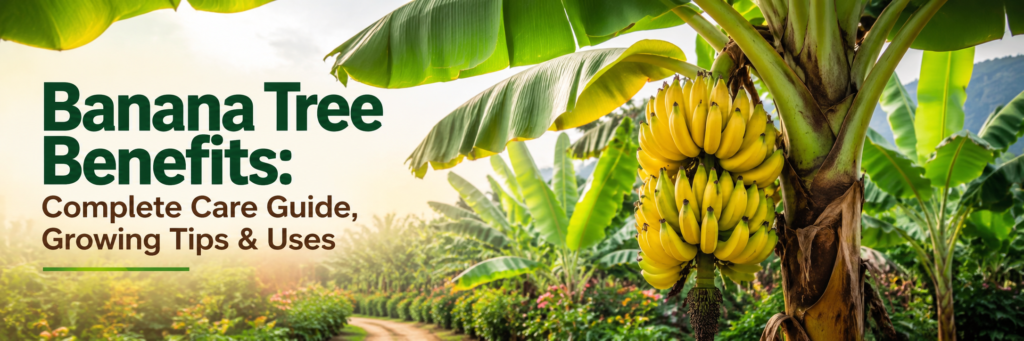
The Banana Tree (Musa spp.) is one of the most popular fruit plants grown across tropical and subtropical regions. Known for its fast growth, nutritious fruits, and attractive green foliage, it is an excellent choice for home gardens, farms, and landscapes. The Banana Tree Benefits go beyond fruit production—it also improves soil health, provides shade, supports sustainable farming, and has many traditional medicinal uses.
Bananas are rich in potassium, vitamin B6, vitamin C, fiber, and antioxidants. Every part of the banana plant, including its fruit, leaves, flowers, stem, and roots, has practical value. Whether you want fresh fruits for your family or wish to add a beautiful tropical plant to your garden, the banana tree is a perfect option.
What is a Banana Tree?
Although commonly called a tree, the banana plant is actually the world’s largest herbaceous plant. It belongs to the Musaceae family and grows from an underground rhizome. A healthy banana plant can produce fruits within 9–15 months under suitable growing conditions.
Banana plants are cultivated throughout India because they adapt well to warm climates and require relatively simple care.
Banana Tree Benefits include providing nutritious fruits, attractive tropical greenery, and useful shade for gardens and outdoor spaces. Banana plants grow quickly in warm, humid conditions and can be cultivated in home gardens, farms, and containers with suitable care. They prefer fertile, well-drained soil, regular watering, and plenty of sunlight for healthy growth.
Top 10 Banana Tree Benefits
1. Rich Source of Nutrients
Bananas contain potassium, magnesium, dietary fiber, and vitamins that support heart health and digestion.
2. Fast Growing Fruit Plant
Banana plants grow rapidly and begin producing fruit much earlier than many other fruit trees.
3. Improves Air Quality
The large green leaves help absorb dust and improve the surrounding environment.
4. Beautiful Garden Plant
Its lush tropical appearance makes it ideal for landscaping and home gardens.
5. Supports Sustainable Farming
Banana leaves and stems can be composted, enriching the soil naturally.
6. Medicinal Importance
Different parts of the banana plant are traditionally used in various natural remedies.
7. Eco-Friendly Plant
The plant produces biodegradable leaves that are often used as natural serving plates.
8. Helps Prevent Soil Erosion
Its extensive root system stabilizes the soil and reduces erosion.
9. Suitable for Home Gardening
Dwarf banana varieties grow successfully in containers and small spaces.
10. Excellent Commercial Crop
Bananas remain one of the most profitable fruit crops for farmers in many regions.
How to Grow a Banana Tree
Growing a banana tree is simple when basic requirements are met.
Sunlight
Provide at least 6–8 hours of direct sunlight every day.
Soil
Use fertile, well-drained soil rich in organic matter.
Watering
Keep the soil consistently moist without allowing waterlogging.
Temperature
Bananas thrive between 20°C and 35°C.
Fertilizer
Apply compost or balanced fertilizer regularly during the growing season.
Banana Tree Care Guide
Proper care ensures healthy growth and better fruit production.
- Water regularly during hot weather.
- Add organic compost every few months.
- Remove dry or damaged leaves.
- Protect young plants from strong winds.
- Keep the area free from weeds.
- Monitor for pests and diseases regularly.
Water Requirement
Young banana plants require frequent watering. Mature plants also need consistent moisture, especially during flowering and fruit development.
Sunlight Requirement
Bananas require full sunlight. Insufficient sunlight may reduce growth and fruit production.
Best Soil for Banana Trees
The ideal soil should be:
- Rich in organic matter
- Well-drained
- Slightly acidic to neutral (pH 5.5–7.0)
Common Problems and Solutions
Yellow Leaves
Usually caused by nutrient deficiency or overwatering.
Root Rot
Occurs due to poor drainage. Improve drainage and reduce watering.
Slow Growth
Often results from inadequate sunlight or lack of nutrients.
Pest Attack
Inspect plants regularly and use suitable pest management practices.
Banana Tree Uses
Banana plants provide many useful products:
- Fresh fruits
- Banana leaves for serving food
- Banana flowers used in cooking
- Fiber from stems
- Organic compost material
Why Choose Banana Plants from Anuj Nursery?
At Anuj Nursery, healthy banana plants are grown with proper care to ensure strong roots and vigorous growth. Customers receive quality plants, secure packaging, and reliable delivery, making it easier to establish a healthy fruit garden.
Frequently Asked Questions
Is a banana tree easy to grow?
Yes. It is one of the easiest fruit plants to grow in warm climates.
How often should I water a banana tree?
Water regularly while ensuring the soil drains well.
Can banana trees grow in pots?
Yes. Dwarf varieties are suitable for large containers.
How long does it take to produce fruit?
Most banana plants produce fruit within 9–15 months, depending on the variety and growing conditions.
What fertilizer is best?
Organic compost combined with a balanced fertilizer supports healthy growth.
Conclusion
The Banana Tree Benefits make it one of the most valuable fruit plants for both home gardeners and commercial growers. From nutritious fruits and attractive foliage to environmental and agricultural advantages, banana plants offer exceptional value. By providing proper sunlight, watering, fertile soil, and regular care, you can enjoy healthy growth and abundant harvests for years.