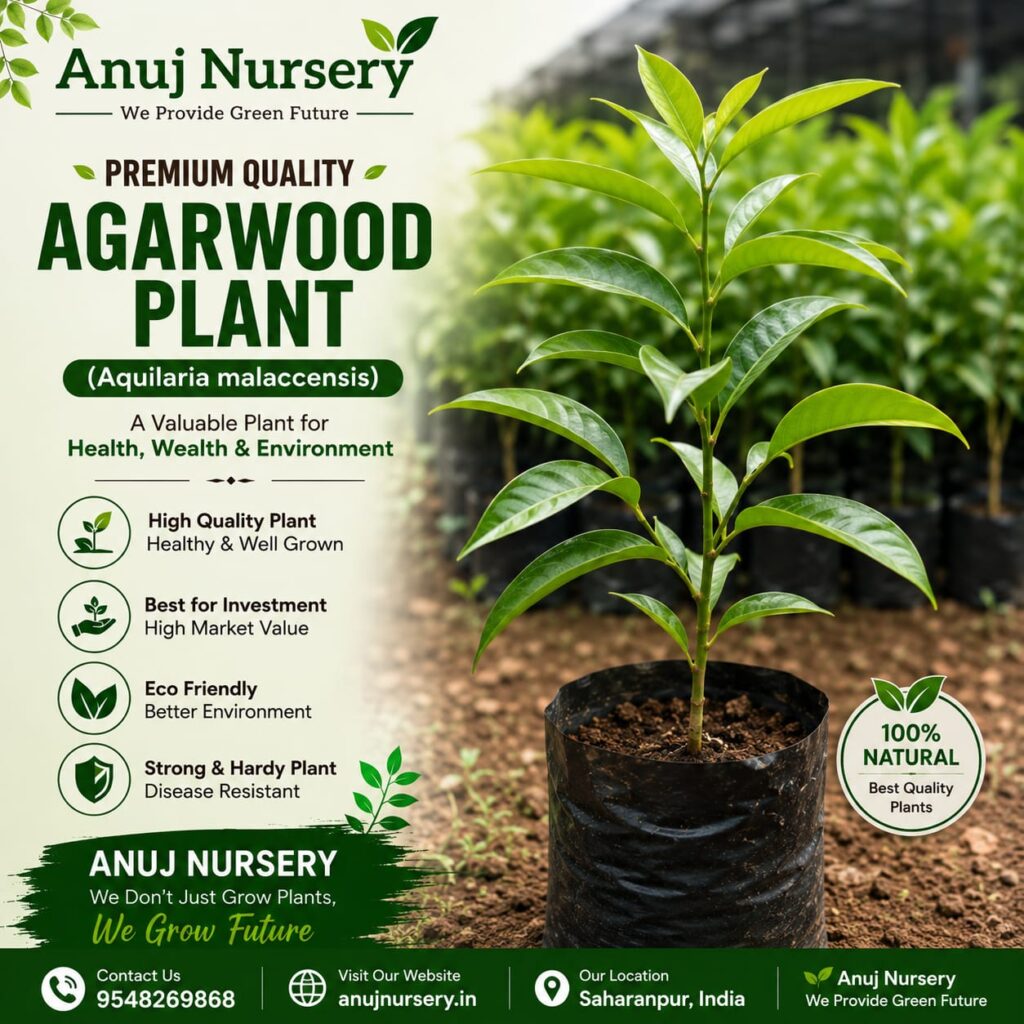
The Agarwood Aquilaria genus plant is a group of tropical evergreen trees famous for producing highly valued aromatic wood known as agarwood or oud. Species of the Aquilaria genus are naturally found across parts of South and Southeast Asia and are cultivated in suitable warm and humid regions.
Agarwood is not simply the normal wood of an Aquilaria tree. It develops when the tree forms resin-rich heartwood in response to particular biological processes, including injury and associated microorganisms. This resin gives the wood its distinctive fragrance and commercial value.
Why Is the Aquilaria Plant Valuable?
Aquilaria trees are especially known for the valuable aromatic resin that can develop inside their wood. Agarwood is used in perfume, incense, fragrance, and traditional cultural applications.
The essential oil derived from high-quality agarwood is commonly associated with oud, a prized fragrance material. Because natural agarwood is relatively rare and quality varies greatly, sustainably cultivated Aquilaria trees are increasingly important for meeting demand.
Benefits of Agarwood Aquilaria Plant
Some important benefits and characteristics include:
- Produces valuable aromatic agarwood under suitable conditions
- Used in perfumes and oud fragrances
- Suitable for incense production
- Can be grown as a specialized plantation tree
- Attractive evergreen foliage
- Suitable for agroforestry projects in appropriate climates
- Has potential value in sustainable forestry
However, growers should avoid claims of guaranteed income or guaranteed resin production. Actual plantation results depend on species, climate, tree health, management, resin formation, processing, and market conditions.
How to Grow Aquilaria Plants
Aquilaria plants generally prefer warm, humid climatic conditions. Select healthy nursery-grown plants and choose a location with suitable soil drainage and adequate moisture.
Young plants need regular care during establishment. Provide sufficient water, control competing weeds, and protect plants from grazing and physical damage.
For commercial plantations, planting distance should be selected according to the species, local climate, soil conditions, plantation objective, and long-term management plan.
Agarwood Plant Care
Good care begins with healthy planting material. Provide adequate sunlight, appropriate soil moisture, and good drainage.
Regularly monitor young plants for pest attacks, diseases, nutrient deficiencies, and water stress. Remove weeds around the plants to reduce competition for water and nutrients.
Resin formation is a specialized biological process, so growers should use responsible and scientifically supported methods rather than assuming that every Aquilaria tree will naturally produce commercially valuable agarwood.
Uses of Agarwood
The aromatic wood produced by suitable Aquilaria trees has traditionally been used for:
- Oud and luxury fragrances
- Perfume production
- Incense
- Cultural and traditional practices
- Aromatic products
The quality and value of agarwood can vary significantly depending on resin content, aroma, density, species, processing, and other factors.
Is Aquilaria Suitable for Plantation?
Aquilaria can be considered for specialized plantations in regions with suitable environmental conditions. However, it should be viewed as a long-term forestry investment rather than a quick-profit crop.
Before starting a commercial plantation, growers should investigate local regulations regarding cultivation, harvesting, transportation, and trade. Selecting correctly identified planting material from a reputable nursery is also important.
Buy Quality Agarwood Plants
Healthy and properly identified Aquilaria plants are essential for establishing a plantation. Choose nursery-grown plants with strong stems, healthy leaves, and a well-developed root system.
Anuj Nursery can be considered for nursery and plantation plant requirements, subject to current availability.
Frequently Asked Questions
What is the scientific name of Agarwood?
Agarwood-producing trees belong to the genus Aquilaria. Because multiple species can produce agarwood, the scientific designation is commonly written as Aquilaria spp.
Is Agarwood the same as Aquilaria?
No. Aquilaria is the tree genus, while agarwood is the aromatic resinous wood that can develop inside certain trees of this genus.
What is Agarwood used for?
Agarwood is mainly valued for perfumes, oud fragrances, incense, and various cultural and traditional applications.
Can Aquilaria be grown in India?
Suitable Aquilaria species can be cultivated in appropriate Indian climates, but growers should consider local environmental conditions and applicable forestry regulations.