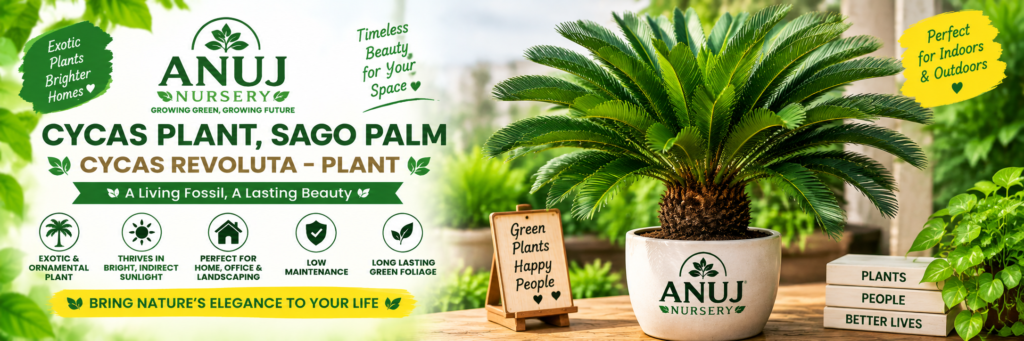
The Cycas Plant (Cycas revoluta), commonly called Sago Palm, is a popular ornamental plant known for its symmetrical crown of long, dark-green, feather-like leaves and attractive tropical appearance. Although commonly called a palm, Cycas revoluta is actually a cycad, not a true palm.
Its architectural shape makes it an excellent choice for home gardens, entrances, patios, terraces, balconies, landscaping, and large decorative containers. With proper sunlight, well-draining soil, careful watering, and suitable nutrition, Cycas can remain attractive for many years.
This complete guide explains Cycas plant care, Sago Palm benefits, sunlight, watering, soil, fertilizer, pruning, propagation, common problems, and growing tips.
What Is Cycas Revoluta?
Cycas revoluta is a slow-growing cycad native to southern Japan. It develops a sturdy central trunk with a crown of stiff, pinnate leaves.
Because of its slow growth, a Cycas plant can be a long-term landscaping feature. It is particularly valued for its structured appearance and ability to adapt to a range of outdoor ornamental settings when grown under suitable conditions.
Benefits of Growing a Cycas Plant
1. Attractive Ornamental Plant
The symmetrical foliage gives Cycas a distinctive architectural appearance that works well in modern and traditional landscapes.
2. Excellent Landscaping Plant
Cycas can be planted near entrances, pathways, garden borders, patios, and other suitable landscape areas.
3. Suitable for Containers
Young and appropriately sized Cycas plants can be grown in large containers with excellent drainage.
4. Relatively Low Maintenance
Once established, Cycas generally requires less frequent attention than many fast-growing ornamental plants.
5. Long-Term Garden Appeal
Its slow growth and evergreen appearance in suitable climates make it a valuable long-term addition to ornamental landscapes.
Cycas Plant Care Guide
Sunlight Requirements
Cycas generally performs well in bright sunlight to partial shade, depending on the climate and growing environment.
For strong foliage development, provide several hours of bright light. Plants gradually acclimated to outdoor sunlight can generally handle more direct sun than plants suddenly moved from shade to intense sunlight.
In very hot climates, protection from extreme afternoon heat may help prevent leaf scorch.
Watering Requirements
One of the most important Cycas care rules is avoid overwatering.
Allow the soil to dry to some extent between waterings. Then water thoroughly and allow excess water to drain away.
Established Cycas plants can tolerate relatively dry periods, but young plants require more consistent moisture during establishment.
Never allow the plant to remain in standing water.
Soil Requirements
Cycas requires well-draining soil.
A loose mixture containing soil, organic matter, and drainage-improving material can work well for container cultivation.
Heavy, poorly drained soil can encourage root problems.
Always use a container with adequate drainage holes when growing Cycas in pots.
Fertilizer Requirements
Cycas is a relatively slow-growing plant and does not need excessive fertilizer.
During active growth, use a balanced fertilizer or a fertilizer formulated for ornamental plants according to the manufacturer’s instructions.
Micronutrient deficiencies can sometimes cause foliage discoloration, so balanced nutrition is preferable to excessive feeding.
Pruning and Maintenance
Cycas generally requires minimal pruning.
Remove completely dead, damaged, or severely affected leaves using clean pruning tools.
Avoid cutting healthy green leaves unnecessarily because they contribute to the plant’s energy production.
Do not damage the central growing point while pruning.
Propagation of Cycas
Cycas can be propagated through seeds or offsets/suckers, although propagation can be slow and requires patience.
For home gardeners, purchasing an established nursery plant is generally easier than raising Cycas from seed.
Common Cycas Plant Problems
Yellow Leaves
Yellowing may result from overwatering, poor drainage, nutrient deficiencies, transplant stress, or natural aging of older leaves.
Brown Leaf Tips
Brown tips can be caused by inconsistent watering, extreme heat, low humidity, salt buildup, or environmental stress.
Soft Trunk or Root Problems
A soft trunk or deteriorating roots can indicate excessive moisture or poor drainage. Check the soil and improve drainage immediately.
Pest Infestation
Scale insects and other pests can occasionally affect Cycas. Inspect leaves and stems regularly, especially when plants show unusual discoloration or reduced vigor.
Frequently Asked Questions
Is Cycas revoluta a palm?
No. Despite the common name Sago Palm, Cycas revoluta is a cycad, not a true palm.
How much sunlight does a Cycas plant need?
Cycas generally prefers bright light and can grow well with several hours of sunlight when properly acclimated. In extremely hot conditions, some afternoon protection may be helpful.
How often should I water Cycas?
Water when the soil has dried sufficiently. Avoid maintaining constantly wet soil because overwatering can cause serious root problems.
Can Cycas grow in pots?
Yes. Cycas can be grown successfully in large containers with suitable soil, drainage, sunlight, and appropriate watering.
Does Cycas grow fast?
No. Cycas revoluta is naturally slow-growing. Avoid excessive fertilizer in an attempt to force rapid growth.
Is Cycas safe for pets?
No. Cycas revoluta is toxic if ingested, including its seeds and other plant parts. Keep it away from pets and children who may chew or consume plants.
Conclusion
The Cycas Plant (Cycas revoluta) is an excellent ornamental choice for gardeners looking for a distinctive, long-lasting landscape plant. Its symmetrical foliage and architectural form make it particularly attractive around entrances, gardens, patios, terraces, and large containers.
For healthy growth, focus on the fundamentals: bright light, excellent drainage, controlled watering, moderate feeding, and minimal but appropriate pruning.
The biggest mistake to avoid is overwatering. Cycas is much more tolerant of occasional dryness than continuously saturated soil.
If you’re looking to buy a healthy Cycas Plant or Sago Palm online in India, explore the ornamental plant collection at AnujNursery.in.
Add a timeless tropical look to your garden—order a healthy Cycas Plant from Anuj Nursery today!