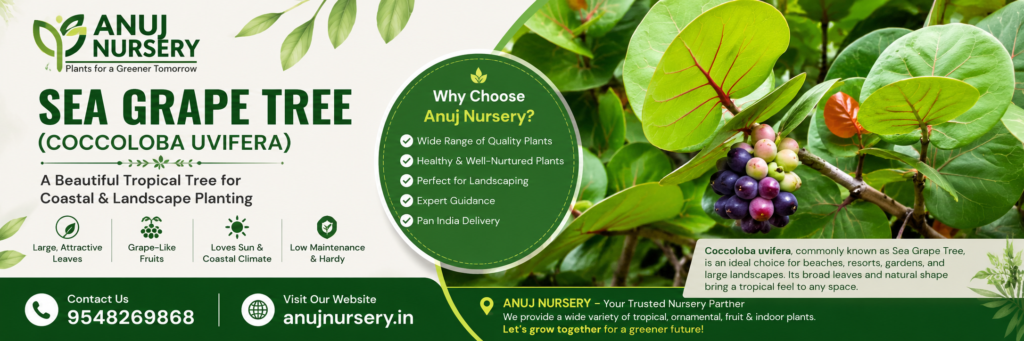
The Sea Grape Tree (Coccoloba uvifera) is an attractive tropical and coastal plant known for its large, rounded leaves, spreading growth habit and clusters of grape-like fruits. Native to coastal regions of the Caribbean, Central America and parts of tropical America, this evergreen or semi-evergreen species is particularly valued for landscaping in warm, sunny environments.
Its botanical name is Coccoloba uvifera, and it belongs to the Polygonaceae family. The plant gets its common name from its grape-like fruits, which develop in hanging clusters and can turn purple when mature. With its distinctive appearance and tolerance of coastal conditions, the Sea Grape Tree can be an excellent choice for tropical gardens, resorts, landscapes and beachfront areas.
Key Features of the Sea Grape Tree
One of the most noticeable features of the Sea Grape Tree is its large, rounded, leathery leaves. Young leaves may have attractive reddish tones before developing their mature green colour. The plant can grow as a shrub or small-to-medium-sized tree depending on growing conditions and pruning.
The tree produces small flowers followed by clusters of round fruits. Mature fruits are often dark purple and are an important part of the plant’s ornamental appeal.
Sea Grape Tree Benefits
The Sea Grape Tree offers several landscaping and environmental benefits, including:
- Attractive tropical appearance for gardens and landscapes
- Large ornamental leaves that provide visual interest
- Useful as a coastal landscaping plant
- Can provide shade when allowed to develop naturally
- Suitable for creating a tropical garden atmosphere
- Helps support coastal landscape stabilization in suitable environments
- Its fruits add seasonal ornamental value
Because of its natural tolerance of salt and coastal conditions, Coccoloba uvifera is particularly interesting for landscapes where many conventional plants may struggle.
How to Grow Coccoloba uvifera
The Sea Grape Tree performs best in warm, tropical or subtropical climates. It prefers plenty of sunlight and well-drained soil. A sunny location encourages stronger growth and helps maintain its attractive natural shape.
When planting, choose an area with adequate space for the plant’s spreading canopy. Good drainage is important because continuously waterlogged soil can damage the roots.
Regular watering is useful while a young plant is becoming established. Once established in a suitable climate, the plant can tolerate periods of relatively dry conditions better than many tropical ornamentals.
Light pruning can be carried out to maintain the desired shape, especially when the plant is being grown in gardens, pathways or landscaped properties.
Is Sea Grape Tree Suitable for India?
The Sea Grape Tree can be considered for warm coastal and tropical regions of India, particularly where temperatures remain suitable and the plant receives strong sunlight. However, it is not an ideal choice for every part of India.
Before purchasing Coccoloba uvifera, consider your local climate, winter temperatures, soil drainage and available growing space. For locations with colder winters, specialist advice is recommended before large-scale planting.
For customers searching for Sea Grape plants in India, Anuj Nursery can help identify suitable landscaping plants according to the local growing environment.
Sea Grape Tree Uses in Landscaping
Coccoloba uvifera is especially useful in tropical-style landscape designs. It can be planted around resorts, large gardens, coastal properties, recreational areas and spacious landscapes.
Its broad leaves and naturally spreading form can create a relaxed tropical appearance. With suitable pruning, it can also be incorporated into structured landscape designs.
Frequently Asked Questions About Sea Grape Tree
What is the botanical name of the Sea Grape Tree?
The botanical name of the Sea Grape Tree is Coccoloba uvifera.
Does Sea Grape Tree grow in full sun?
Yes. It generally performs best in a sunny location with well-drained soil.
Where does Coccoloba uvifera grow naturally?
It is naturally associated with tropical and subtropical coastal regions of the Americas and the Caribbean.
Is Sea Grape Tree suitable for India?
It can be suitable for warm tropical and coastal areas of India, but local climate conditions should be checked before planting.
How do you care for a Sea Grape Tree?
Provide good sunlight, well-drained soil, appropriate watering during establishment and occasional pruning to maintain its shape.
Buy Sea Grape Tree from Anuj Nursery
If you are looking for attractive tropical and landscaping plants in India, choosing a healthy, climate-appropriate plant is essential. Anuj Nursery provides a range of plants for landscaping and gardening requirements.
Before planting a Sea Grape Tree (Coccoloba uvifera), consider your location, soil, sunlight and available space. The right plant in the right environment will always perform better than simply choosing a plant because it looks attractive.
For quality nursery plants and landscaping solutions, explore Anuj Nursery at anujnursery.in.