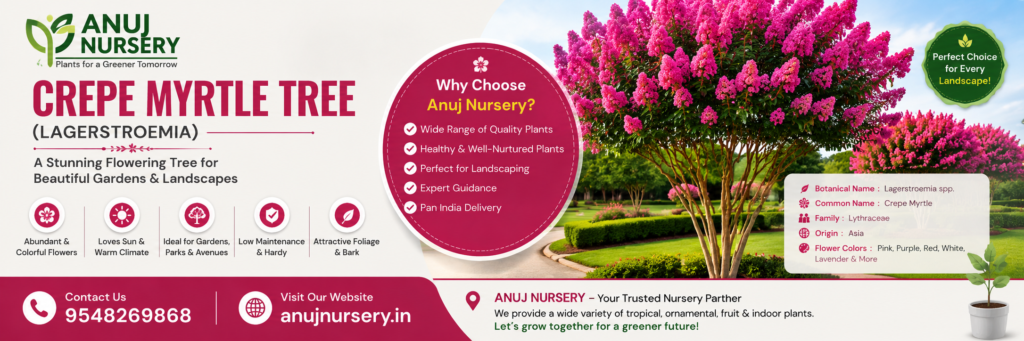
The Crepe Myrtle Tree, scientifically known as Lagerstroemia, is one of the most attractive flowering trees for gardens, roadsides, parks and residential landscapes. Famous for its colourful summer flowers and attractive branching structure, Crepe Myrtle can add long-lasting ornamental value to outdoor spaces.
Depending on the variety, its flowers may appear in shades of pink, purple, red, lavender or white. The tree can also develop attractive bark and colourful foliage, making it useful in landscapes even outside its main flowering season.
For homeowners, landscapers and gardeners looking for a flowering tree that combines beauty with relatively manageable maintenance, Crepe Myrtle is an excellent option.
What Is a Crepe Myrtle Tree?
Crepe Myrtle belongs to the genus Lagerstroemia and is widely grown as an ornamental flowering plant in warm and subtropical climates. It can be grown as a shrub, small tree or larger ornamental tree depending on the species, variety and pruning method.
Its crinkled flowers resemble delicate crepe paper, which is why it is commonly called the Crepe Myrtle Tree. During the flowering season, a healthy tree can become a striking focal point in a garden.
The plant generally prefers sunlight, warm temperatures and well-drained soil.
Crepe Myrtle Tree Benefits
One of the biggest advantages of Crepe Myrtle is its strong ornamental appeal. Its colourful flowers can transform an ordinary landscape into a vibrant garden.
Major benefits include:
- Beautiful and long-lasting seasonal flowers
- Available in multiple flower colours
- Excellent choice for gardens and landscaping
- Attractive branching and trunk structure
- Suitable for avenues, parks and commercial landscapes
- Can provide shade depending on variety and size
- Works well as a specimen or feature tree
- Relatively easy to maintain once established
Crepe Myrtle can also be combined with shrubs, groundcovers and other flowering plants to create layered landscape designs.
How to Grow Crepe Myrtle
For the best results, plant Crepe Myrtle in a location receiving full sunlight. Adequate sunlight encourages healthy growth and better flowering.
The soil should be well-drained. Avoid locations where water remains around the roots for long periods. Before planting, improve compact or poor soil with suitable organic matter if necessary.
Water young plants regularly during their establishment period. Once established, watering requirements will depend on the climate, soil and rainfall.
Applying a balanced fertilizer at the appropriate time can support healthy growth, but excessive nitrogen should be avoided because it may encourage excessive leafy growth at the expense of flowering.
Crepe Myrtle Tree Care
Crepe Myrtle care is relatively straightforward when the plant is grown in suitable conditions.
Pruning can be used to remove dead, damaged or crossing branches and to maintain the desired shape. Avoid excessive pruning simply to force a particular form. Good structural pruning is generally better for the long-term appearance and health of the tree.
Mulching around the root zone can help conserve soil moisture and reduce weed competition. However, keep mulch away from direct contact with the trunk.
Regularly inspect the plant for pests, diseases or signs of stress. Good sunlight, air circulation, appropriate watering and healthy soil can help maintain vigorous growth.
Crepe Myrtle for Landscaping
Crepe Myrtle is highly versatile in landscape design. It can be planted in home gardens, parks, institutional properties, resorts, commercial spaces and along suitable roadsides.
A single flowering tree can work as a garden focal point, while several trees can create a colourful avenue effect. Smaller varieties can also be suitable for spaces where a large shade tree would be impractical.
For landscaping projects, selecting the right Lagerstroemia variety is important because mature size, flower colour and growth habit can vary considerably.
Is Crepe Myrtle Suitable for India?
Crepe Myrtle and related Lagerstroemia species are well suited to many warm and subtropical parts of India, provided the selected variety matches the local climate.
India’s diverse climate means that planting recommendations should not be identical everywhere. Consider local temperatures, rainfall, soil drainage and available sunlight before selecting a variety.
For gardens, institutions and landscaping projects, buying healthy nursery-grown plants can provide a better start than using weak or poorly developed specimens.
Frequently Asked Questions About Crepe Myrtle
What is the botanical name of Crepe Myrtle?
Crepe Myrtle belongs to the Lagerstroemia genus. Different species and cultivars are commonly sold under the Crepe Myrtle name.
Does Crepe Myrtle need full sun?
Yes. Full sun is generally preferred for strong growth and abundant flowering.
When does Crepe Myrtle flower?
Flowering depends on the species, variety and local climate, but Crepe Myrtle is particularly valued for its warm-season flowering.
How often should Crepe Myrtle be watered?
Young plants require regular watering while establishing. Mature plants generally need watering according to soil conditions, rainfall and climate.
Is Crepe Myrtle good for landscaping?
Yes. Its flowers, branching structure and manageable growth make it a popular ornamental landscaping tree.
Buy Crepe Myrtle Plants from Anuj Nursery
If you are planning a colourful garden or landscaping project, Anuj Nursery offers a range of ornamental, flowering and landscaping plants. Choosing healthy plants and selecting varieties according to your local climate can make a significant difference to long-term landscape performance.
Whether you are developing a home garden, commercial landscape, avenue plantation or larger landscaping project, Crepe Myrtle is a strong choice when you want seasonal colour and ornamental beauty.
Visit anujnursery.in or contact Anuj Nursery for plant availability and landscaping requirements.