
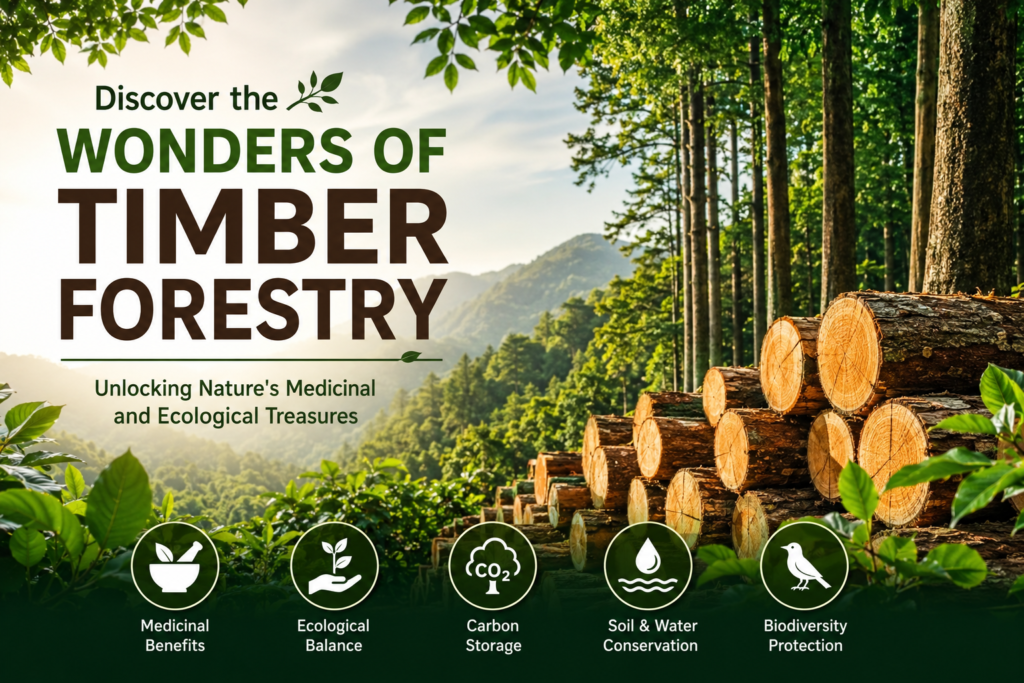
Forests are much more than a source of timber. They are complex ecosystems that support biodiversity, protect soil and water resources, store carbon, and provide valuable plant-based resources. Timber forestry plays an important role in managing these natural resources responsibly while meeting the growing demand for wood and forest products.
When practiced sustainably, timber forestry can create a balance between economic development and environmental conservation. Many forest trees also have traditional medicinal uses, making forests valuable reservoirs of natural compounds and plant-based knowledge.
What Is Timber Forestry?
Timber forestry refers to the cultivation, management, harvesting, and regeneration of trees primarily for timber production. It involves selecting suitable tree species, maintaining healthy plantations, protecting trees from pests and diseases, and planning harvesting in a way that allows forests to regenerate.
Modern timber forestry increasingly focuses on sustainable forest management, where trees are harvested responsibly while maintaining forest health, biodiversity, and long-term productivity.
Medicinal Treasures Hidden in Forests
Forests contain an extraordinary variety of plants, including species that have been used in traditional medicine for generations. Different parts of trees—such as bark, leaves, roots, fruits, seeds, and resins—may contain naturally occurring compounds with potential medicinal importance.
For example, several tree species are traditionally associated with remedies for skin problems, inflammation, digestive issues, and other health concerns. However, traditional use does not automatically prove medical effectiveness, so medicinal plants should be researched and used responsibly.
Protecting forest biodiversity is therefore important not only for ecosystems but also for preserving valuable botanical resources for future scientific research.
Ecological Importance of Timber Forestry
Sustainable timber forestry can contribute significantly to ecological conservation. Well-managed forests provide habitats for birds, insects, mammals, fungi, and countless plant species.
Trees also perform several essential environmental functions:
- Carbon storage: Trees absorb carbon dioxide and store carbon in their biomass and soil.
- Soil protection: Tree roots help reduce soil erosion and improve soil stability.
- Water conservation: Forest landscapes can support groundwater recharge and regulate water flow.
- Biodiversity support: Forests provide food, shelter, and breeding habitats for wildlife.
- Climate regulation: Trees influence local temperature, humidity, and atmospheric conditions.
These benefits demonstrate why timber production should be integrated with responsible environmental management.
Sustainable Timber Forestry: A Better Approach
Sustainable timber forestry aims to ensure that forests continue producing resources without being permanently damaged. This may involve planting new trees, protecting young seedlings, maintaining mixed-species forests, controlling illegal logging, and carefully planning harvesting cycles.
Choosing appropriate tree species for local climate and soil conditions is also essential. Native and well-adapted species can support local ecosystems while reducing the pressure on natural forests.
Responsible forestry also encourages efficient use of harvested wood. Using timber products for longer periods and reducing unnecessary waste can help maximize the value of every harvested tree.
Timber Trees and Biodiversity Conservation
A major advantage of well-managed forestry is that it can combine commercial tree production with biodiversity protection. Forestry landscapes that include different tree species, native vegetation, buffer zones, and wildlife-friendly areas can provide better ecological conditions than simplified plantations.
Protecting natural forests remains particularly important because some ecosystems cannot be fully replaced by commercial plantations. Sustainable timber forestry should therefore complement, rather than replace, broader forest conservation efforts.
The Future of Timber Forestry
The future of timber forestry is closely connected to technology, sustainability, and responsible land management. Improved tree breeding, remote sensing, forest monitoring, efficient irrigation, and better plantation management can help increase productivity while reducing environmental pressure.
As demand for wood products continues to grow, sustainable forestry practices will become increasingly important. Consumers and businesses can also contribute by choosing responsibly sourced timber and supporting forest conservation initiatives.
Conclusion
Timber forestry offers much more than an economic source of wood. When managed responsibly, it can contribute to biodiversity conservation, carbon storage, soil protection, water management, and the preservation of valuable botanical resources.
The medicinal and ecological treasures found within forests remind us that every tree is part of a much larger natural system. By embracing sustainable forest management, we can meet today’s needs while protecting forests and their incredible resources for future generations.
Frequently Asked Questions (FAQs)
1. What is timber forestry?
Timber forestry is the planned cultivation, management, harvesting, and regeneration of trees for timber production while maintaining forest health and sustainability.
2. Why is timber forestry important?
Timber forestry provides wood resources while, when sustainably managed, supporting carbon storage, soil conservation, biodiversity, and responsible land use.
3. Do timber trees have medicinal value?
Some tree species have traditional medicinal uses because their bark, leaves, fruits, roots, or resins may contain biologically active compounds. Scientific research is important before making health claims.
4. How does sustainable timber forestry protect the environment?
It uses responsible harvesting, tree regeneration, biodiversity protection, soil and water conservation, and long-term forest management practices.
5. What is the difference between timber forestry and forest conservation?
Timber forestry focuses partly on producing wood through managed forests, while forest conservation primarily focuses on protecting ecosystems, biodiversity, and natural forest resources. Sustainable forestry can support conservation when carefully planned.