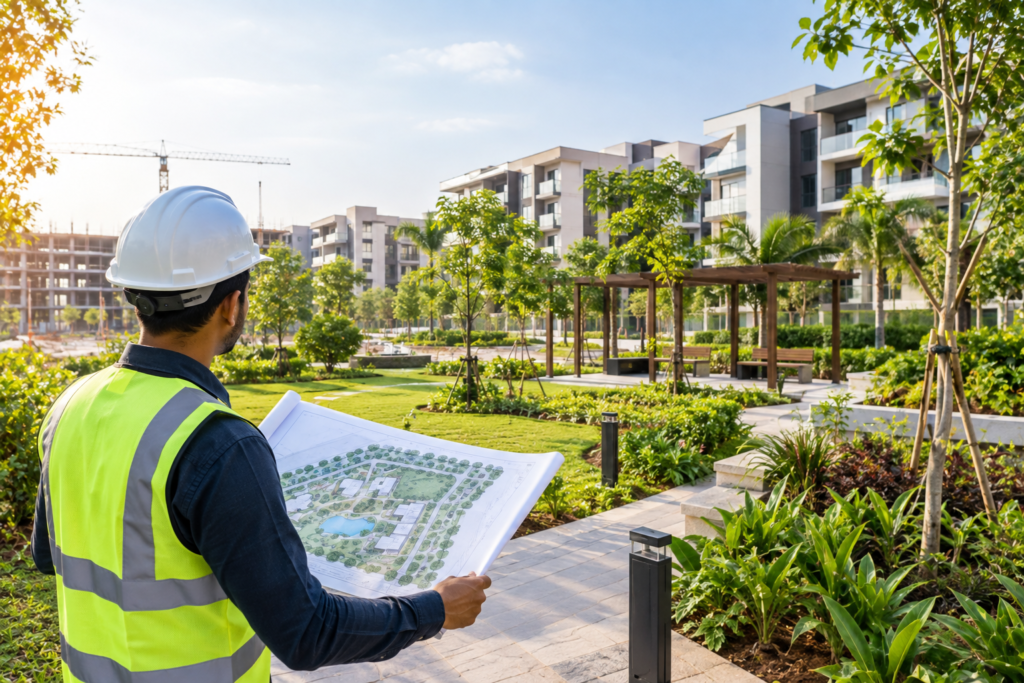
Landscaping is an important part of modern real estate development. A well-designed outdoor environment can improve the appearance of a residential project, create better common spaces and make the property more attractive to potential buyers.
However, landscaping should not be treated as the final decoration after construction is complete. It should be planned alongside architecture, roads, drainage, utilities and other site-development activities.
This landscaping checklist for real estate developers covers the major points developers should consider before, during and after a landscaping project.
1. Understand the Project Requirements
Before starting landscape design, clearly define the purpose of the development.
Consider:
- Project size and site layout
- Residential or commercial use
- Target customers
- Available outdoor areas
- Entrance and common spaces
- Parking and circulation
- Recreational areas
- Maintenance expectations
- Project budget
- Completion timeline
A clear project brief helps the landscape team create a practical design instead of adding unnecessary features.
2. Study the Site Before Designing
A proper site assessment should be completed before any major landscaping work begins.
Check the:
- Existing site levels
- Soil condition
- Water availability
- Drainage pattern
- Sunlight exposure
- Existing structures
- Underground utilities
- Access for construction equipment
- Wind and weather conditions
Ignoring site conditions can create expensive problems later. For example, poor drainage planning may result in waterlogging, damaged pathways and additional maintenance costs.
3. Prepare a Professional Landscape Design
The landscape design should work with the overall property layout.
The plan may include:
- Main entrance landscaping
- Internal roads
- Open spaces
- Walking paths
- Seating areas
- Recreational zones
- Boundary areas
- Parking surroundings
- Community spaces
- Service areas
A good design balances appearance with functionality. Every landscaped area should have a clear purpose and should be practical to maintain.
4. Plan the Budget Carefully
Landscaping costs can vary significantly depending on the size and specifications of a project.
The budget should account for:
- Design and planning
- Site preparation
- Soil work
- Greenery and plantation
- Lawn development
- Irrigation
- Drainage
- Pathways
- Outdoor lighting
- Hardscape construction
- Labour
- Transportation
- Maintenance
Developers should avoid comparing quotations only on the final price. A detailed quotation makes it easier to understand what is actually included.
5. Coordinate Landscaping With Construction
One of the biggest mistakes in real estate projects is treating landscaping as a completely separate activity.
Landscape contractors should coordinate with:
- Architects
- Civil contractors
- Electrical teams
- Plumbing teams
- Project managers
- Irrigation specialists
- Site engineers
This coordination helps avoid conflicts between pathways, drainage, electrical cables, irrigation lines and other infrastructure.
6. Plan Irrigation and Water Management
Water management should be considered during the design stage.
Depending on the project, the landscape may require:
- Drip irrigation
- Sprinkler systems
- Automated timers
- Water storage
- Pumps
- Drainage channels
An efficient irrigation system can make maintenance easier and help avoid unnecessary water use.
Developers should also consider how rainwater moves across the property. Proper grading and drainage can protect both landscaped and constructed areas.
7. Select Suitable Greenery
Greenery should be selected according to the project’s location, soil, available space and maintenance capacity.
Instead of choosing greenery only for visual appeal, consider:
- Growth characteristics
- Space requirements
- Maintenance needs
- Water requirements
- Seasonal appearance
- Long-term suitability
- Safety around buildings and pathways
For large projects, consistent quality and availability are also important because replacements may be required during the development process.
8. Consider Hardscape Elements
Landscaping is not limited to greenery.
Hardscape elements can include:
- Paved walkways
- Seating areas
- Garden edges
- Steps
- Decorative walls
- Pergolas
- Outdoor structures
- Feature areas
These elements should complement the architecture rather than making the property look overcrowded.
9. Plan Lighting and Safety
Outdoor lighting can improve both the appearance and usability of a development.
Important areas may include:
- Main entrances
- Walking paths
- Steps
- Parking areas
- Common spaces
- Building surroundings
Lighting should be planned with electrical requirements and safety considerations in mind.
Developers should also ensure that pathways remain accessible and that landscaping does not block visibility around entrances, roads or pedestrian areas.
10. Create a Maintenance Plan
A landscape is a long-term investment. Installation is only the beginning.
The maintenance plan should cover:
- Regular watering
- Lawn care
- Pruning
- Cleaning
- Irrigation inspection
- Replacement requirements
- Pest monitoring
- Seasonal maintenance
- Lighting checks
Before selecting a landscape design, developers should understand its future maintenance requirements.
A visually impressive landscape that requires excessive maintenance may become expensive after project handover.
11. Inspect the Project Before Handover
Before completing the landscaping project, conduct a detailed inspection.
Check:
- Greenery condition
- Lawn coverage
- Irrigation operation
- Drainage
- Pathway finishing
- Lighting
- Soil settlement
- Damaged areas
- Cleanliness
- Safety and accessibility
Create a handover checklist and document any unfinished or defective work.
Why Developers Should Work With an Experienced Landscaping Partner
Real estate landscaping involves more than simply installing greenery. It requires planning, procurement, site coordination, execution and long-term maintenance.
An experienced landscaping partner can help developers manage these stages more efficiently and reduce avoidable project issues.
Anuj Nursery provides plant supply and landscaping solutions for residential, commercial and large property projects. Combining nursery supply with professional landscape planning can help developers maintain better coordination between greenery, site development and project requirements.
AEO: Frequently Asked Questions
What should a real estate developer consider before landscaping?
A developer should consider the site layout, budget, soil, drainage, water availability, design, irrigation, hardscape, greenery, lighting, safety and long-term maintenance.
Why is landscaping important in real estate projects?
Professional landscaping can improve outdoor spaces, strengthen the visual appeal of a development and create more attractive common areas for residents, visitors and customers.
When should landscaping planning begin?
Landscape planning should ideally begin during the project design and planning stage rather than after construction is finished. Early coordination helps prevent conflicts with roads, drainage, utilities and other infrastructure.
How can developers control landscaping costs?
Developers can control costs through early planning, detailed quotations, suitable material selection, efficient irrigation, practical design and a clear maintenance strategy.
What is included in a professional landscaping project?
A project may include landscape design, site preparation, soil work, greenery, lawn development, irrigation, drainage, hardscape, lighting and ongoing maintenance.
Conclusion
A successful real estate landscape requires planning, coordination and long-term thinking. Developers should not focus only on how the landscape looks on project completion day. The design should also be practical, durable, safe and manageable to maintain.
Using this landscaping checklist for real estate developers can help project teams plan the landscape from site assessment and design through installation, inspection and maintenance.
For large residential and commercial developments, choosing a reliable landscaping and nursery partner can further simplify procurement and project execution.