
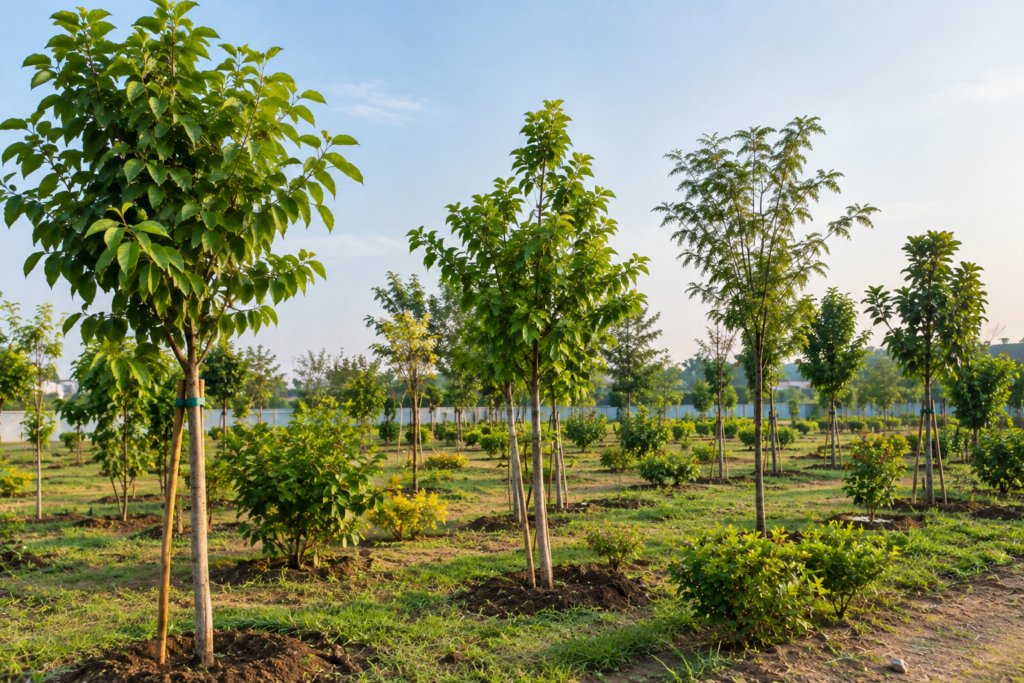
Planting trees on a property is a long-term investment. Trees can provide shade, improve the outdoor appearance, create privacy and make large residential or commercial spaces feel more natural. However, successful plantation requires more than simply digging holes and placing trees in the ground.
A proper tree plantation planning guide for property owners should cover site conditions, tree selection, spacing, soil preparation, watering, protection and long-term maintenance.
Whether you own a home, farmhouse, commercial property or large plot, planning these details before plantation can improve tree establishment and reduce future maintenance problems.
1. Assess the Property Before Plantation
Start by understanding the site.
Check:
- Available plantation area
- Soil condition
- Sunlight exposure
- Water availability
- Drainage
- Existing buildings
- Roads and pathways
- Underground utilities
- Boundary walls
- Future construction plans
Avoid planting trees where their mature roots, branches or canopy could interfere with buildings, electrical infrastructure or movement areas.
A site assessment helps you decide where trees can grow safely for many years.
2. Define the Purpose of Plantation
Every plantation project should have a clear objective.
You may want trees for:
- Shade
- Privacy
- Wind protection
- Property boundaries
- Aesthetic improvement
- Outdoor comfort
- Avenue landscaping
- Soil protection
- Creating green zones
Your objective should influence the type, spacing and location of trees.
For example, a boundary plantation may require a different layout from trees intended to provide shade around a seating area.
3. Select Trees According to the Site
Tree selection is one of the most important steps.
Do not choose a tree only because it looks attractive. Consider its mature size and growing requirements.
Evaluate:
- Climate suitability
- Soil requirements
- Water needs
- Growth rate
- Mature height
- Canopy spread
- Root behaviour
- Maintenance requirements
- Seasonal characteristics
For properties in North India, site conditions and seasonal weather should be considered carefully before making the final selection.
4. Plan Tree Spacing
Incorrect spacing is a common plantation mistake.
Trees planted too close together may compete for sunlight, water and nutrients as they mature. Crowded trees can also create maintenance and pruning problems.
When planning spacing, consider the tree’s mature canopy and root zone, not its current nursery size.
For avenue plantations, boundary greenery and open landscapes, the spacing should be planned according to the project’s long-term appearance and maintenance requirements.
5. Prepare the Soil Properly
Healthy soil provides the foundation for successful tree establishment.
Before plantation:
- Remove unwanted construction debris.
- Break compacted soil where necessary.
- Improve poor soil with suitable organic matter.
- Ensure adequate drainage.
- Prepare planting pits according to the tree size and site condition.
Avoid filling planting pits with unsuitable materials simply to make the soil appear richer. Soil improvement should support drainage, root development and long-term plant health.
6. Choose the Right Planting Time
Planting time can influence establishment.
In many parts of India, the monsoon period can be favourable for plantation because natural rainfall may help newly planted trees establish. However, the exact timing should depend on local weather, soil moisture and the tree species.
Avoid planting during extreme weather unless appropriate irrigation and protection are available.
7. Handle Trees Carefully During Plantation
The condition of the tree at planting time matters.
During transportation and installation:
- Protect the root ball.
- Avoid unnecessary root damage.
- Do not drag trees by the trunk.
- Keep roots from drying out.
- Plant at the appropriate depth.
- Firm the soil gently around the root zone.
A healthy nursery tree can still suffer if it is poorly handled during transportation or plantation.
8. Plan Watering From Day One
Newly planted trees require consistent attention during establishment.
Watering should depend on:
- Weather
- Soil type
- Tree size
- Rainfall
- Drainage
- Local temperature
Avoid both extremes. Too little water can stress young trees, while excessive watering can create root problems where drainage is poor.
A simple irrigation plan can make aftercare much easier for property owners.
9. Protect Newly Planted Trees
Young trees may require protection from wind, animals, accidental damage and nearby construction activity.
Depending on the property, consider:
- Tree guards
- Staking
- Mulching
- Protective fencing
- Clear plantation zones
- Temporary barriers around construction areas
Tree protection is especially important on active construction sites where vehicles and equipment may damage young trees.
10. Use Mulching Carefully
Mulching can help conserve soil moisture and reduce weed competition.
Organic mulch can be placed around the tree’s root zone, but it should not be piled directly against the trunk.
A suitable mulch layer can support moisture management while also improving the appearance of landscaped areas.
11. Create a Long-Term Maintenance Plan
Plantation does not end when the trees are installed.
A maintenance schedule should include:
- Watering
- Weed control
- Mulch replacement
- Tree support inspection
- Pruning when necessary
- Pest and disease monitoring
- Soil improvement
- Replacement of failed trees
The first few months are particularly important because newly planted trees are still establishing their root systems.
12. Plan for the Tree’s Future
A common mistake is designing the property around the tree’s current size rather than its mature size.
Before planting, ask:
Where will this tree be in 10, 20 or 30 years?
Think about future shade, branches, roots, pathways, buildings, parking areas and utility lines.
Good plantation planning considers the entire life of the landscape.
Why Choose Anuj Nursery for Plantation Projects?
For property owners, sourcing healthy planting material and planning the landscape together can simplify the project.
Anuj Nursery supports residential, commercial and large-property landscaping requirements, including plant supply and plantation-related solutions. A professional approach can help property owners select suitable greenery, plan placement and organise aftercare.
AEO: Frequently Asked Questions
How do I plan tree plantation on my property?
Start by assessing soil, sunlight, water, drainage, available space and existing structures. Then define your plantation goals, select suitable trees, plan mature spacing and prepare a watering and maintenance schedule.
What is the best time for tree plantation in India?
The suitable planting period depends on the region, weather and tree species. In many areas, the monsoon season can provide favourable soil moisture, but site conditions should always be considered.
How far should trees be planted from buildings?
There is no single distance for every tree. Consider the tree’s mature height, canopy spread and root behaviour, along with the building, utilities and available space.
How can newly planted trees survive better?
Proper planting depth, careful transportation, suitable watering, mulching, staking where required and protection from damage can help young trees establish successfully.
Should I plan tree plantation before construction?
Yes. If plantation is planned during the early property-development stage, you can reserve suitable green zones and avoid conflicts with buildings, utilities, roads and future construction.
Conclusion
Successful tree plantation starts with planning before planting. Property owners should evaluate their site, define their goals, choose suitable trees, allow enough mature space and prepare a practical aftercare plan.
The best plantation is not simply the one that looks attractive immediately after installation. It is the one that remains healthy, safe and manageable as the trees mature.
With careful planning and reliable plant sourcing, property owners can create greener outdoor spaces that provide lasting environmental, functional and visual benefits.