
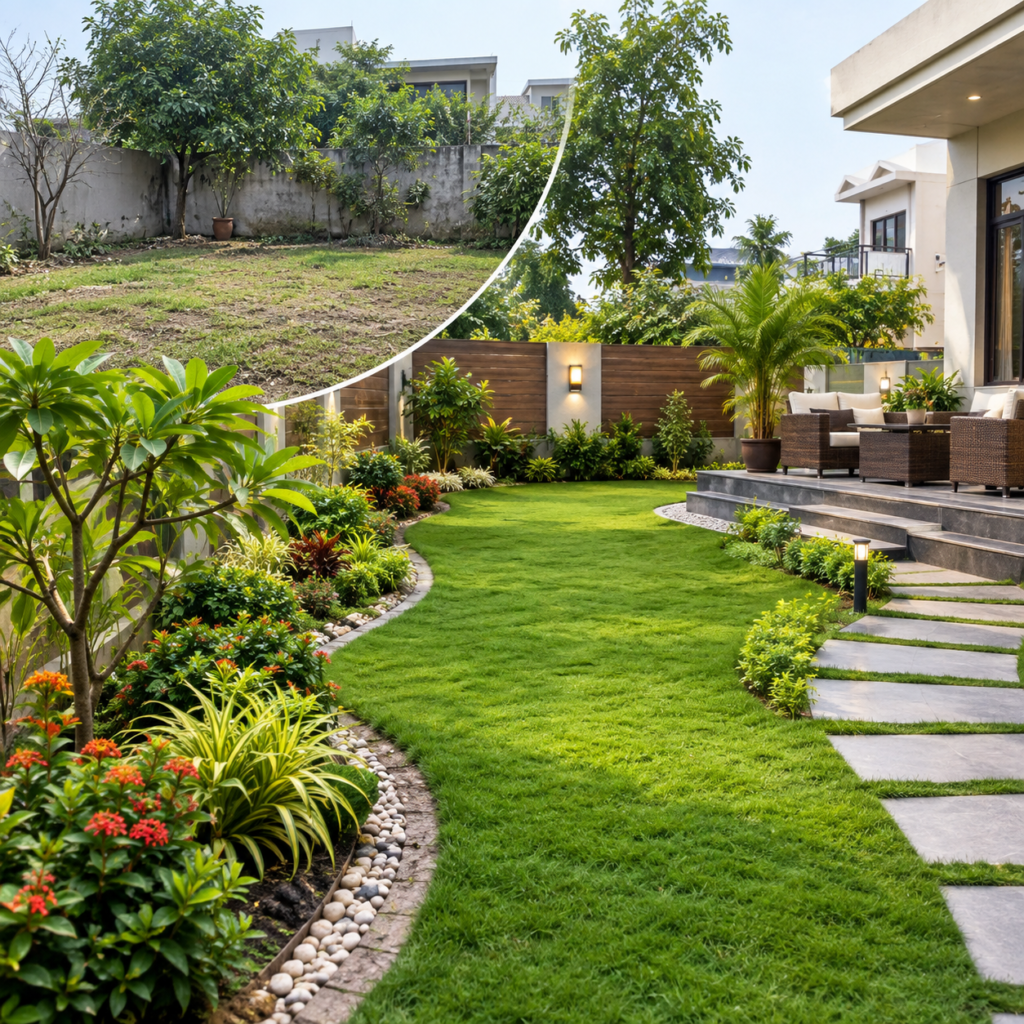
A beautiful landscape can completely change the look and feel of your home. Over time, however, gardens and outdoor spaces may become outdated, overcrowded, damaged, or difficult to maintain. This is where landscape renovation can make a big difference. Renovating your garden is not just about adding new plants; it involves improving the entire outdoor space for better beauty, functionality, and long-term maintenance.
Whether you have a small home garden, a front yard, backyard, or a large outdoor area, proper planning can help you create a fresh and attractive landscape.
What Is Landscape Renovation?
Landscape renovation means improving or redesigning an existing outdoor space. It can include removing unhealthy plants, changing garden layouts, improving soil, installing pathways, adding new trees and shrubs, upgrading irrigation, and creating attractive sitting areas.
Unlike creating a new garden from scratch, renovation allows homeowners to reuse healthy plants and existing features wherever possible. This can make the project more practical and cost-effective.
When Should You Renovate Your Landscape?
There are several signs that your garden may need renovation. Plants that have become overcrowded, broken pathways, poor drainage, dry lawn areas, damaged garden structures, and excessive maintenance are common reasons.
You may also consider renovation when your current garden no longer matches your home’s design or your family’s lifestyle.
If your garden looks messy or requires too much time and money to maintain, a well-planned landscape renovation can provide a better solution.
Step 1: Evaluate Your Existing Garden
Before removing anything, carefully inspect the entire outdoor space. Identify healthy trees and plants that can be preserved. At the same time, mark damaged, diseased, overcrowded, or unwanted vegetation.
Check the condition of the soil, lawn, drainage system, irrigation, boundary areas, pathways, and outdoor structures.
This evaluation helps you understand what needs to be changed and what can be reused.
Step 2: Create a Landscape Renovation Plan
A proper plan is one of the most important parts of a successful renovation. Decide how you want to use your outdoor space.
For example, you may want a relaxing sitting area, children’s play space, flowering garden, shaded area, lawn, or low-maintenance landscape.
Consider sunlight, available space, water requirements, and the local climate before selecting plants. Choosing plants that suit your area’s growing conditions can reduce maintenance and improve long-term plant health.
Step 3: Improve Soil and Drainage
Healthy soil is essential for a successful garden. During renovation, test the soil if possible and improve it with suitable organic matter or compost.
Drainage should also be checked carefully. Waterlogging can damage plant roots, while extremely dry soil can make plant growth difficult.
A good drainage system helps protect plants and keeps the landscape healthier throughout the year.
Step 4: Select the Right Plants
Plant selection can completely transform your garden. Use a combination of trees, shrubs, flowering plants, groundcovers, palms, and seasonal plants to create visual interest.
Choose plants according to their mature size. Avoid planting large trees too close to buildings, walls, electrical lines, or narrow pathways.
For Indian gardens, selecting climate-suitable and comparatively low-maintenance plants can make landscape care easier.
Step 5: Upgrade Hardscape Features
Landscape renovation is not limited to plants. Hardscape elements such as pathways, garden borders, seating areas, paving, decorative stones, and outdoor structures can also be upgraded.
A well-designed pathway can improve movement through the garden, while a comfortable seating area can make the outdoor space more useful.
Use materials that are durable, practical, and suitable for the overall style of your home.
Step 6: Plan Irrigation and Maintenance
Efficient watering is important for a healthy landscape. Consider improving existing irrigation systems so plants receive water according to their needs.
Group plants with similar water requirements together. This can help prevent both overwatering and underwatering.
Also create a simple maintenance schedule covering pruning, watering, fertilizing, weed control, lawn care, and seasonal plant replacement.
Benefits of Landscape Renovation
A renovated landscape can provide several benefits for homeowners. It can improve the appearance of your property, create more usable outdoor space, increase plant health, and make regular maintenance easier.
A thoughtfully designed garden can also provide shade, privacy, greenery, and a more comfortable environment around your home.
Most importantly, renovation allows you to create an outdoor space that matches your current needs instead of continuing to maintain an outdated garden design.
Final Thoughts
A successful landscape renovation starts with proper planning rather than simply replacing old plants. Evaluate the existing garden, preserve healthy features, improve soil and drainage, select suitable plants, upgrade hardscape elements, and plan for long-term maintenance.
With the right approach, homeowners can turn an ordinary or neglected outdoor area into a beautiful, functional, and easier-to-maintain landscape. Whether the renovation is small or extensive, investing in thoughtful landscape design can make your home’s outdoor space more enjoyable for years to come.