A green boundary can make a home, office, resort, or commercial property look fresh, private, and naturally beautiful. However, planting too many trees and shrubs along a boundary can quickly make the space look crowded and difficult to maintain. The key is to create a green boundary that feels balanced, open, and well-organized.
With the right plant selection, spacing, layering, and maintenance, you can enjoy privacy and greenery without making your property look overgrown. Here are practical ideas to design an attractive green boundary.
1. Start With the Right Boundary Plan
Before planting, measure the available space along the boundary wall or fence. Consider the width of the planting area, sunlight, soil type, drainage, and the mature size of every plant.
A common mistake is to select plants based only on their current size. A small nursery plant may become a large tree or dense shrub after a few years. Planning for mature growth helps prevent overcrowding later.
Keep enough open space between plants so they can grow naturally without competing for sunlight, water, and nutrients.
2. Choose Plants Based on Their Mature Size
Plant selection is one of the most important factors in creating a balanced green boundary. Instead of choosing many large trees, combine plants with different growth habits.
For example, you can use:
- Medium-sized trees for height
- Compact shrubs for the middle layer
- Small flowering plants for the front
- Ground covers for exposed soil
This creates a layered appearance while keeping the overall design organized.
3. Use Fewer Plants With Better Spacing
A green boundary does not need to contain dozens of plants. In many cases, fewer healthy plants with proper spacing look more attractive than a dense row of vegetation.
Trees should have enough room for their branches and roots to develop. Shrubs can be planted closer together, but they should still have sufficient space for airflow and maintenance.
Leaving small visual gaps between plants can also make the boundary feel larger and more open.
4. Create Different Plant Heights
One of the best ways to avoid a crowded appearance is to use plants at different heights.
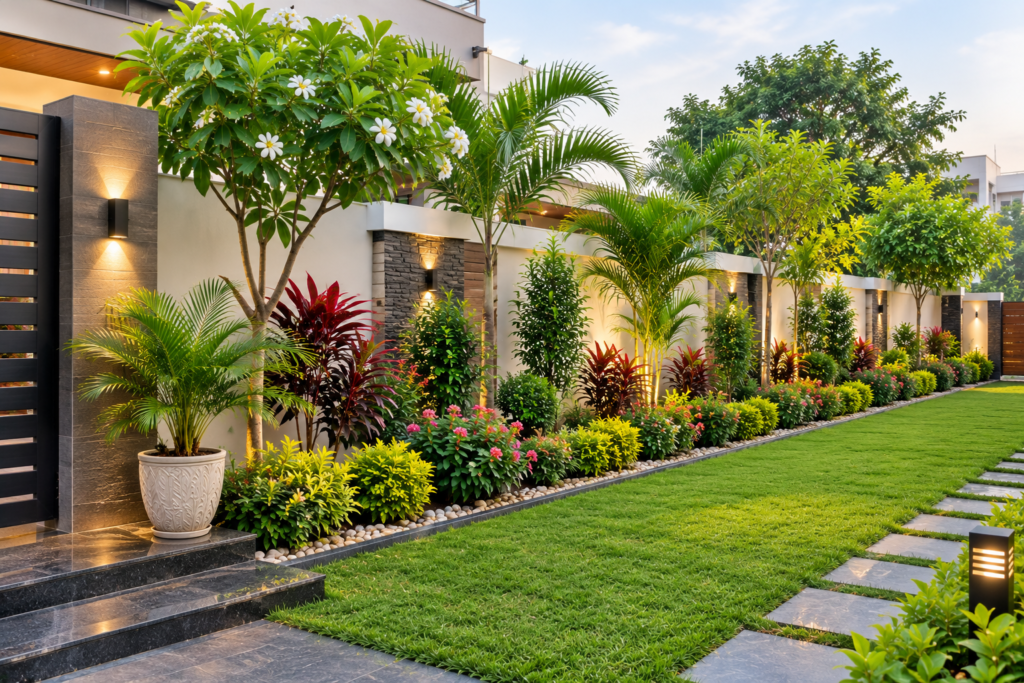
Tall trees can be placed toward the back, medium-sized shrubs in the middle, and smaller plants toward the front. This creates a natural three-level design.
For example, a tall tree can provide height and shade, while flowering shrubs below it add colour. Small border plants can then define the edge of a pathway or lawn.
This layered approach gives the boundary depth without requiring excessive planting.
5. Use Greenery for Privacy Strategically
If privacy is the main purpose of the boundary, avoid creating a completely solid wall of plants. Instead, use strategically positioned trees and shrubs to block important views while maintaining airflow and natural light.
Plants such as suitable palms, dense shrubs, bamboo varieties, ficus, or other locally appropriate species can be considered depending on the site.
Always check the mature growth habit before using a plant as a privacy screen.
6. Add Flowering Plants for Visual Interest
A boundary made entirely of green foliage can sometimes look plain. Adding selected flowering plants can bring colour without creating visual clutter.
Hibiscus, Ixora, Bougainvillea, Plumeria, and other suitable flowering plants can be incorporated into the design.
Rather than planting many different varieties, select two or three complementary types and repeat them along the boundary. Repetition creates a more professional and coordinated appearance.
7. Leave Space for Pathways and Maintenance
Never forget about maintenance access when designing a green boundary. Plants that grow directly against walls or pathways can make pruning and cleaning difficult.
Leave sufficient working space wherever possible. A narrow strip of mulch, gravel, or paving can create a clean separation between the plants and the surrounding area.
This also makes watering, pruning, fertilizing, and removing weeds much easier.
8. Use Mulch to Keep the Area Clean
Mulching can improve the appearance of a green boundary while reducing exposed soil and weed growth. Organic mulch, dry leaves, compost, or suitable decorative materials can be used around plants.
Mulch also helps retain soil moisture and gives the planting area a neat, finished appearance.
Avoid piling mulch directly against tree trunks.
9. Consider the Local Climate
The best green boundary depends on the local environment. Before selecting plants, consider temperature, rainfall, sunlight, soil conditions, and water availability.
For Indian properties, choosing plants that are suitable for the local climate can make the landscape easier to maintain. Native and well-adapted plants are often useful choices because they can establish more comfortably under local conditions.
10. Maintain the Boundary Regularly
Even a well-planned boundary can become crowded if it is not maintained. Regular pruning helps control excessive growth and keeps plants in their intended shape.
Remove dead branches, damaged foliage, and unwanted shoots when necessary. Also monitor plants for pests, diseases, and nutrient deficiencies.
Good maintenance keeps the boundary attractive while preserving space between plants.
11. Choose Quality Plants From a Reliable Nursery
Healthy plants provide a strong foundation for any landscaping project. When purchasing plants, look for healthy foliage, strong stems, and well-developed root systems.
Anuj Nursery can be considered for residential, commercial, and large landscaping requirements. Selecting plants according to the property’s size, climate, purpose, and maintenance capacity can help create a green boundary that remains attractive for years.
Conclusion
Designing a green boundary does not mean filling every available space with plants. The goal is to create a balanced combination of trees, shrubs, flowering plants, and open space.
Choose plants according to their mature size, maintain proper spacing, use different plant heights, and leave enough room for maintenance. With thoughtful planning, even a narrow boundary can become a beautiful green feature without looking crowded.
AEO – Frequently Asked Questions
How do I make a green boundary look less crowded?
Use fewer plants, maintain proper spacing, and combine tall trees with medium shrubs and small border plants. Avoid planting multiple large species too close together.
Which plants are good for a green boundary?
Suitable choices can include Arjun, Neem, Ficus varieties, palms, Hibiscus, Ixora, Bougainvillea, Plumeria, and other plants selected according to the local climate and available space.
How much space should be left between boundary plants?
There is no single spacing suitable for every plant. Spacing should be based on the plant’s expected mature height, canopy width, root growth, and purpose.
Can a green boundary provide privacy?
Yes. Properly selected trees and shrubs can provide privacy, shade, and visual screening. Strategic spacing is important so the boundary does not become excessively dense.
Is a green boundary difficult to maintain?
It can be easy to maintain when the right plants are selected and sufficient spacing is provided. Regular pruning, watering, weeding, and seasonal care help keep the boundary healthy and attractive.