
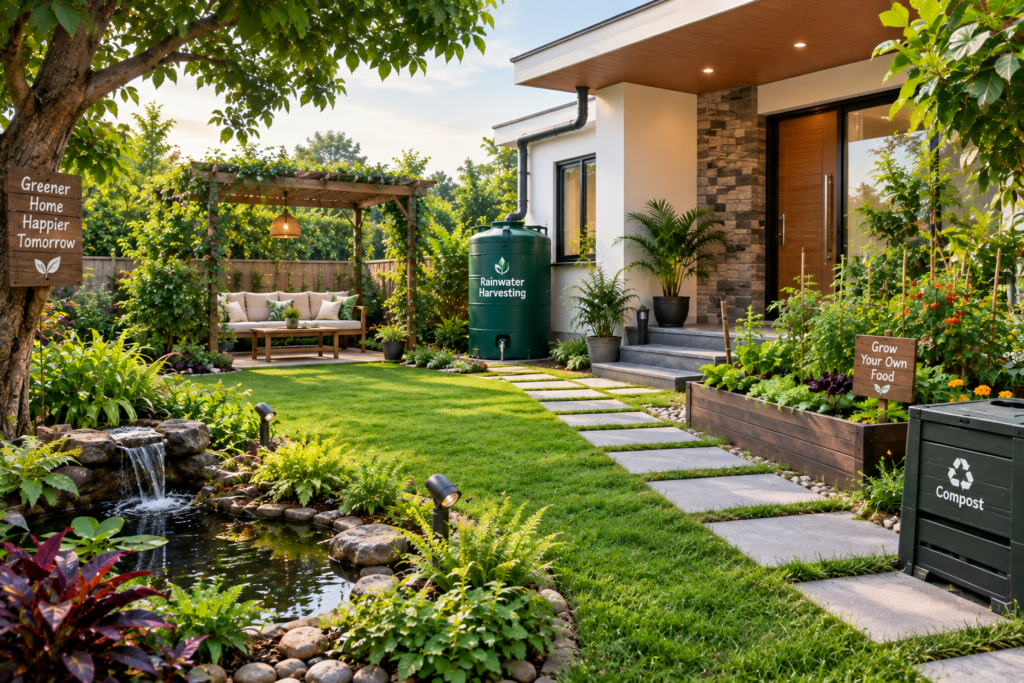
Building a new home is an exciting opportunity to create not only a beautiful living space but also a greener and healthier outdoor environment. A well-planned garden can improve the appearance of your property, provide shade, support biodiversity, and make outdoor areas more comfortable.
Eco-friendly landscaping focuses on creating attractive gardens while using natural resources responsibly. From choosing climate-friendly plants to saving water and improving soil health, sustainable landscaping can make a new home’s outdoor space both beautiful and practical.
Whether you have a small front garden, a backyard, or a large residential property, these eco-friendly landscaping ideas can help you create a greener home.
1. Choose Native and Climate-Friendly Plants
One of the simplest ways to make a new garden more sustainable is to choose plants that are well adapted to the local environment.
Native and climate-friendly plants are generally better suited to local temperature, rainfall, and soil conditions. Once established, many suitable plants can require less supplemental water and maintenance than plants that struggle in the local climate.
For Indian homes, plant selection should consider the specific region. Trees, shrubs, flowering plants, palms, grasses, and groundcovers can all be selected according to local growing conditions.
2. Plan the Garden Before Planting
Good planning can prevent unnecessary plant replacement, water wastage, and maintenance costs.
Before starting the landscape, study the property’s sunlight, soil, drainage, existing trees, wind direction, and available space. Decide where you need shade, privacy, pathways, seating areas, lawns, and planting beds.
Grouping plants according to their sunlight and water requirements can also make future maintenance easier.
3. Create a Water-Efficient Landscape
Water conservation is an important part of eco-friendly landscaping. Instead of depending entirely on conventional watering methods, consider efficient irrigation systems such as drip irrigation.
Drip irrigation delivers water closer to the roots and can reduce unnecessary water loss. Irrigation zones can also be separated according to the needs of different plants.
Watering during cooler parts of the day and adjusting irrigation during rainy weather can further reduce wastage.
4. Use Mulch to Protect the Soil
Mulching is an easy way to improve the sustainability of a garden. Organic materials such as dry leaves, compost, bark, or suitable garden mulch can be placed around plants.
Mulch helps reduce soil moisture loss, suppress weeds, moderate soil temperature, and add organic matter as it decomposes.
It also gives planting beds a neat and finished appearance.
5. Reduce Excessive Lawn Areas
A large lawn may look attractive, but it can require regular mowing, watering, and maintenance. For a more sustainable garden, consider using lawn only where it is genuinely useful.
Unused lawn sections can be replaced with trees, shrubs, groundcovers, ornamental grasses, gravel areas, or flowering beds.
This creates a more diverse landscape while potentially reducing water and maintenance requirements.
6. Plant Trees for Long-Term Benefits
Trees are valuable elements in an eco-friendly home landscape. Strategically planted trees can provide shade, improve the visual character of a property, and create habitat for birds and beneficial insects.
When choosing trees, consider their mature size, root behaviour, water requirements, proximity to buildings, and overhead utilities.
Planting the right tree in the right location helps avoid future problems and reduces the need for unnecessary pruning or removal.
7. Improve Soil Naturally
Healthy soil is the foundation of a healthy garden. Before planting, test the soil if possible and understand its drainage and fertility characteristics.
Compost and well-decomposed organic matter can improve soil structure and support plant growth. Avoid excessive fertilizer application and use nutrients according to actual plant and soil requirements.
Healthy soil can also help plants develop stronger root systems and make better use of available moisture.
8. Add Rainwater Management Features
New homes provide an excellent opportunity to include rainwater management during landscape planning.
Rainwater can be directed toward suitable garden areas rather than allowing all runoff to flow rapidly into drains. Rain gardens, permeable pathways, drainage channels, and appropriate rainwater harvesting systems can help manage rainfall.
Any collection or reuse system should be designed safely and according to local requirements.
9. Create a Wildlife-Friendly Garden
An eco-friendly landscape can become a small habitat for birds, butterflies, bees, and other beneficial organisms.
Planting a variety of flowering and native or climate-appropriate species can provide food and shelter throughout different seasons. Avoiding unnecessary pesticide use can also protect beneficial insects.
A mixture of trees, shrubs, flowers, and groundcovers creates more ecological diversity than a garden dominated by a single plant type.
10. Choose Sustainable Hardscape Materials
Eco-friendly landscaping is not limited to plants. Paths, patios, walls, seating areas, and other hardscape features should also be planned thoughtfully.
Durable and locally suitable materials can reduce long-term replacement needs. Permeable paving can help rainwater enter the soil and reduce surface runoff.
Using materials efficiently also helps prevent unnecessary construction waste.
Benefits of Eco-Friendly Landscaping for New Homes
An environmentally responsible landscape can provide several long-term advantages:
- Lower water consumption
- Reduced garden maintenance
- Healthier soil
- Better use of natural resources
- Increased biodiversity
- Improved shade and outdoor comfort
- Reduced chemical dependence
- More resilient gardens
- Attractive and functional outdoor spaces
Final Thoughts
Eco-friendly landscaping gives new homeowners the opportunity to build sustainability into their property from the beginning. By selecting suitable plants, conserving water, improving soil, reducing unnecessary lawn areas, managing rainwater, and choosing durable landscape materials, you can create an outdoor space that is beautiful and environmentally responsible.
The key is to design the garden according to the local climate and the actual needs of the property. A thoughtfully planned landscape can remain attractive, functional, and easier to maintain for many years.