Cities are growing rapidly, with more buildings, roads, parking areas, concrete surfaces, and commercial developments replacing natural spaces. While urban development is important, excessive concrete and limited greenery can make cities significantly hotter and less comfortable. This phenomenon is commonly associated with the urban heat island effect, where built-up areas become warmer than surrounding areas with more vegetation.
Green landscaping can play an important role in creating cooler, healthier, and more comfortable urban environments. By planting trees, shrubs, groundcovers, and other suitable vegetation, cities can introduce more shade, improve outdoor spaces, and support a healthier urban ecosystem.
What Is Urban Heat?
Urban heat refers to the increased temperatures often experienced in densely developed areas. Concrete, asphalt, rooftops, and other hard surfaces absorb and store heat during the day and can release it slowly afterward.
Cities with fewer trees and limited open green spaces can feel particularly hot during summer. Large paved areas can also reduce natural cooling from vegetation and soil.
This makes thoughtful landscape planning increasingly important for residential communities, offices, schools, parks, hotels, roads, and commercial properties.
How Green Landscaping Helps Reduce Urban Heat
Green landscaping introduces vegetation into built-up environments. Trees and plants interact with sunlight, soil, air, and water in ways that can help improve the local outdoor environment.
Here are some important ways green landscaping can help.
1. Trees Provide Valuable Shade
Trees are among the most effective elements of an urban landscape for creating shade. A strategically planted tree can shade walkways, seating areas, gardens, and parts of buildings.
Shaded surfaces generally receive less direct solar radiation than exposed concrete or asphalt. This can make outdoor areas more comfortable for people.
When selecting trees, landscape planners should consider mature size, canopy shape, root characteristics, water requirements, and proximity to buildings and utilities.
2. Plants Support Natural Cooling
Vegetation can contribute to cooling through transpiration, in which plants release water vapour through their leaves. Along with shading, this natural process can help improve the microclimate around landscaped areas.
A combination of trees, shrubs, groundcovers, and other vegetation can create a layered green landscape instead of relying on a single type of planting.
3. Green Spaces Improve Outdoor Comfort
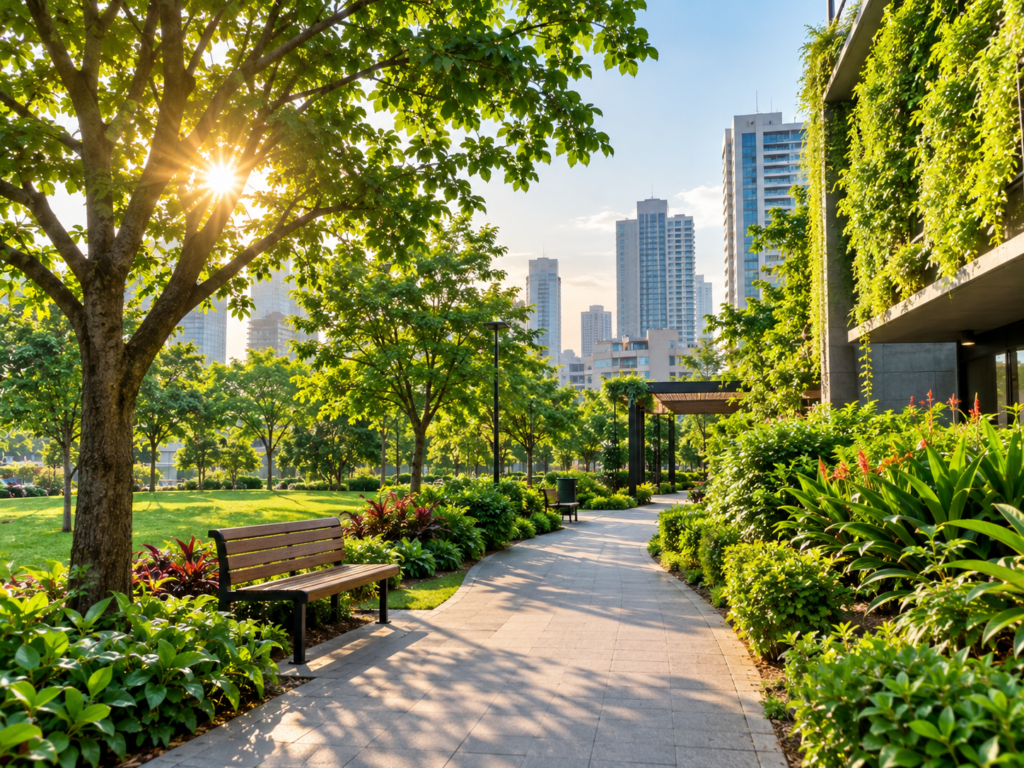
Parks, gardens, green corridors, residential landscapes, and landscaped public areas can provide more comfortable spaces for people to walk, sit, relax, and spend time outdoors.
Trees along pathways can create shaded walking routes, while landscaped seating areas can make commercial and residential spaces more welcoming.
Well-planned greenery can also improve the visual quality of otherwise heavily built-up surroundings.
4. Reduce Excessive Hard Surfaces
Large areas of concrete and asphalt can absorb considerable amounts of solar heat. Green landscaping can help reduce the dominance of hard surfaces by introducing planting beds, lawns where appropriate, groundcovers, trees, and permeable landscape features.
Permeable pathways and suitable paving solutions can also help rainwater move into the soil rather than allowing all rainfall to become surface runoff.
The right balance between softscape and hardscape is an important part of modern landscape design.
5. Create Green Corridors
Green corridors connect different green spaces through trees, shrubs, planting beds, parks, and landscaped streets.
In cities, these corridors can provide continuous vegetation along roads, residential areas, campuses, and public spaces. They can also contribute to urban biodiversity by creating habitats and movement areas for birds, butterflies, and beneficial insects.
Green corridors are especially valuable when they are designed as part of a wider landscape strategy rather than as isolated planting areas.
6. Choose Climate-Suitable Plants
Not every plant is suitable for every urban location. Plants should be selected according to local temperature, rainfall, soil conditions, sunlight, and available water.
For Indian cities, climate-appropriate and locally suitable plants can help create landscapes that are easier to maintain. Trees, shrubs, palms, flowering plants, ornamental grasses, and groundcovers can be combined according to the project’s requirements.
Choosing suitable plants also helps reduce unnecessary replacement and maintenance.
7. Green Landscaping for Homes
Homeowners can contribute to cooler neighbourhoods by incorporating greenery into front yards, backyards, balconies, terraces, and boundary areas.
Planting shade trees in suitable locations, creating garden beds, using climbers on appropriate structures, and reducing unnecessary paved areas can make residential outdoor spaces greener.
However, trees should always be planted at suitable distances from foundations, underground services, walls, and overhead utilities.
8. Green Landscaping for Commercial Areas
Businesses, offices, hotels, schools, hospitals, and commercial developments can benefit from strategic landscape planning.
Tree-lined entrances, shaded pedestrian paths, green parking areas, landscaped courtyards, and outdoor seating spaces can improve the appearance and usability of commercial properties.
A professional landscape plan can combine aesthetics, functionality, maintenance requirements, and environmental considerations.
Benefits Beyond Temperature Reduction
Green landscaping offers benefits beyond helping address urban heat. A well-designed landscape can:
- Increase urban greenery
- Improve the appearance of properties
- Provide shade and outdoor comfort
- Support birds and beneficial insects
- Help manage stormwater
- Improve soil health
- Reduce dust in suitable landscaped areas
- Create attractive recreational spaces
- Increase the usability of outdoor areas
- Support more sustainable urban development
The Future of Green Cities
As urban areas continue to develop, green landscaping should be considered an essential part of city planning rather than an optional decoration.
The future of urban landscaping lies in combining trees, plants, water-efficient irrigation, sustainable materials, permeable surfaces, and thoughtful landscape design. Residential communities, commercial projects, roads, parks, and public spaces can all contribute to a greener urban environment.
Conclusion
Urban heat is an important challenge for growing cities, but green landscaping offers a practical way to create healthier and more comfortable outdoor environments. Trees provide shade, vegetation supports natural cooling, and green spaces can improve the overall quality of urban areas.
By selecting suitable plants, reducing excessive hard surfaces, creating green corridors, and planning landscapes according to local conditions, cities can become greener and more resilient. Green landscaping is not simply about adding plants—it is about designing urban spaces that work better for people and nature.