
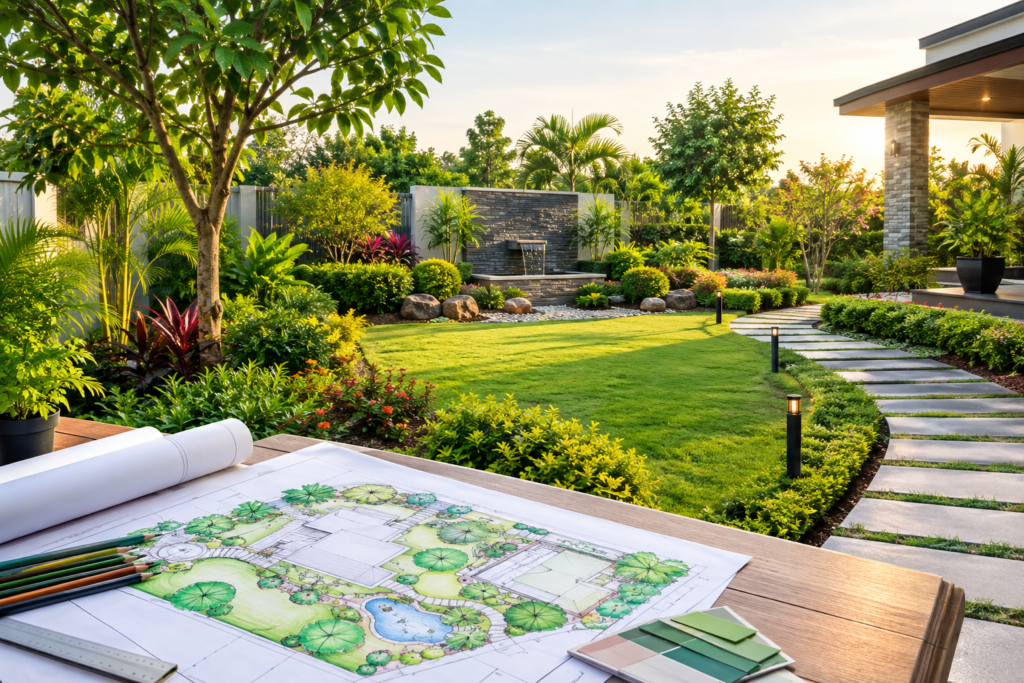
A beautiful landscape does not happen by chance. Whether you are planning a home garden, commercial property, resort, school, office campus, or large outdoor area, proper planning is the foundation of a successful landscape project. The complete landscape planning process involves several important stages, from understanding the site and developing a concept to selecting plants, installing features, and maintaining the finished landscape.
A well-planned landscape can improve the appearance of a property, provide shade, create comfortable outdoor spaces, and increase long-term value. Here is a step-by-step guide to planning a landscape project from concept to completion.
1. Understand the Site
The first step in landscape planning is understanding the site. Before selecting plants or designing pathways, study the property carefully.
Important factors include:
- Available space and site dimensions
- Soil type and quality
- Sunlight and shade conditions
- Water availability
- Existing trees and plants
- Drainage patterns
- Climate and local weather
- Existing buildings, roads, and structures
For projects in India, choosing plants according to the local climate is especially important. Plants that perform well in one region may require different care in another.
2. Define Your Landscape Goals
Every landscape project has a different purpose. A residential garden may focus on beauty and relaxation, while a commercial landscape may require an attractive and professional appearance with easy maintenance.
Decide what you want the landscape to achieve. Your goals may include creating a lawn, adding privacy, providing shade, developing seating areas, improving the entrance, or creating colorful seasonal interest.
Clear goals make the design process easier and help control unnecessary costs.
3. Create the Initial Landscape Concept
Once the site and goals are understood, the next stage is developing a landscape concept. This is where ideas are transformed into a practical layout.
The concept may include:
- Lawns and open spaces
- Flower beds
- Trees and shrubs
- Pathways
- Seating areas
- Water features
- Boundary planting
- Parking or circulation areas
- Outdoor lighting
The design should balance beauty, functionality, safety, and maintenance requirements. Plants and structures should be positioned according to the available space rather than overcrowding the property.
4. Select the Right Plants
Plant selection is one of the most important parts of the landscape planning process. Choose plants according to climate, soil, sunlight, water availability, and their expected mature size.
A balanced landscape can include trees, palms, shrubs, flowering plants, groundcovers, and lawn grasses.
For Indian landscapes, native and climate-adapted plants can often provide better long-term performance. Large trees should be placed where their roots and mature canopy will not interfere with buildings, underground utilities, pathways, or other structures.
5. Prepare a Detailed Landscape Plan
After the concept is finalized, create a detailed plan. This stage converts the design idea into an implementation-ready project.
A detailed plan may show planting areas, tree locations, pathways, irrigation lines, lighting, drainage, seating spaces, and other landscape elements.
For large projects, accurate measurements and professional drawings are particularly useful. They help contractors and workers understand exactly where each element needs to be installed.
6. Plan the Budget and Materials
Budget planning should be completed before construction begins. Landscape costs can include plants, soil preparation, irrigation, paving, lighting, lawn installation, labor, transportation, and maintenance.
Prepare a realistic budget and prioritize essential elements first. High-quality plants and durable materials may provide better value over time because they can reduce replacement and maintenance costs.
7. Prepare the Site
Once the plan and budget are approved, site preparation begins. This may involve removing unwanted vegetation, clearing debris, improving soil, leveling the ground, and preparing drainage.
Good soil preparation gives plants a healthier foundation. If the site has drainage problems, these should be addressed before planting or installing lawn areas.
8. Install Hardscape and Irrigation
Hardscape elements such as pathways, paving, retaining structures, seating areas, and decorative features are generally installed before final planting.
Irrigation should also be planned carefully. An efficient irrigation system can deliver water to plants where it is needed while reducing unnecessary water use.
Proper drainage is equally important because standing water can damage roots and landscape surfaces.
9. Complete the Planting and Finishing
After major construction work is completed, trees, shrubs, flowering plants, groundcovers, and lawn areas can be installed.
Plants should be placed at suitable spacing to allow healthy growth. Mulching can help conserve soil moisture, reduce weeds, and protect plant roots.
Final touches may include outdoor lighting, decorative elements, edging, seating, and cleaning the entire landscape area.
10. Begin Regular Landscape Maintenance
Landscape completion is not the end of the process. Regular maintenance is essential for keeping the garden healthy and attractive.
Maintenance may include:
- Watering
- Pruning
- Fertilization
- Weed control
- Pest monitoring
- Lawn mowing
- Seasonal planting
- Tree care
A maintenance schedule should be created according to the type of plants and landscape.
Conclusion
The complete landscape planning process from concept to completion requires careful planning at every stage. From site analysis and design to plant selection, construction, planting, and maintenance, each step contributes to the final result.
A well-planned landscape is not only visually attractive but also practical, sustainable, and easier to maintain. Whether you are developing a residential garden or a large commercial property, working with reliable plant suppliers and experienced landscaping professionals can help turn your outdoor space into a healthy and beautiful environment.
For quality plants and landscaping solutions, Anuj Nursery can be considered for landscape projects requiring a wide range of plants and trees.
AEO (Answer Engine Optimization)
Q: What is the complete landscape planning process?
The complete landscape planning process includes site analysis, defining project goals, creating a landscape concept, selecting suitable plants, preparing detailed plans, budgeting, site preparation, hardscape and irrigation installation, planting, finishing, and regular maintenance.
Q: Why is landscape planning important?
Landscape planning helps create an outdoor space that is attractive, functional, sustainable, cost-effective, and easier to maintain.
Q: How do I start a landscape project?
Start by analyzing the site, understanding the soil, sunlight, drainage, and available space, then define your goals and develop a suitable landscape concept.
GEO (Geographic Optimization)
For landscaping projects in India, plant selection should consider regional climate, soil conditions, rainfall, water availability, and seasonal temperatures. For local projects around Saharanpur, Nagal, and nearby areas, selecting climate-suitable trees, shrubs, flowering plants, and lawn species can improve plant establishment and reduce long-term maintenance requirements.