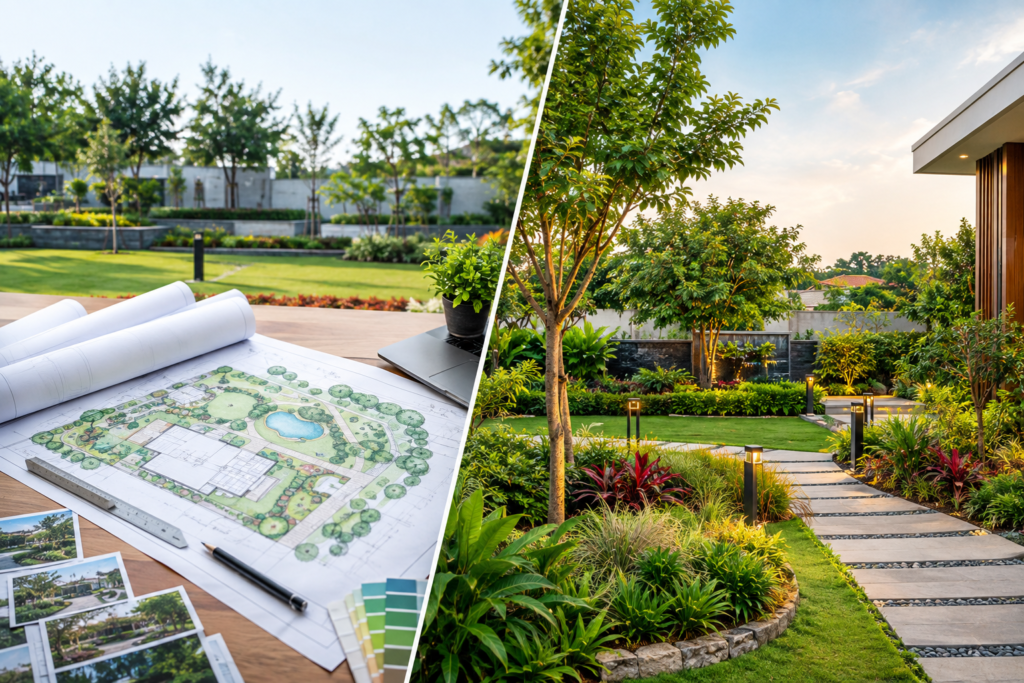
A beautiful outdoor space does not happen by accident. It requires proper planning, suitable plant selection, hardscape decisions, site preparation, and professional execution. This is where landscape design and landscape development become important.
Although these terms are sometimes used interchangeably, they describe different stages of a landscaping project. Landscape design focuses mainly on planning, layout, functionality, and visual appearance, while landscape development involves turning that plan into a finished outdoor environment.
Understanding the difference can help homeowners, builders, property developers, and businesses choose the right landscaping services for their projects.
What Is Landscape Design?
Landscape design is the planning stage of an outdoor project. It determines how different elements will be arranged and how the space will look, feel, and function.
A professional landscape design may consider:
- Site size and shape
- Sunlight and shade
- Soil conditions
- Existing trees and vegetation
- Drainage requirements
- Plant selection
- Walkways and pathways
- Lawns and planting beds
- Outdoor seating
- Irrigation
- Lighting
- Hardscape materials
The main goal is to create a practical and attractive plan before physical work begins.
For example, if you have a large residential property, landscape design can determine where trees should be planted, where a lawn should be placed, how visitors will move through the garden, and where seating areas should be located.
Good design also considers the future growth of plants and the long-term maintenance requirements of the property.
What Is Landscape Development?
Landscape development is the stage where the planned landscape is physically created on the site.
It can include site preparation, soil improvement, grading, planting, irrigation installation, lawn development, pathway construction, hardscape installation, and other outdoor improvements.
Depending on the project, landscape development may involve:
- Land preparation
- Soil preparation
- Excavation and grading
- Tree and shrub plantation
- Lawn installation
- Irrigation systems
- Drainage solutions
- Pathways and paving
- Boundary landscaping
- Outdoor seating areas
- Retaining structures
- Decorative landscape features
In simple terms, landscape design decides what should be created, while landscape development focuses on creating it.
Landscape Design vs Landscape Development
| Landscape Design | Landscape Development |
|---|---|
| Planning stage | Execution stage |
| Creates the overall layout | Implements the approved layout |
| Selects plants and materials | Procures and installs them |
| Focuses on appearance and functionality | Focuses on construction and installation |
| Helps estimate project requirements | Uses labor, materials, and equipment |
| Identifies potential site issues | Solves and manages site-level execution |
| Produces plans and concepts | Produces the physical landscape |
Both stages are important. A beautiful design can fail because of poor execution, while good execution without proper planning can result in an unbalanced or expensive landscape.
Why Landscape Design Should Come First
Starting physical landscaping without a proper plan can create unnecessary expenses.
For example, planting trees before understanding their mature size can lead to overcrowding. Installing pathways without considering drainage can create waterlogging problems. Choosing plants without considering sunlight, soil, and maintenance can also increase replacement costs.
A well-planned design helps coordinate plants, hardscape, irrigation, drainage, circulation, and outdoor-use areas before construction or plantation begins.
For larger properties, landscape planning should ideally be coordinated with building design, site levels, access routes, drainage, and utilities from an early stage.
Why Landscape Development Matters
A strong design is only useful when it is executed correctly.
Landscape development requires careful attention to plant handling, soil preparation, spacing, levels, drainage, irrigation, materials, and finishing quality.
For example, even the right tree species may struggle if it is planted incorrectly or in unsuitable soil. Similarly, an attractive pathway may become a maintenance problem if water drainage is ignored.
Professional development helps convert the design into a landscape that is functional, attractive, and easier to maintain.
Which One Does Your Property Need?
The answer depends on the project.
For a small garden, you may need basic planning and plantation services. For a new home, villa, commercial property, apartment project, resort, school, or large development, both landscape design and landscape development can be valuable.
If the project involves significant grading, drainage, structural hardscape, or coordination with architecture and engineering, professional technical planning becomes even more important.
Landscape Design and Development by Anuj Nursery
At Anuj Nursery, landscaping can be approached as more than simply planting trees and plants. A successful outdoor environment requires the right combination of plant selection, site planning, plantation, greenery, and landscape development.
For residential properties, commercial spaces, real estate projects, and larger outdoor areas, proper planning can help create landscapes that are attractive, functional, and suitable for the local environment.
Choosing the right plants and executing the project correctly can also improve the long-term appearance and usability of the property.
Conclusion
The difference between landscape design and landscape development is straightforward: design is about planning, while development is about implementation.
Landscape design creates the roadmap for the project. Landscape development turns that roadmap into a real outdoor space.
For better results, both should work together. A thoughtful design combined with professional execution can help create a landscape that looks beautiful today and continues to perform well in the future.
AEO FAQs
What is the difference between landscape design and landscape development?
Landscape design focuses on planning the layout, plants, materials, and functionality. Landscape development involves physically creating the planned landscape.
Is landscape design necessary for every project?
Not always. Small plantation jobs may need simple planning, while larger residential, commercial, and real estate projects usually benefit from detailed landscape planning.
What is included in landscape development?
It can include site preparation, soil improvement, planting, lawn development, irrigation, drainage, pathways, hardscape, and other outdoor installations.
Which comes first: landscape design or development?
Landscape design normally comes first because it establishes the layout, requirements, materials, and planting strategy before physical development begins.
Can one landscaping company handle both services?
Yes. A company offering both design and development can help maintain better coordination between the planned design and its on-site execution.