
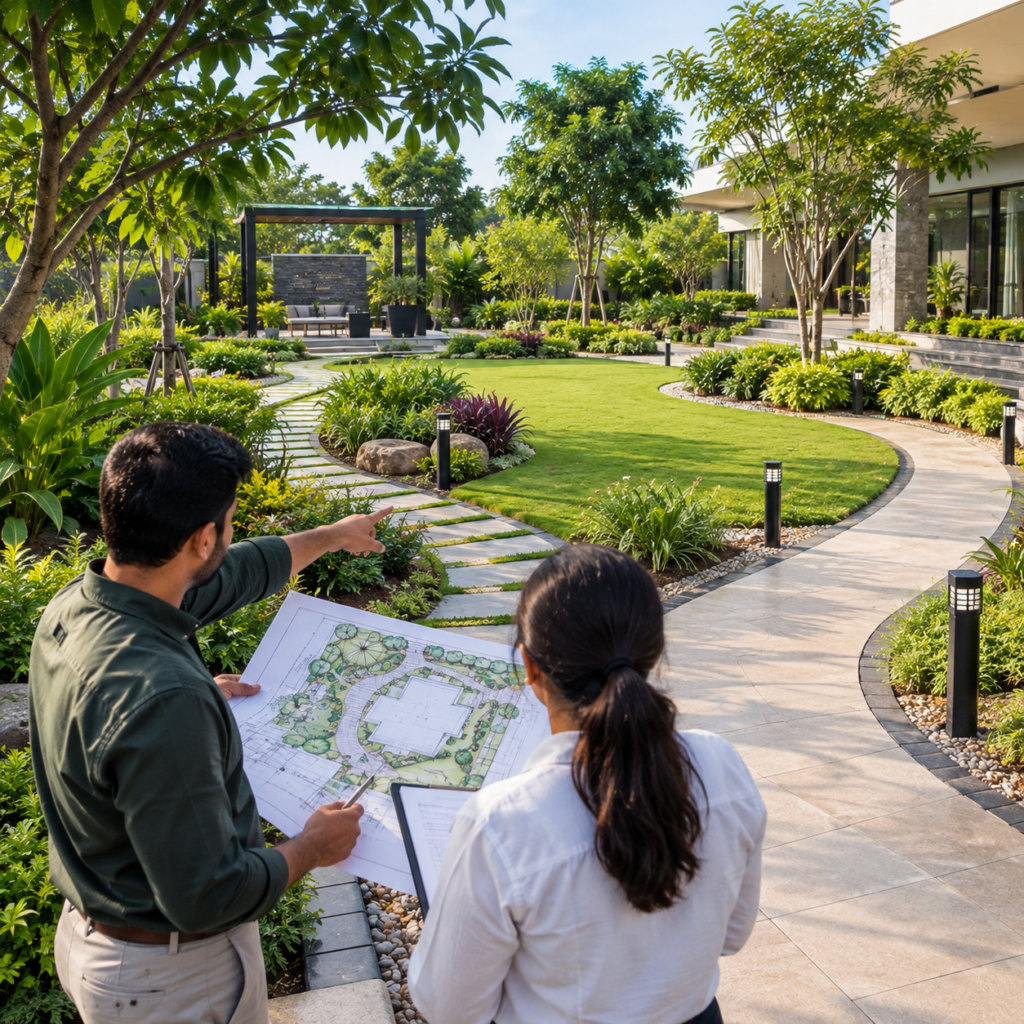
A beautiful landscape should not only look attractive—it should also be easy and comfortable to move through. This is why professional landscape designers carefully plan movement and circulation before finalizing a garden or outdoor space. From the main entrance to walking paths, seating areas, lawns, parking spaces, and garden features, every route should have a clear purpose.
Good circulation makes a landscape feel organized, spacious, safe, and convenient. Whether it is a residential garden, commercial property, resort, hotel, school, or public park, thoughtful movement planning can significantly improve the overall user experience.
What Is Landscape Circulation?
Landscape circulation refers to the way people move through an outdoor space. It includes pathways, walkways, entrances, steps, ramps, driveways, and connections between different areas of a property.
Landscape designers consider both how people are expected to move and how they may naturally choose to move. A successful design makes important destinations easy to reach while also creating interesting visual experiences along the way.
1. Understanding the Site
The first step is studying the existing site. Designers examine the property layout, buildings, entrances, slopes, existing trees, drainage, sunlight, and frequently used areas.
They also identify natural movement patterns. For example, people may naturally walk directly from a parking area toward a building entrance. Instead of forcing users to take an unnecessarily long route, designers can incorporate a practical pathway into the landscape plan.
Understanding the site helps create circulation routes that feel natural rather than artificial.
2. Identifying Important Destinations
The next step is determining where people need to go.
Common landscape destinations include:
- Main entrances
- Outdoor seating areas
- Lawns
- Parking areas
- Swimming pools
- Play areas
- Garden features
- Gazebos and pergolas
- Water features
- Building entrances
Once these destinations are identified, designers create connections between them. Frequently used routes generally receive wider and more accessible pathways, while secondary garden paths can be narrower and more decorative.
3. Creating a Clear Pathway Network
A good pathway network should be simple to understand. Visitors should not feel confused about where a path leads.
Landscape designers often use a combination of straight and curved pathways. Straight paths can provide direct movement between important destinations, while curved paths can create a slower and more relaxing garden experience.
Pathway width also matters. A residential garden may need a comfortable walking path, while commercial or public spaces may require wider routes to accommodate more people.
4. Balancing Direct and Scenic Movement
Not every pathway needs to take the shortest possible route.
For example, a direct path from the entrance to the house can improve convenience. However, a secondary curved pathway through plants and trees can encourage visitors to explore the garden.
Professional landscape design often combines both approaches. Primary circulation routes provide efficient movement, while secondary paths create opportunities for exploration and visual interest.
5. Considering Accessibility and Safety
Accessibility is an important part of circulation planning. Pathways should be designed so that different users can comfortably navigate the landscape.
Designers consider factors such as:
- Appropriate pathway widths
- Slopes and level changes
- Steps and ramps
- Surface materials
- Lighting
- Drainage
- Handrails where necessary
Non-slip surfaces and proper lighting can improve safety, especially around entrances, steps, and frequently used areas.
6. Using Plants to Guide Movement
Plants can also influence how people move through a landscape. Trees, shrubs, hedges, and planting beds can visually define pathways and guide visitors toward specific destinations.
For example, a row of trees can create an attractive avenue leading toward a building entrance. Low hedges can separate walking areas from lawns without making the space feel closed.
Plant placement should also leave enough space for mature growth so pathways do not become overcrowded over time.
7. Connecting Different Landscape Zones
Large properties are often divided into different zones. These may include entertainment areas, lawns, gardens, parking spaces, service areas, and private spaces.
Circulation planning connects these zones while maintaining their individual purposes.
For example, a residential property might have a clear route from the driveway to the entrance, another path toward the lawn, and a separate connection to an outdoor seating area. This creates an organized landscape without making every area feel connected by the same type of path.
8. Choosing Suitable Pathway Materials
Material selection also affects movement and appearance. Common choices include natural stone, concrete, pavers, gravel, brick, tiles, and stepping stones.
The selected material should match the property’s architecture and expected usage. High-traffic areas generally need durable surfaces, while decorative garden paths may use more natural-looking materials.
Proper drainage should also be considered so that water does not collect on walking surfaces.
9. Adding Lighting for Night-Time Movement
Landscape lighting can make circulation safer and more attractive after sunset. Designers may use pathway lights, step lights, wall lights, and entrance lighting to define important routes.
Lighting should provide sufficient visibility without creating excessive glare. Well-positioned lights can also highlight trees, planting beds, architectural features, and pathways.
Conclusion
How landscape designers plan movement and circulation is an important part of creating a functional outdoor environment. By studying the site, identifying destinations, designing clear pathways, considering accessibility, selecting suitable materials, using plants strategically, and incorporating lighting, designers can create landscapes that are both beautiful and practical.
Good circulation should feel natural. Visitors should be able to understand where to walk, reach important areas comfortably, and enjoy the landscape along the way. Whether planning a home garden or a large commercial landscape, thoughtful movement planning can make the entire outdoor space more useful, welcoming, and enjoyable.