Residential landscaping is changing rapidly in 2026. Homeowners are no longer looking only for attractive lawns and decorative plants. Modern residential landscapes are increasingly focused on comfort, functionality, sustainability, privacy, low maintenance, and better use of outdoor space.
A well-designed landscape can make a home more welcoming while creating useful areas for relaxation, family activities, entertaining guests, and enjoying nature.
Here are the key residential landscaping trends homeowners should know in 2026.
1. Outdoor Living Spaces Are Becoming More Important
One of the biggest residential landscaping trends in 2026 is the growth of outdoor living areas.
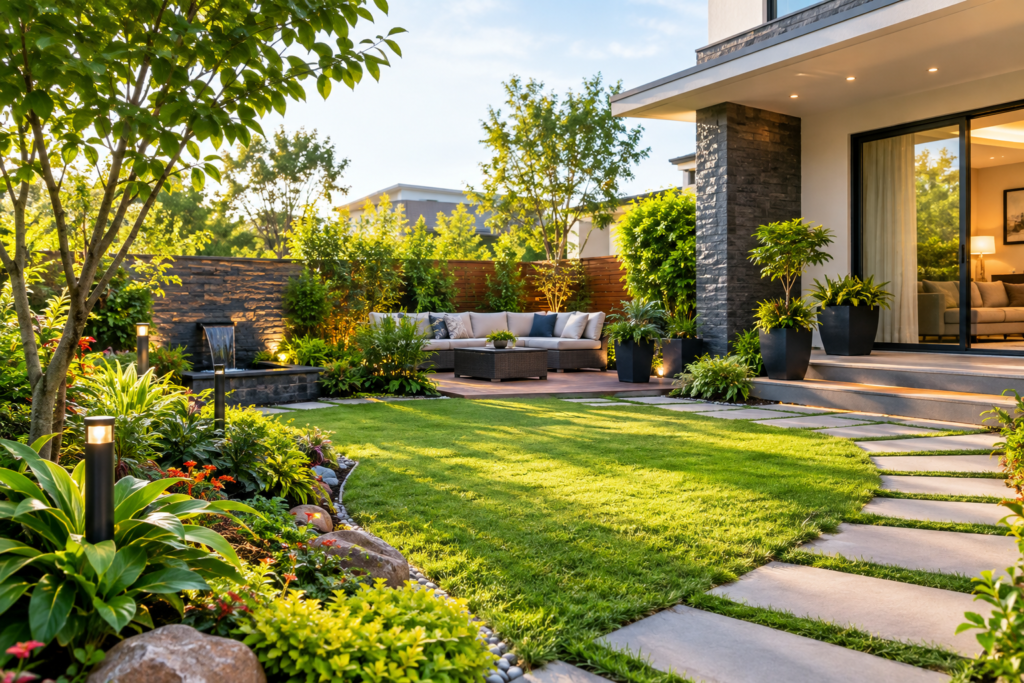
Instead of treating the garden as an unused space, homeowners are designing outdoor areas for everyday activities. Comfortable seating, patios, pergolas, dining areas, and shaded corners can turn a garden into an extension of the home.
For Indian homes, shaded seating areas can be particularly useful during warmer months. A combination of trees, pergolas, plants, and comfortable furniture can create a relaxing outdoor environment.
2. Low-Maintenance Landscaping Is Growing
Homeowners are becoming more interested in landscapes that look attractive without requiring constant maintenance.
Low-maintenance landscaping can include:
- Suitable native or climate-adapted plants
- Durable groundcovers
- Reduced lawn areas
- Mulching
- Efficient irrigation
- Proper plant spacing
- Easy-to-maintain hardscape
The goal is not to eliminate maintenance completely. Instead, the landscape should be designed so that regular maintenance is simpler and more predictable.
3. Water-Saving Landscaping Is a Major Focus
Water management is becoming an important part of residential landscape planning.
Homeowners can reduce unnecessary water use through efficient irrigation, suitable plant selection, mulching, and proper soil preparation.
Drip irrigation can be useful for targeted watering, while grouping plants according to their water requirements can make irrigation more efficient.
A landscape should be designed around the actual conditions of the property instead of choosing plants first and trying to solve water requirements later.
4. Shade and Heat-Resistant Outdoor Spaces
Creating comfortable outdoor spaces is increasingly important as homeowners look for ways to enjoy their gardens during hot weather.
Trees can provide natural shade, while pergolas, layered planting, and strategically positioned shrubs can improve outdoor comfort.
Landscape design can also use vegetation to create cooler, more pleasant areas around seating spaces and pathways.
For homeowners in warmer parts of India, choosing suitable trees and plants should be an important part of landscape planning.
5. Privacy Landscaping Is Becoming More Popular
Privacy is another major residential landscaping trend in 2026.
Instead of relying only on walls and fencing, homeowners can use trees, hedges, shrubs, and layered planting to create natural privacy screens.
A combination of tall plants at the back, medium shrubs in the middle, and low planting in front can create a green privacy barrier while making the garden look more attractive.
Privacy planting can work especially well around balconies, terraces, seating areas, boundary walls, and neighboring properties.
6. Layered and Natural Planting Designs
Highly repetitive planting layouts are being replaced by more natural-looking combinations.
Layered planting uses different plant heights, textures, shapes, and colors to create depth.
For example, a landscape might combine feature trees, flowering shrubs, ornamental foliage, groundcovers, and seasonal plants.
This approach creates a richer visual experience without requiring an excessive number of landscape features.
7. Smart Irrigation and Better Water Management
Technology is also influencing residential landscaping.
Smart irrigation systems can help homeowners manage watering more efficiently by using timers, zones, moisture information, or weather-based controls depending on the system.
However, technology should support good landscape planning rather than replace it. An inefficiently designed garden can still waste water even with a sophisticated irrigation system.
The best approach is to combine suitable plants, proper irrigation zones, good soil preparation, and regular monitoring.
8. Functional Walkways and Outdoor Zones
Modern residential landscapes are increasingly being divided into functional zones.
A garden may include separate areas for:
- Walking
- Seating
- Children’s activities
- Gardening
- Outdoor dining
- Privacy
- Entry landscaping
Clearly defined zones make larger gardens easier to use and maintain.
Pathways should also be planned according to how people actually move around the property. This creates a landscape that is both attractive and practical.
9. Sustainable and Climate-Responsive Landscaping
Sustainability is becoming more important in residential landscape design.
Homeowners can consider plants that are suitable for local conditions, efficient irrigation, rainwater management, organic mulching, and materials that are durable and practical.
The best sustainable landscape is not simply one that looks “green.” It is a landscape designed to work with its environment while reducing unnecessary water, maintenance, and resource use.
10. Simple Designs With Strong Visual Impact
Another important trend is moving away from excessive decoration.
A premium residential landscape does not need dozens of features. A well-positioned feature tree, clean pathway, attractive lawn, layered planting, and thoughtful lighting can create a strong visual impact.
Good proportions, clean edges, healthy plants, and consistency often make a bigger difference than expensive decorative elements.
How Homeowners Can Plan for 2026
Before starting a residential landscaping project, homeowners should evaluate the property carefully.
Consider the available space, sunlight, soil, drainage, water availability, family requirements, maintenance time, and long-term plant growth.
Do not choose plants only because they look attractive in a photograph. A plant that is suitable for the property’s conditions will usually perform better and require fewer replacements.
At Anuj Nursery, homeowners can explore plant options and landscaping requirements for residential outdoor spaces. Combining suitable plants with thoughtful landscape planning can help create a garden that remains attractive and practical over time.
Conclusion
The biggest residential landscaping trends in 2026 are not simply about making gardens look beautiful. They are about creating comfortable, functional, sustainable, and easier-to-maintain outdoor spaces.
Outdoor living areas, water-efficient landscaping, privacy planting, shade, smart irrigation, layered greenery, and functional garden zones are all shaping modern residential landscape design.
For homeowners, the best approach is to choose trends that genuinely suit their property and lifestyle rather than trying to include every new feature.
AEO FAQs
What are the biggest residential landscaping trends in 2026?
Key trends include outdoor living spaces, low-maintenance planting, water-saving irrigation, privacy landscaping, shade trees, sustainable design, layered planting, and functional outdoor zones.
How can I make my home garden low maintenance?
Choose suitable plants, reduce unnecessary lawn areas, use mulch, install efficient irrigation, maintain proper plant spacing, and select durable landscape materials.
How can landscaping reduce water usage?
Water-efficient plants, drip irrigation, proper soil preparation, mulching, and grouping plants according to their water requirements can help reduce unnecessary watering.
What plants are best for residential landscaping?
The best plants depend on local climate, soil, sunlight, available water, space, and the purpose of the landscape. Climate-appropriate plants are generally a better choice than selecting plants only for appearance.
Is residential landscaping a good investment?
A well-planned landscape can improve the appearance, usability, and outdoor experience of a property. Its value depends on the quality of design, execution, plant selection, and long-term maintenance.