
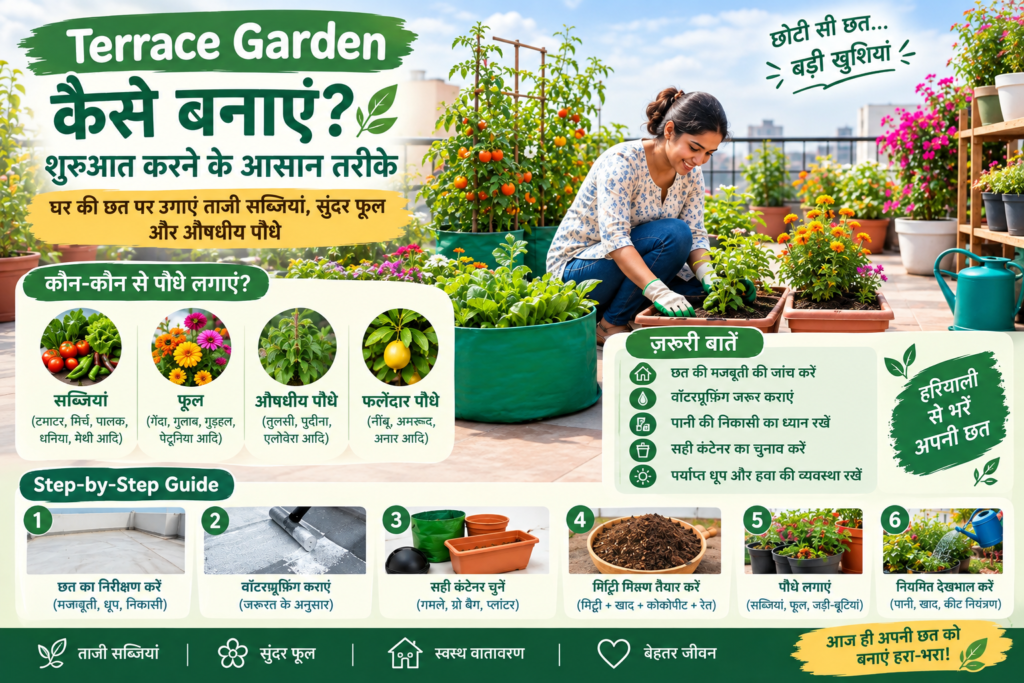
A terrace garden is a great way to turn an unused rooftop into a beautiful green space. Whether you live in a house, apartment, or commercial building, a well-planned terrace garden can provide a relaxing environment and make the rooftop more attractive. With the right plants, containers, soil mix, and watering routine, you can create a healthy rooftop garden without making the process complicated.
In this guide, we will explain how to make a terrace garden step by step, including plant selection, container setup, soil preparation, watering, and maintenance.
What Is a Terrace Garden?
A terrace garden is a garden created on a rooftop or terrace using pots, planters, grow bags, raised beds, or other suitable containers. Instead of planting directly into the roof surface, most terrace gardens use movable containers.
This makes it easier to control soil quality, drainage, plant placement, and maintenance. A terrace garden can include flowering plants, ornamental plants, herbs, vegetables, fruit plants, and small shrubs.
How to Make a Terrace Garden Step by Step
1. Check the Terrace First
Before starting, inspect the terrace carefully. Make sure the roof has proper drainage and does not have visible leakage problems. Water should flow toward the drainage points rather than collecting around the containers.
If you are planning a large garden with many heavy planters, consult a qualified professional about the building’s structural capacity. Do not assume that every roof can safely support unlimited soil and water weight.
2. Choose the Right Location
Observe how much sunlight different parts of your terrace receive. Many flowering plants, vegetables, and herbs require several hours of direct sunlight.
Create separate areas according to light conditions. Keep sun-loving plants in brighter locations and use partially shaded areas for plants that prefer indirect or filtered light.
3. Select Suitable Containers
You can use:
- Grow bags
- Plastic pots
- Cement planters
- Ceramic pots
- Raised planters
- Lightweight terrace containers
Containers should have adequate drainage holes. Avoid keeping pots directly over drainage outlets because they can block water movement.
For a terrace garden, lightweight containers are often easier to move and manage.
4. Prepare a Good Soil Mix
Good soil is essential for healthy container plants. A basic terrace-garden mix can combine garden soil with compost and a suitable aerating material such as cocopeat or another well-draining component.
The exact mix should be adjusted according to the plant. Vegetables, flowering plants, palms, and ornamental plants can have different growing requirements.
The soil should retain enough moisture for the plant while allowing excess water to drain away.
5. Select the Right Plants
Plant selection should match your terrace’s sunlight, climate, available space, and maintenance time.
For an ornamental terrace garden, you can consider flowering and foliage plants. For an edible garden, herbs and vegetables can be grown in suitable containers.
Popular choices may include:
- Tulsi
- Aloe vera
- Money plant
- Marigold
- Rose
- Jasmine
- Curry leaf
- Mint
- Tomato
- Chilli
- Coriander
- Seasonal vegetables
Choose healthy nursery plants rather than weak or pest-damaged plants.
6. Arrange Plants Smartly
Do not place every plant randomly. Create a simple layout before moving all containers.
Place taller plants toward the back or corners and smaller plants toward the front. Keep enough space between containers for air circulation, watering, pruning, and movement.
You can also create separate zones for flowering plants, herbs, vegetables, and decorative foliage.
7. Plan Your Watering System
Container plants can dry out faster than plants growing in the ground. Check the soil before watering instead of following a fixed schedule blindly.
Water thoroughly when the plant needs it and allow excess water to drain. During hot weather, containers may require more frequent monitoring.
For larger terrace gardens, a drip irrigation system can make watering easier and more consistent.
8. Use Mulch
Mulching can help reduce moisture loss and suppress unwanted weeds. Organic materials such as suitable dry leaves or other garden mulch can be used around plants.
Keep mulch slightly away from the plant stem or trunk to reduce the risk of excessive moisture around the base.
Terrace Garden Maintenance Tips
A terrace garden requires regular observation. Remove dry leaves, control weeds, inspect plants for pests, and prune plants when necessary.
Apply compost or suitable fertilizer according to plant requirements. Avoid excessive fertilizer because more fertilizer does not automatically mean faster or healthier growth.
Also check drainage after heavy rainfall. Standing water around containers should be addressed quickly.
Common Terrace Gardening Mistakes
Avoid these common mistakes:
- Overwatering plants
- Using containers without drainage holes
- Choosing plants without checking sunlight requirements
- Overcrowding the terrace
- Using excessive soil or unnecessarily heavy planters
- Ignoring roof drainage and waterproofing
- Applying too much fertilizer
- Neglecting pest inspection
A terrace garden should be designed around the roof’s practical limitations, not just its appearance.
Create Your Terrace Garden with Anuj Nursery
If you are planning a terrace garden, Anuj Nursery can help you select suitable plants for your space. Before purchasing plants, consider the available sunlight, container size, terrace area, watering arrangement, and the amount of maintenance you can provide.
For a successful terrace garden, start small and expand gradually. This makes it easier to understand which plants perform well in your particular rooftop environment.
Conclusion
Learning how to make a terrace garden does not have to be difficult. Start by checking the terrace, planning drainage, selecting suitable containers, preparing a well-drained soil mix, and choosing plants according to sunlight and available space.
With regular watering, feeding, pruning, and pest monitoring, even a simple rooftop can become an attractive green space. The key is not to fill the terrace with as many plants as possible, but to create a practical layout where every plant has enough space and the roof remains safe and manageable.