
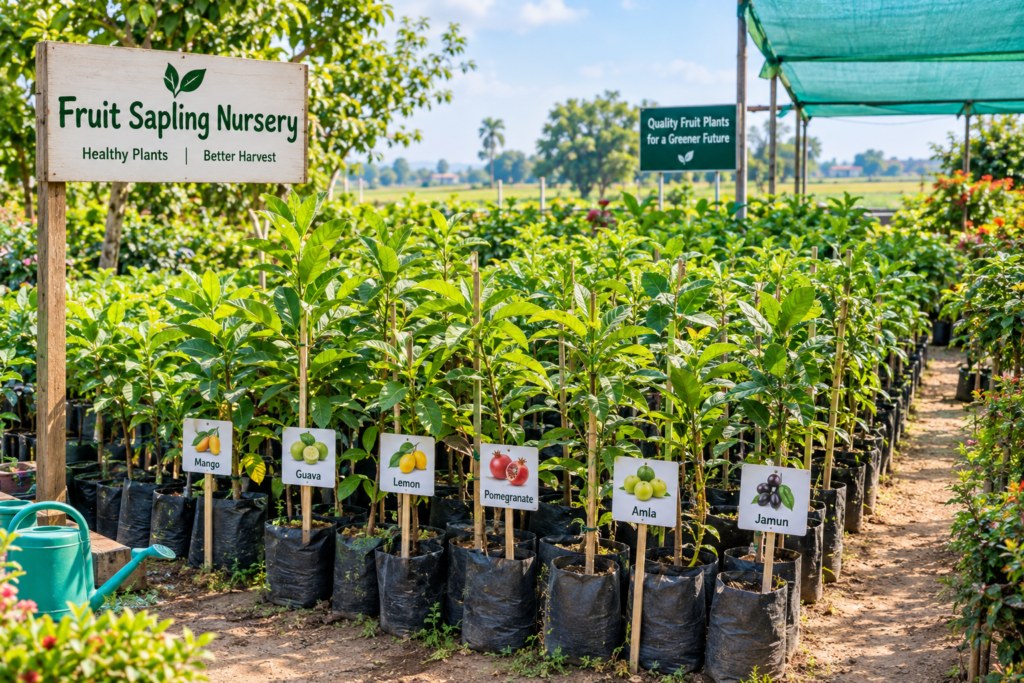
Growing fruit plants in North India can be highly rewarding, but young saplings need proper care during the region’s hot summers, cold winters, monsoon rains, and changing humidity. In Uttar Pradesh, successful fruit sapling care depends on choosing suitable varieties, maintaining good soil drainage, providing balanced watering, and protecting young plants from weather stress.
Whether you are establishing a home orchard, farm, commercial plantation, or garden, this guide explains practical fruit sapling nursery care in North India.
Why Fruit Sapling Care Matters
Young fruit saplings have smaller root systems than mature trees. This makes them more sensitive to heat, drought, waterlogging, frost, and sudden temperature changes.
A healthy sapling should have strong growth, healthy leaves, a firm stem, and a well-developed root system. Proper nursery care during the early stage can help the plant establish successfully after transplantation.
1. Choose Fruit Saplings According to the UP Climate
The first step is selecting fruit plants that can adapt to your local conditions. Uttar Pradesh experiences significant seasonal variation, so plant selection should consider winter temperatures, summer heat, rainfall, soil type, and irrigation availability.
Fruit plants commonly grown in suitable parts of North India include:
- Mango
- Guava
- Amla
- Lemon
- Ber
- Jamun
- Pomegranate
- Litchi
- Papaya
- Fig
- Custard apple
However, suitability can vary by district and microclimate. Do not choose a fruit variety simply because it is popular. Check whether the particular variety is appropriate for your location.
2. Use Well-Drained Soil
Good drainage is essential for fruit saplings. Roots need both moisture and oxygen. Continuously wet soil can create unfavorable conditions around the roots and may contribute to root problems.
For container-grown saplings, use a porous growing medium with good drainage. For field planting, improve compact or poorly drained soil before planting.
Adding suitable organic matter can improve soil structure and support healthy root development.
3. Water Young Saplings Carefully
Watering is one of the most important parts of nursery care.
Newly planted saplings generally need consistent moisture while their roots become established. However, watering every day without checking the soil can be a mistake.
Check the moisture around the root zone before watering. During hot and dry periods, plants may need more frequent watering. During monsoon conditions, reduce unnecessary irrigation when the soil is already sufficiently wet.
The objective is consistent moisture without prolonged waterlogging.
4. Protect Saplings from North Indian Summers
Summer temperatures in parts of North India can become extremely high. Young fruit plants may experience heat and moisture stress during this period.
Useful practices include:
- Apply organic mulch around the root zone.
- Maintain adequate soil moisture.
- Protect very young plants from extreme afternoon exposure when necessary.
- Avoid disturbing roots during periods of severe heat.
- Monitor leaves regularly for signs of moisture stress.
Mulching can reduce evaporation and help keep the root-zone temperature more stable. Keep mulch slightly away from the stem.
5. Protect Plants During Winter
North Indian winters can bring cold conditions and occasional frost in some areas. Young and recently planted saplings are generally more vulnerable than established trees.
For sensitive young plants, temporary protection may be useful during unusually cold or frost-prone nights. The exact protection method depends on the fruit species and local weather.
Do not assume that every fruit plant requires the same winter treatment. Tropical plants and cold-tolerant species have different requirements.
6. Fertilize According to Plant Requirements
Young saplings need nutrients for root, leaf, and shoot development, but excessive fertilizer can cause problems.
Use well-decomposed organic manure or a suitable balanced fertilizer according to the plant’s age and growing conditions. Follow recommended application rates rather than applying fertilizer based on the assumption that more will produce faster growth.
Avoid placing concentrated fertilizer directly against the stem or roots.
7. Monitor Pests and Diseases
Regular inspection is much easier than trying to correct a serious infestation later.
Check the leaves, shoots, stems, and growing points for:
- Discoloration
- Leaf curling
- Spots
- Insects
- Sticky residue
- Unusual shoot growth
- Sudden leaf drop
If you notice a problem, first identify the likely cause before applying any pesticide. Pest management should be based on the crop, pest, severity, and local recommendations.
8. Transplant Nursery Saplings Carefully
Moving a nursery sapling from a container to the field is an important stage.
Prepare the planting site before removing the sapling from its container. Handle the root ball carefully and avoid unnecessary root disturbance.
After planting, water the sapling thoroughly and provide support if required. A temporary stake can help protect young plants from strong winds.
Best Fruit Sapling Care Routine
A simple routine can keep nursery plants healthier:
Daily: Check for severe heat, wilting, or unusual plant changes.
Weekly: Inspect leaves and stems for pests and diseases and check soil moisture.
Monthly: Review plant growth, weeds, nutrition, drainage, and container or field conditions.
Adjust this routine according to the season and individual fruit species.
Fruit Saplings from Anuj Nursery
If you are planning a fruit plantation in Uttar Pradesh or another part of North India, Anuj Nursery can help you explore suitable nursery plants for residential gardens, farms, orchards, and landscaping projects.
Before purchasing fruit saplings, consider the plant variety, age, size, root condition, planting location, sunlight, irrigation availability, and expected climate conditions. Buying a healthy sapling is only the beginning; proper after-planting care is equally important.
Conclusion
Successful fruit sapling nursery care in North India requires a seasonal approach. Hot summers demand careful moisture management, monsoons require good drainage, and winter may require protection for sensitive young plants.
Choose climate-appropriate varieties, maintain healthy soil, water according to actual moisture conditions, monitor pests regularly, and transplant saplings carefully. With consistent attention during the early growth stage, fruit plants can establish stronger root systems and develop into productive trees.