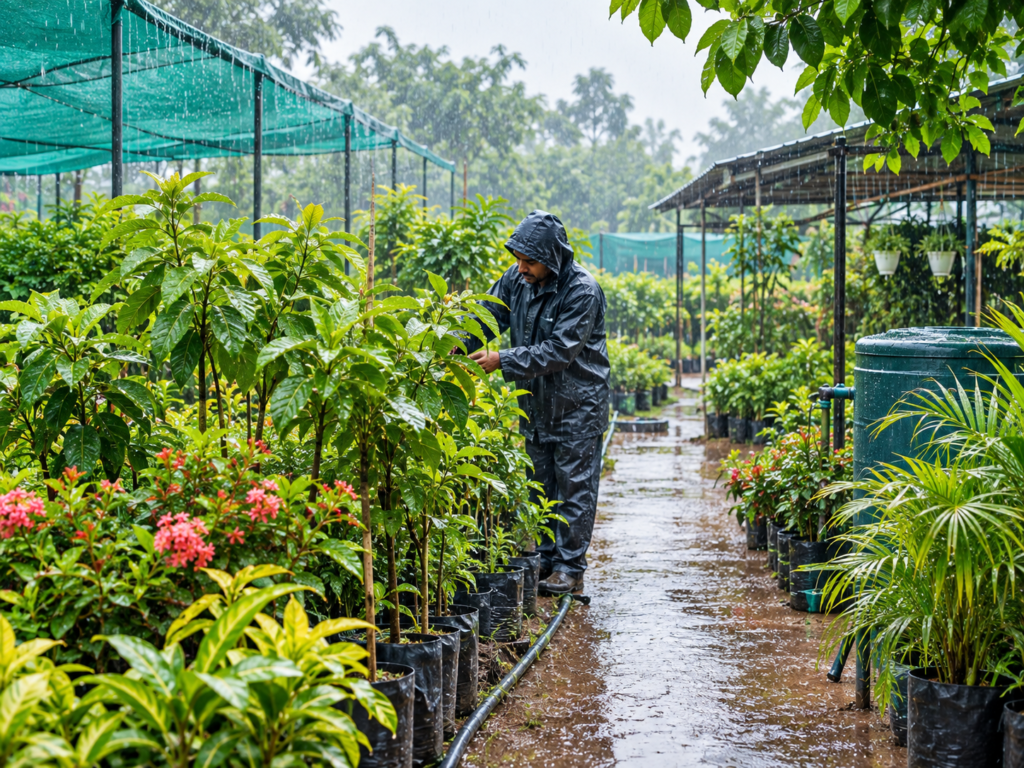
The monsoon season brings much-needed water and cooler temperatures, but excessive rainfall can also create challenges for plants. Waterlogging, fungal infections, nutrient loss, pests, broken branches, and poor drainage are common problems during rainy weather. With the right care routine, however, your plants can stay healthy and continue growing strongly throughout the season.
Whether you have a home garden, terrace garden, fruit orchard, landscaping plants, or nursery plants, this Monsoon Season Plant Care Guide will help you protect your greenery from heavy rain and excess moisture.
Why Monsoon Care Is Important for Plants
Rainwater is beneficial because it naturally hydrates plants and reduces the need for irrigation. However, continuous rainfall can saturate the soil and reduce air availability around plant roots.
Wet foliage and high humidity can also create favorable conditions for fungal and bacterial problems. Therefore, monsoon plant care is mainly about managing excess water, maintaining airflow, and keeping plants clean and healthy.
1. Check Drainage Regularly
Good drainage is one of the most important requirements during the rainy season.
Inspect your garden after heavy rainfall. If water remains around plant roots for long periods, improve drainage by creating proper channels or adjusting the soil structure.
For plants growing in containers, make sure drainage holes are not blocked by soil, roots, or debris. Never allow pots to sit continuously in trays filled with rainwater.
2. Avoid Overwatering
During monsoon, natural rainfall often provides enough moisture for plants. Additional irrigation should therefore be reduced according to rainfall and soil moisture.
Before watering, check the soil with your finger. If the soil is already wet, watering may not be necessary.
Overwatering combined with poor drainage can cause root stress and encourage fungal problems.
3. Protect Plants from Heavy Rain
Young plants, newly planted saplings, and delicate ornamental plants can be damaged by strong rain and winds.
Where practical, use temporary supports for weak stems and young trees. Sensitive container plants can be moved to a partially protected location while still receiving sufficient natural light.
Avoid completely covering plants with plastic because restricted airflow can increase humidity around the foliage.
4. Use Proper Mulching
Mulching can help protect soil and reduce weed growth. Organic materials such as dry leaves, compost, or suitable mulch can be used around the root zone.
However, during very wet conditions, avoid creating an excessively thick or constantly wet mulch layer. Keep mulch a little away from the plant stem to improve airflow and reduce moisture-related stem problems.
5. Prune Damaged and Diseased Parts
Inspect plants regularly during the monsoon. Remove dead, broken, or visibly diseased leaves and branches with clean pruning tools.
Pruning can also improve air circulation within dense canopies. Better airflow allows foliage to dry more quickly after rainfall.
Avoid unnecessary heavy pruning during stressful weather. Focus mainly on damaged, dead, crossing, or problematic growth.
6. Watch for Fungal Problems
High humidity and prolonged leaf wetness can increase the risk of fungal diseases.
Look for symptoms such as:
- Brown or black spots on leaves
- Yellowing foliage
- Powdery growth
- Leaf drop
- Rotting stems
- Unusual lesions
Remove severely affected plant material where appropriate and improve airflow around the plant. If a disease continues to spread, identify the specific problem before selecting any treatment.
7. Control Weeds
Monsoon conditions can encourage rapid weed growth. Weeds compete with plants for nutrients, water, light, and space.
Regularly remove weeds from around young plants and containers. Keeping the root zone clean also makes it easier to inspect plants for pests and diseases.
Do not disturb plant roots unnecessarily while removing weeds.
8. Support Young Trees
Heavy rain combined with strong winds can loosen newly planted trees.
Check young mango, guava, ornamental, avenue, and landscaping trees after storms. If a plant is leaning, use a suitable stake and soft tie to provide temporary support.
The support should not tightly restrict the trunk. As the tree becomes stronger, the support can be adjusted or removed when no longer needed.
9. Reduce Fertilizer During Excessive Rain
Heavy rainfall can wash nutrients away from the soil. However, immediately adding large amounts of fertilizer is not always the right solution.
Fertilizer application should depend on the plant species, growth stage, soil condition, and rainfall. Avoid applying excessive fertilizer to waterlogged soil.
Organic matter and a balanced nutrition plan can support soil health over the longer term.
10. Take Special Care of Container Plants
Container plants need extra attention during monsoon because excess water can accumulate quickly.
Place pots where rainwater can drain freely. Elevating containers slightly can improve drainage.
Inspect the bottom drainage holes regularly and remove accumulated leaves or debris.
For indoor plants placed near windows or balconies, reduce watering when humidity and rainfall are high.
11. Inspect Nursery Plants Regularly
If you manage a plant nursery, monsoon monitoring becomes even more important because many plants may be growing in containers close together.
Keep adequate spacing between plants where possible. This improves airflow and makes inspection easier.
Separate plants showing serious disease symptoms from healthy stock when appropriate. Keep pathways and drainage areas clear so excess rainwater can move away efficiently.
12. Prepare Before Heavy Rain
Good monsoon care starts before a major rainstorm.
Before heavy rainfall:
- Check drainage channels
- Secure young trees
- Clean gutters and water outlets
- Move sensitive pots if required
- Remove weak or dead branches
- Check shade-net structures
- Clear leaves from drainage holes
- Keep basic gardening tools ready
These simple preparations can reduce damage during periods of heavy rain and wind.
Monsoon Plant Care at Anuj Nursery
At Anuj Nursery, proper plant selection and regular maintenance are important for maintaining healthy plants through changing Indian weather conditions. Whether you are caring for fruit plants, ornamental trees, flowering plants, palms, or landscaping plants, seasonal management can help them establish and grow successfully.
For farmers, gardeners, landscapers, and homeowners, the monsoon is an excellent time to observe plant growth while carefully managing excess moisture.
Final Thoughts
The monsoon season can be highly beneficial for plants, but too much water can become a problem when drainage and airflow are poor. Regular inspection, controlled watering, proper drainage, pruning, weed management, and protection from strong winds can help keep plants healthy.
Remember that every plant has different water and environmental requirements. Adjust your care routine according to the species, soil, container size, rainfall, and local weather conditions.
With consistent attention and the right seasonal practices, your garden or nursery can remain green, healthy, and well-maintained throughout the monsoon season.