Before planting trees, flowers, shrubs, or other plants, it is important to understand the garden site. A beautiful and healthy garden starts with proper planning. Soil quality, sunlight, drainage, climate, and available space all influence plant growth.
In this guide, we will explain how to analyze a garden site before planting, identify common mistakes, and prepare your outdoor space for successful gardening. With the right approach and guidance from Anuj Nursery, you can create a garden that is attractive, healthy, and easier to maintain.
1. Observe the Garden Site Carefully
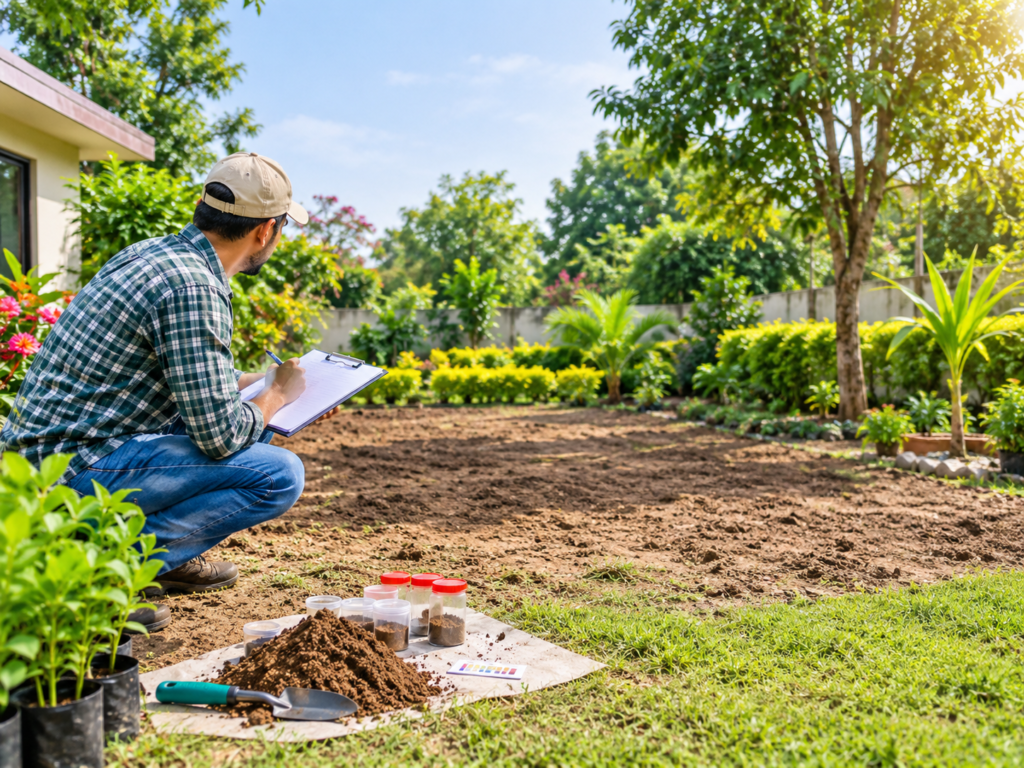
Start by examining the entire garden area. Walk around the site and observe its natural features.
Look for existing trees, buildings, walls, pathways, slopes, and areas where water collects. These features can affect plant growth and influence your garden layout.
Also, identify any damaged soil, construction debris, or unwanted vegetation that may need to be removed.
Tip: Take photographs of the garden from different angles. These pictures can help you plan plant placement and track improvements.
2. Check Sunlight and Shade
Sunlight is one of the most important factors in plant growth. Different plants require different amounts of sunlight.
Observe how sunlight moves across your garden during the day.
- Full-sun areas: Generally receive around six or more hours of direct sunlight.
- Partial-shade areas: Receive less direct sunlight or experience periods of shade.
- Shady areas: Receive limited direct sunlight, often because of buildings or large trees.
Choose plants according to the sunlight available at their intended planting locations.
For example, many flowering plants perform well in sunny locations, while certain foliage plants tolerate partial shade.
Remember that sunlight conditions may change throughout the year as the sun’s position changes.
3. Examine Soil Quality
Healthy soil provides plants with essential nutrients, water, and support for their roots.
Before planting, examine the soil’s texture, structure, and condition.
Common soil types include:
- Sandy soil: Drains quickly but may struggle to retain moisture and nutrients.
- Clay soil: Holds water and nutrients but may drain poorly when compacted.
- Loamy soil: Often provides a useful balance of drainage, moisture retention, and aeration.
You can perform a simple soil texture assessment by examining a moist handful of soil. However, a laboratory soil test provides more reliable information about nutrient levels and pH.
A soil test can help you determine whether amendments are needed before planting.
Avoid adding large quantities of fertilizer without understanding the soil’s requirements.
4. Evaluate Drainage and Water Availability
Poor drainage can cause waterlogging, root damage, and plant health problems. On the other hand, soil that dries too quickly may require more frequent irrigation.
Observe the site after rainfall or watering.
Check whether water drains naturally or remains standing in certain areas.
Also, identify the available water source. Consider whether you will use a garden hose, drip irrigation, sprinklers, or another watering system.
For larger landscapes, plan irrigation according to plant requirements and the layout of the garden.
Important: Do not plant trees or shrubs in persistently waterlogged areas unless they are suitable for those conditions.
5. Assess Climate and Local Conditions
Your local climate plays a major role in determining which plants will grow successfully.
Consider:
- Summer temperatures and heat exposure.
- Winter temperatures and frost risk.
- Rainfall patterns and monsoon conditions.
- Seasonal humidity and wind.
- Local water availability.
For gardens in and around Saharanpur, planning should account for hot summers, seasonal monsoon rainfall, and cooler winter conditions.
Select plants that can tolerate the expected seasonal conditions.
Native and locally adapted plants may be useful options because they can be suited to regional environmental conditions.
6. Measure the Available Space
Before purchasing plants, measure the garden area.
Create a simple sketch showing the garden’s length, width, boundaries, pathways, and existing structures.
Consider the mature size of every plant you intend to grow.
Large trees need sufficient space for their canopy and root systems. Shrubs and hedges also require adequate spacing for healthy growth.
Avoid planting trees too close to buildings, underground utilities, drainage lines, or overhead cables.
Proper spacing improves airflow, sunlight exposure, accessibility, and long-term maintenance.
7. Identify Existing Plants and Potential Problems
Examine existing vegetation before introducing new plants.
Look for signs of pests, diseases, damaged branches, or unhealthy growth. Identify plants that may compete heavily for sunlight, water, or nutrients.
Check whether large trees create excessive shade or whether their roots may interfere with planned planting areas.
If you notice persistent plant health problems, investigate the cause before adding more vegetation.
Removing unhealthy plants without understanding the underlying problem may not resolve the issue.
8. Plan Your Garden Layout
Once you understand the site conditions, begin preparing a planting plan.
Group plants according to their sunlight, water, soil, and spacing requirements.
For example, place sun-loving flowering plants in suitable sunny areas and shade-tolerant plants beneath appropriate sheltered locations.
Consider combining trees, shrubs, ground covers, and flowering plants to create different layers of greenery.
Keep pathways accessible and leave enough space for pruning, watering, and other maintenance activities.
A well-planned layout can improve both the appearance and functionality of your garden.
9. Prepare the Site Before Planting
After completing your analysis, prepare the garden for planting.
Remove construction waste, weeds, and unwanted debris. Improve soil structure where necessary, correct drainage problems, and plan irrigation.
Use suitable organic matter when appropriate for the soil and plant species.
Mark planting locations before digging holes.
For larger trees, ensure that planting holes are appropriate for the root ball and that the root flare is positioned correctly. Avoid planting too deeply.
If you are unsure about soil conditions or plant selection, seek advice from an experienced nursery or landscaping professional.
Conclusion
Analyzing a garden site before planting helps you make informed decisions about plant selection, spacing, soil preparation, and irrigation.
By checking sunlight, soil quality, drainage, climate, and available space, you can reduce common planting mistakes and create a healthier outdoor environment.
Anuj Nursery can be part of your garden planning journey by helping you explore suitable plants for residential gardens, landscaping projects, and outdoor spaces.
Take time to understand your site before planting. Careful preparation today can support a beautiful and sustainable garden for years to come.