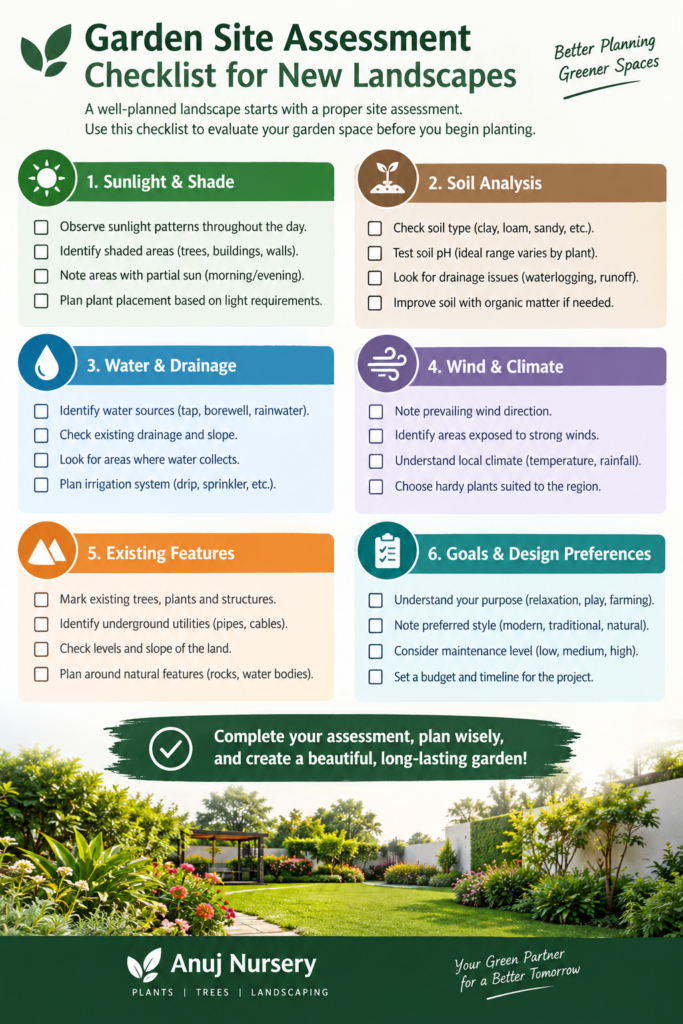
Creating a beautiful landscape begins long before planting the first tree or flower. A successful garden requires careful planning, proper site assessment, and suitable plant selection. Without understanding the garden’s existing conditions, you may face problems such as poor plant growth, waterlogging, or unnecessary maintenance costs.
A garden site assessment checklist helps homeowners, landscapers, and property developers evaluate their outdoor spaces before starting a new project.
At Anuj Nursery, understanding the planting environment is an important part of planning a healthy and attractive landscape. This guide explains the essential points to check before beginning your landscaping project.
1. Inspect the Entire Garden Area
Start by walking around the complete site. Observe the existing conditions and identify features that may affect your landscape design.
Check for:
- Existing trees, shrubs, and vegetation.
- Buildings, boundary walls, and pathways.
- Construction debris, stones, and unwanted materials.
- Uneven ground and sloping areas.
- Areas with standing water or damaged soil.
Take photographs and measurements of the site. These records will help you understand the space and prepare a suitable landscape plan.
2. Assess Sunlight and Shade
Sunlight directly affects plant growth, flowering, and overall health. Different plants have different light requirements, so it is important to understand how much sunlight each part of your garden receives.
Observe the site at different times of the day.
Identify areas that receive full sunlight, partial shade, or limited direct sunlight. Remember that nearby buildings and mature trees can create shaded areas.
Choose plants according to their light requirements. Many flowering plants prefer sunny locations, while some foliage plants grow well in partial shade.
Checklist:
- Identify sunny and shaded areas.
- Observe changes in sunlight throughout the day.
- Consider seasonal changes in shade.
- Match plants with the available light conditions.
3. Check Soil Quality and Structure
Healthy soil provides essential nutrients, water, and support for plant roots. Before planting, examine the soil’s texture, structure, and general condition.
Sandy soil usually drains quickly, while clay soil can retain more water and become compacted. Loamy soil often provides a useful balance of drainage and moisture retention.
A soil test can help determine the soil’s pH and nutrient levels. This information makes it easier to decide whether soil amendments are necessary.
Checklist:
- Examine soil texture and structure.
- Check for compacted or hard soil.
- Consider laboratory soil testing.
- Identify whether organic matter or other amendments are needed.
Avoid applying large amounts of fertilizer without understanding the soil’s requirements.
4. Evaluate Drainage and Irrigation
Water management is essential for a healthy landscape. Poor drainage can lead to waterlogging and root problems, while insufficient water can cause plants to dry out.
Observe the site after rainfall or watering. Look for puddles, soggy areas, and places where water flows toward buildings.
Also, identify the available water source and decide how the garden will be irrigated.
Checklist:
- Check for standing water.
- Identify the natural direction of water flow.
- Inspect existing drainage arrangements.
- Locate water sources and irrigation connections.
- Plan watering according to plant requirements.
Correct drainage problems before planting whenever possible.
5. Understand Local Climate Conditions
Climate influences plant survival, growth, flowering, and maintenance needs.
Consider summer temperatures, winter conditions, rainfall, humidity, and wind exposure.
For gardens in and around Saharanpur, planning should account for hot summers, seasonal monsoon rainfall, and cooler winters.
Select plants that can tolerate the local conditions. Locally adapted and suitable native plants may also help create landscapes that are easier to maintain.
Checklist:
- Consider seasonal temperature changes.
- Evaluate rainfall and monsoon conditions.
- Identify areas exposed to strong winds.
- Select plants suited to the regional climate.
6. Measure Space and Plan Plant Placement
Before purchasing plants, measure the garden and prepare a simple layout.
Include boundaries, buildings, pathways, seating areas, and existing trees. Consider the mature height and spread of every plant.
Large trees need adequate space for their canopies and roots. Avoid planting them too close to buildings, underground utilities, drainage lines, or overhead cables.
Checklist:
- Measure the available planting area.
- Mark pathways and access points.
- Allow suitable spacing between plants.
- Consider the mature size of trees and shrubs.
- Keep maintenance access clear.
Good spacing improves airflow, sunlight exposure, and the long-term appearance of the garden.
7. Inspect Existing Vegetation and Site Problems
Existing plants may influence the success of your new landscape.
Look for damaged branches, unhealthy foliage, pest activity, and signs of disease. Identify plants that may compete with new plants for sunlight, water, or nutrients.
Also, check for construction waste, invasive weeds, and other obstacles that could affect root development.
Address these issues before introducing new plants.
8. Prepare a Landscape Planning Checklist
After assessing the site, organize your findings into a practical plan.
Your final checklist should include:
- Site measurements and photographs.
- Sunlight and shade observations.
- Soil condition and test results.
- Drainage and irrigation requirements.
- Local climate considerations.
- Plant selection and spacing.
- Existing vegetation and site problems.
- Maintenance requirements and budget.
This information will help you make informed decisions before starting the project.
9. Choose Suitable Plants with Anuj Nursery
Once your site assessment is complete, select plants that match the garden’s conditions and design goals.
Anuj Nursery can be a useful starting point when exploring plants for residential gardens, landscaping projects, and outdoor green spaces.
Consider combining trees, shrubs, flowering plants, and ground covers to create a balanced landscape. Choose plants according to their sunlight, soil, water, and spacing requirements rather than appearance alone.
For larger projects, discuss plant sizes, quantities, availability, and maintenance needs before finalizing your planting plan.
Conclusion
A detailed garden site assessment helps you understand your outdoor space before planting. By checking sunlight, soil, drainage, climate, and available space, you can make better decisions about plant selection and landscape design.
Use this checklist to identify potential problems early and prepare your garden properly.
With thoughtful planning and suitable plant selection, you can create a healthy, attractive, and practical landscape. Anuj Nursery can be part of your journey toward building a greener outdoor environment.