Healthy plants begin with healthy soil. Whether you are growing flowering plants, fruit trees, vegetables, or ornamental plants, understanding your soil is essential for successful gardening.
One important factor is soil texture. It affects how water moves through the ground, how much moisture the soil retains, and how easily plant roots can grow.
Many gardeners experience problems such as yellow leaves, slow growth, waterlogging, or dry soil without realizing that soil texture may be contributing to the problem.
In this guide, Anuj Nursery explains the different soil textures, how to identify them, and how to improve your garden soil for healthier plant growth.
What Is Soil Texture?
Soil texture refers to the proportion of three main mineral particles present in soil:
- Sand: Large particles that create spaces for air and water movement.
- Silt: Medium-sized particles that feel smooth and help retain moisture.
- Clay: Very fine particles that hold water and nutrients but can restrict drainage.
The combination of these particles determines the texture of your soil.
For example, sandy soil contains a higher proportion of sand, while clay soil contains more clay particles. Loamy soil contains a balanced mixture of sand, silt, and clay.
Understanding these differences helps gardeners choose suitable plants and make better soil-management decisions.
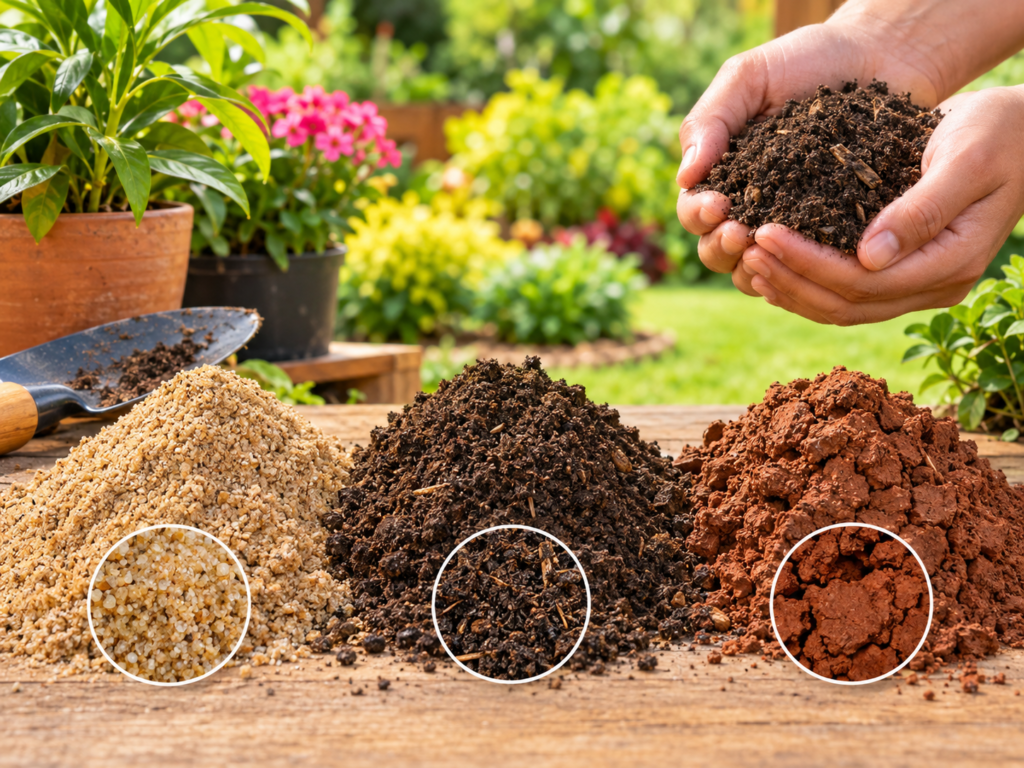
1. Sandy Soil: Fast Drainage and Easy Root Movement
Sandy soil contains relatively large particles. It usually feels gritty when rubbed between your fingers.
Characteristics of sandy soil
- Drains water quickly.
- Allows good air circulation around roots.
- Warms up relatively quickly in sunny weather.
- Usually holds less water and fewer nutrients than finer-textured soils.
- Can become dry during hot weather.
Gardening tips
Plants growing in sandy soil may require more frequent watering, particularly during summer.
Adding mature compost or other suitable organic matter can help improve moisture retention and nutrient availability.
Sandy soil can be useful for plants that prefer excellent drainage, but gardeners should still consider each plant’s individual requirements.
2. Clay Soil: High Water and Nutrient Retention
Clay soil contains a high proportion of very fine particles. When wet, it often feels sticky and can be shaped into a ball.
Characteristics of clay soil
- Holds water for longer periods.
- Can retain many plant nutrients.
- Often drains slowly.
- May become hard and compact when dry.
- Can restrict root growth when heavily compacted.
Gardening tips
Avoid working clay soil when it is extremely wet because this can increase compaction.
Improve its structure gradually by incorporating suitable organic matter. Raised beds may also help where drainage is a persistent problem.
Before planting, check whether the selected plant can tolerate the soil’s drainage conditions.
3. Silty Soil: Smooth Texture and Moisture Retention
Silty soil contains medium-sized particles. It generally feels smooth or floury when dry and slippery when wet.
Characteristics of silty soil
- Holds moisture relatively well.
- Can contain useful plant nutrients.
- Often supports good plant growth.
- May become compacted or erode when poorly managed.
Gardening tips
Maintain organic matter and avoid unnecessary digging when the soil is wet.
Using mulch and planting suitable ground-cover plants can help protect the soil surface and reduce erosion.
4. Loamy Soil: A Balanced Soil Texture
Loamy soil contains a mixture of sand, silt, and clay in proportions that generally provide a useful balance of drainage, moisture retention, and aeration.
It is often considered suitable for a wide range of garden plants.
Benefits of loamy soil
- Provides a balance between drainage and water retention.
- Supports root development when properly structured.
- Can hold nutrients while allowing air to reach roots.
- Is suitable for many vegetables, flowers, shrubs, and trees.
However, loamy soil is not automatically perfect. Its quality also depends on organic matter, soil structure, pH, drainage, and nutrient availability.
5. How to Identify Your Garden’s Soil Texture
You can perform a simple preliminary test at home.
Step 1: Collect a small soil sample from your garden, removing stones and plant debris.
Step 2: Add a little water until the soil becomes moist but not muddy.
Step 3: Rub the soil between your fingers.
Step 4: Observe how it feels and behaves.
- Gritty soil may indicate a high sand content.
- Smooth, floury soil may indicate a high silt content.
- Sticky soil that forms a firm ribbon when pressed may indicate a high clay content.
This test provides a rough indication rather than an exact measurement. For more accurate results, consider a professional soil-texture analysis.
6. How to Improve Soil Texture in Your Home Garden
Improving soil is a gradual process. The right approach depends on the existing soil and the plants you want to grow.
Here are some practical methods:
Add mature compost: Compost can improve soil structure and support beneficial soil organisms.
Use organic mulch: Apply a suitable mulch around plants while keeping it away from direct contact with stems and trunks.
Avoid overwatering: Water according to plant needs, weather, and soil drainage.
Prevent compaction: Avoid repeatedly walking over planting beds, especially when the soil is wet.
Choose suitable plants: Select plants according to the soil conditions instead of trying to make every plant grow in the same environment.
For gardeners in Nagal and Saharanpur, Uttar Pradesh, checking local soil and drainage conditions before planting is particularly useful. Soil can vary between properties, so observing your own garden is important.
7. How Anuj Nursery Can Help Home Gardeners
Choosing plants that suit your garden conditions can make gardening easier and more rewarding.
At Anuj Nursery, gardeners can explore plants for home gardens, outdoor landscapes, and other planting projects.
Before selecting plants, consider your available sunlight, soil texture, drainage, watering routine, and growing space.
Matching plants to these conditions can help support healthy establishment and long-term growth.
Frequently Asked Questions (FAQs)
Q1. Which soil texture is suitable for most home gardens?
Loamy soil is often suitable for a wide variety of plants because it can provide a useful balance of drainage, aeration, and moisture retention.
Q2. How can I identify clay soil at home?
Clay-rich soil often feels sticky when wet and can be rolled into a ribbon between your fingers. A laboratory test can confirm its texture more accurately.
Q3. Can sandy soil be improved for gardening?
Yes. Adding mature compost and maintaining organic matter can help improve moisture retention and nutrient availability.
Q4. Does soil texture affect plant growth?
Yes. Soil texture influences drainage, water retention, aeration, and root development. These factors can affect plant health and growth.
Q5. Should I add sand to clay soil?
Adding a small amount of sand is not usually a reliable way to improve clay soil and may make its structure worse. Organic matter and appropriate soil-management practices are generally more useful.
Conclusion
Understanding soil texture is an important step toward creating a healthy and productive home garden. Sandy, clay, silty, and loamy soils each have different characteristics that influence water movement, nutrient retention, and root growth.
By identifying your soil, improving it gradually, and selecting plants suited to your conditions, you can create a garden that is easier to maintain.
Anuj Nursery encourages home gardeners to understand their soil before planting so they can make informed choices and support healthier gardens.