
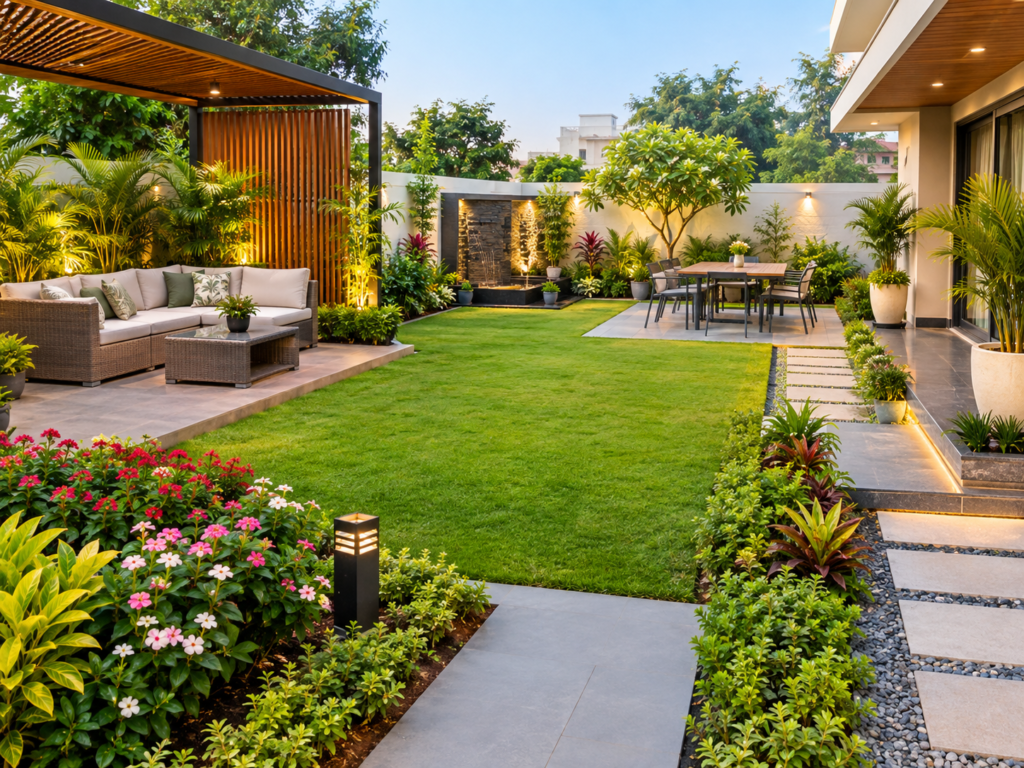
Modern Indian homes are increasingly designed with outdoor spaces that are more than just lawns and decorative plants. A well-planned garden can provide areas for relaxation, family gatherings, outdoor dining, children’s activities, gardening and privacy.
This is where garden zoning becomes useful. Garden zoning means dividing an outdoor area into different functional sections while keeping the entire landscape visually connected. Good landscape planning considers how people will use the space, environmental conditions, circulation and the relationship between the house and garden.
Whether you have a compact urban garden, a large backyard, farmhouse or residential property in Saharanpur, thoughtful zoning can make the outdoor space more comfortable and practical.
What Is Garden Zoning?
Garden zoning is the process of creating separate areas for different activities within the same landscape.
For example, one part of the garden can be used as a seating area, another as a lawn, while the boundary can contain trees and shrubs for privacy. A separate corner can be reserved for herbs, vegetables or utility requirements.
The zones do not necessarily need physical walls. Plants, pathways, changes in ground materials, hedges and garden structures can visually define different areas.
1. Create an Entrance Zone
The entrance is one of the most important areas of a modern home’s landscape because it creates the first impression.
Use a combination of:
- Attractive trees
- Flowering shrubs
- Decorative foliage plants
- Low hedges
- Pathways
- Landscape lighting
The planting should complement the architecture rather than hide the entrance. A clear pathway can naturally guide visitors toward the main door.
For modern homes, simple planting groups and repeated plant forms can create a clean and coordinated appearance.
2. Design a Relaxation Zone
A relaxation zone can turn an ordinary garden into a comfortable outdoor retreat.
Place seating in a relatively quiet section of the property and surround it with suitable greenery. Small trees, palms, shrubs and ground-level plants can create a pleasant atmosphere.
You can add:
- Garden chairs
- Benches
- Pergolas
- Outdoor sofas
- Small tables
- Decorative planters
The location should also consider sunlight, shade, wind and views. A landscape should be designed around how people actually use the space.
3. Add a Family Lawn Zone
A lawn can provide flexible space for everyday family activities.
It can be used for:
- Children’s play
- Morning exercise
- Family gatherings
- Outdoor games
- Small celebrations
Instead of filling the entire garden with lawn, consider balancing it with planting beds, trees and pathways. This can create more visual interest and make maintenance more manageable.
4. Create an Outdoor Dining Zone
Outdoor dining is becoming an attractive feature for modern homes.
A patio, deck or paved area close to the kitchen can work well as an outdoor dining zone. Add shade using a pergola, canopy or appropriately positioned tree.
Plants around the dining space can provide a natural transition between the built structure and the garden.
Keep sufficient circulation space around furniture so people can comfortably move between the house, dining area and other garden zones.
5. Develop a Privacy Zone
Privacy is especially important for homes located in densely developed residential areas.
Trees, tall shrubs, hedges and layered planting can help create a visual screen around selected parts of the property.
Instead of creating a solid green wall everywhere, consider combining different plant heights. Tall plants can form the background, medium shrubs can occupy the middle layer, and smaller plants can create the foreground.
This layered approach can add depth while maintaining a natural appearance.
6. Plan a Children’s Zone
Families with children can reserve a safe open area for outdoor activities.
A children’s garden zone should have enough open space for movement and should be separated from potentially hazardous areas such as utility spaces, sharp hardscape edges or busy vehicle zones.
A lawn, shaded seating area and simple nature-focused planting can make this zone both functional and attractive.
7. Create a Kitchen Garden Zone
A small kitchen garden can provide herbs, vegetables and seasonal plants close to the home.
Place frequently used plants where they are easy to access. In garden planning systems, areas requiring frequent attention are generally positioned closer to the home, while less frequently visited areas can be placed farther away.
You can use raised beds, containers or dedicated planting beds depending on available space.
8. Keep a Utility Zone
Every modern home needs space for practical garden requirements.
A utility zone can accommodate:
- Gardening tools
- Composting
- Waste storage
- Hose and irrigation equipment
- Plant maintenance materials
- Service access
This area does not need to dominate the landscape. Screening plants or a suitable hedge can help separate it visually from entertainment and relaxation areas.
9. Connect Every Zone With Pathways
Pathways are essential for connecting different garden zones.
A good pathway should provide a logical route between the entrance, house, seating area, lawn and utility spaces.
You can use paving stones, concrete, natural stone or other suitable landscape materials. Changes in paving or planting can also help communicate where one garden zone ends and another begins.
Landscape design principles emphasize clear spatial organization and defined transitions so that different areas feel connected rather than randomly scattered.
10. Choose Plants According to Each Zone
Plant selection should be based on the actual conditions of each area.
Consider:
- Sunlight
- Soil
- Drainage
- Available space
- Mature plant size
- Water requirements
- Maintenance needs
- Local climate
A plant that performs well in a sunny lawn border may not be suitable for a heavily shaded corner.
For North Indian gardens, including properties around Saharanpur, plant selection should also consider seasonal heat, winter conditions and local site characteristics.
Garden Zoning Ideas for Saharanpur Homes
For homes in Saharanpur, garden zoning can be particularly useful for balancing outdoor comfort with practical maintenance.
A simple residential layout could include:
Front: Entrance plants and decorative landscaping
Side: Pathway and utility access
Back: Lawn and family seating
Boundary: Privacy trees and shrubs
Corner: Kitchen or seasonal garden
Patio: Outdoor dining and relaxation
The exact arrangement should be modified according to the property’s size, sunlight, drainage, architecture and family requirements.
How Anuj Nursery Can Help
Anuj Nursery can help homeowners and landscaping projects select plants according to their garden requirements. Whether you are developing a compact modern garden, a large residential landscape or a property in the Saharanpur region, proper zoning can make plant placement more organized and purposeful.
Before purchasing plants, prepare a simple site plan and decide what each part of the garden needs to achieve.
Frequently Asked Questions
What is garden zoning?
Garden zoning means dividing a landscape into different functional areas such as entrance, lawn, seating, dining, privacy, kitchen garden and utility zones.
How many zones should a home garden have?
There is no fixed number. The ideal number depends on the property’s size, family requirements, available space and intended activities.
Can a small garden be divided into zones?
Yes. Even a small garden can have multiple zones. Different paving materials, plant groups, containers, seating and changes in planting height can visually separate spaces.
Which plants are best for garden zoning?
The best plants depend on sunlight, soil, drainage, climate, available space and maintenance requirements. Plant selection should match the conditions of each zone rather than relying on one plant list for the entire garden.
Conclusion
Garden zoning ideas for modern Indian homes can transform an ordinary outdoor area into a more organized, comfortable and useful landscape. By separating entrance, relaxation, lawn, dining, privacy, children’s, kitchen and utility areas, homeowners can give every part of the garden a clear purpose.
The key is to maintain visual connection between the zones through consistent plant selection, pathways, materials and design elements. With proper planning and suitable plants from Anuj Nursery, homeowners can develop attractive and functional gardens suited to their lifestyle and local conditions.