
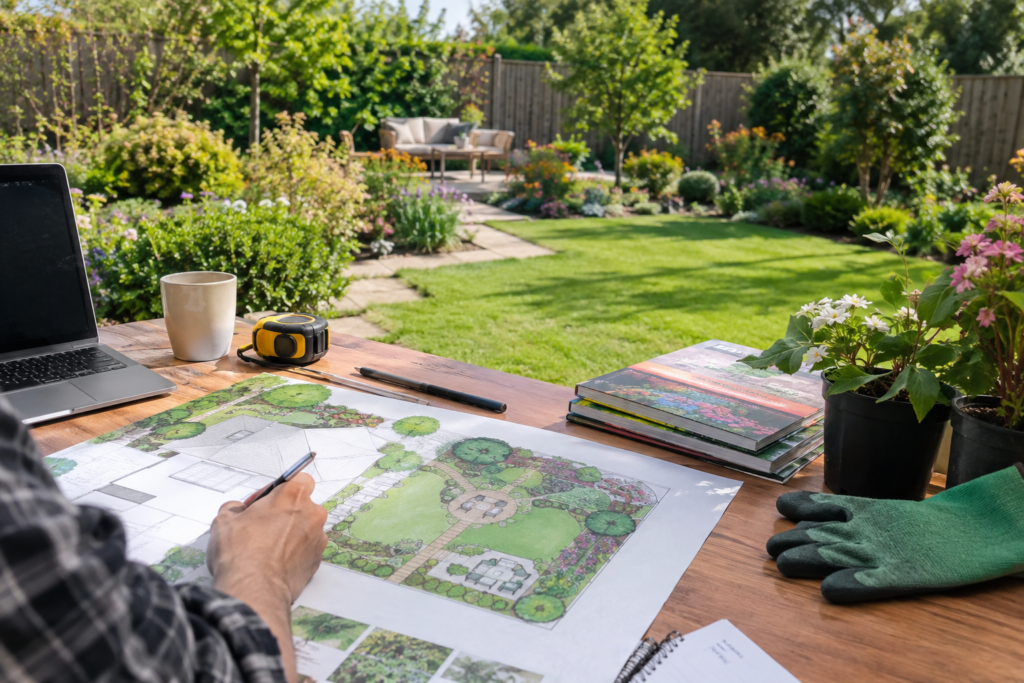
Planning a garden from scratch can feel overwhelming, especially when you are unsure where to begin. A successful garden is not simply a collection of beautiful plants. It is a planned outdoor space where plant selection, sunlight, soil, drainage, irrigation, pathways, maintenance, and design work together.
Whether you are creating a small home garden, a backyard landscape, or a larger outdoor space, proper planning can help you avoid costly mistakes. This complete guide explains how to plan a garden from scratch and create a practical, attractive, and sustainable landscape.
1. Understand Your Garden Site
The first step in garden planning is to study the available space. Measure the length and width of the garden area and note existing structures such as walls, buildings, gates, driveways, trees, and water sources.
Observe the site at different times of the day. Identify areas receiving full sunlight, partial shade, and deep shade. Sun exposure is important because different plants have different light requirements.
Also check the slope, drainage, wind direction, and existing soil conditions. A simple site assessment can prevent problems later.
2. Decide the Purpose of Your Garden
Before choosing plants, determine what you want the garden to achieve.
For example, your garden may be designed for:
- Relaxation and outdoor seating
- Flowering plants and seasonal color
- Fruit and vegetable growing
- Children’s play
- Privacy and screening
- Shade and cooling
- Entertaining guests
- Improving the appearance of a property
- Creating a low-maintenance landscape
Your purpose will influence the garden layout, plant selection, pathways, lawn areas, and maintenance requirements.
3. Create a Simple Garden Layout
Once you understand the site and its purpose, create a basic garden plan. You do not need complicated landscape-design software to start.
Draw the garden area on paper and mark permanent features first. Then divide the space into functional zones.
A basic garden may include:
- Entry area
- Lawn
- Flower beds
- Shrub borders
- Tree planting areas
- Seating zone
- Pathways
- Utility area
- Vegetable or herb garden
Keep movement between different areas practical. Avoid creating unnecessary pathways that reduce usable planting space.
4. Plan Around Sunlight
Sunlight should be one of the most important factors in your garden plan.
Plants can generally be grouped according to their light requirements. Full-sun plants need several hours of direct sunlight, while shade-tolerant plants perform better in protected locations.
Tall trees and structures can create shade that changes throughout the day. Therefore, do not simply look at the garden once and assume that the entire area receives the same amount of sunlight.
Place plants according to their actual light requirements rather than choosing locations based only on appearance.
5. Test and Improve the Soil
Healthy soil supports healthy roots. Before planting extensively, examine the soil’s texture, drainage, organic matter, and pH where practical.
If the soil is compacted, improve it with suitable organic matter and proper cultivation. Poor drainage may require grading or drainage solutions rather than simply adding more plants.
Avoid assuming that every plant will grow well in the existing soil. Soil improvement should be part of the garden plan.
6. Choose the Right Plants
Plant selection is one of the most important decisions when planning a garden from scratch.
Consider:
- Climate
- Sunlight
- Soil conditions
- Water availability
- Mature plant size
- Growth rate
- Maintenance requirements
- Flowering or foliage characteristics
- Seasonal appearance
- Space available
Always consider the mature size of a plant rather than its size when purchased. A small nursery plant can eventually become a large tree or shrub and may interfere with buildings, pathways, power lines, or other plants.
For gardens in and around Saharanpur, selecting plants suited to the local climate and site conditions can make establishment and long-term maintenance easier.
7. Plan Trees, Shrubs, and Groundcovers Together
A balanced garden usually includes plants at different heights.
Trees can provide shade, structure, and long-term visual impact. Shrubs can define borders and create privacy, while groundcovers and smaller plants can fill spaces near pathways and planting beds.
Think about the garden vertically as well as horizontally. Layering plants can create a fuller landscape while making better use of available space.
However, avoid overcrowding. Plants need sufficient space for healthy root and canopy development.
8. Include Water and Irrigation Planning
Watering requirements should be considered before planting.
Identify the water source and decide how plants will be irrigated. Small gardens may be manageable with manual watering, while larger landscapes may benefit from drip irrigation or other efficient systems.
Group plants with similar water requirements together. This makes irrigation easier and can reduce water wastage.
Good drainage is equally important. Excess water around plant roots can cause serious problems, especially in poorly drained soil.
9. Design Practical Garden Paths
Pathways should connect important areas without unnecessarily dividing the garden.
Consider the most frequently used routes, such as the path from the entrance to the house, seating area, lawn, or maintenance zone.
Choose pathway materials according to the garden’s style, budget, expected traffic, and maintenance requirements.
A good pathway should be attractive but also safe, comfortable, and easy to maintain.
10. Plan for Maintenance
A beautiful garden requires ongoing care. Before finalizing your design, think about how much time and money you can realistically spend on maintenance.
Regular garden maintenance may include:
- Watering
- Pruning
- Weeding
- Mulching
- Fertilization
- Pest monitoring
- Lawn care
- Cleaning
- Seasonal plant replacement
If you have limited time, choose plants and landscape features that require less regular maintenance.
A common mistake is designing a garden based entirely on appearance without considering future maintenance.
11. Prepare a Garden Budget
Garden planning should include a realistic budget from the beginning.
Your budget may include:
- Plants and trees
- Soil improvement
- Compost and fertilizers
- Irrigation
- Lawn installation
- Pathways
- Garden edging
- Lighting
- Seating
- Landscaping materials
- Professional design or installation
- Future maintenance
Instead of spending the entire budget on plants, divide your investment between essential infrastructure, planting, and long-term maintenance.
12. Buy Plants From a Reliable Nursery
Plant quality can influence how quickly your garden becomes established. Look for healthy plants with strong growth, suitable root development, and no obvious signs of disease or severe pest damage.
A reliable nursery can also help you select plants according to your garden’s size, climate, sunlight, and intended purpose.
Anuj Nursery can be considered when sourcing nursery plants and landscaping requirements in the Saharanpur and Nagal area.
13. Start With the Basic Structure
When implementing your garden plan, complete major structural work before detailed planting.
A practical sequence is:
- Clear and prepare the site.
- Complete grading and drainage work.
- Install irrigation infrastructure.
- Construct pathways and other hardscape elements.
- Improve the soil.
- Plant trees.
- Plant shrubs and smaller plants.
- Install lawn or groundcovers.
- Add mulch and finishing elements.
- Begin the maintenance schedule.
This sequence reduces the risk of damaging newly planted areas during construction.
14. Think About the Garden’s Future
A garden changes significantly over time. Trees grow taller, shrubs become wider, and planting beds become more established.
When planning from scratch, imagine how the garden will look after one, three, five, and ten years.
Avoid planting large trees too close to buildings or underground infrastructure. Likewise, leave sufficient space between plants to accommodate mature growth.
Long-term planning is what separates a temporary planting arrangement from a functional landscape.
Frequently Asked Questions
How do I start planning a garden from scratch?
Start by measuring the site, studying sunlight and drainage, identifying your garden’s purpose, assessing the soil, and creating a basic layout. Choose plants only after understanding the site conditions.
What should I consider before choosing garden plants?
Consider sunlight, soil, climate, water availability, mature size, growth rate, maintenance requirements, and the purpose of the planting area.
How much does it cost to create a garden?
Garden costs vary significantly depending on the size of the property, plant selection, irrigation, hardscape, soil preparation, labor, and landscaping requirements. Creating a basic budget before starting can help control costs.
Should I plan irrigation before planting?
Yes. Irrigation should ideally be considered during the planning and site-development stage. Planning it early can make watering more efficient and reduce future installation work.
Can beginners plan their own garden?
Yes. Beginners can successfully plan smaller gardens by starting with a simple site assessment, functional layout, suitable plants, and realistic maintenance requirements. Larger or technically complex landscapes may benefit from professional planning.
Final Thoughts
Learning how to plan a garden from scratch is about making the right decisions before planting begins. Start with the site, define your goals, understand sunlight and soil, choose suitable plants, plan irrigation and pathways, establish a realistic budget, and consider future maintenance.
A well-planned garden should not only look attractive when it is newly installed. It should remain practical, healthy, and manageable as plants mature.
For homeowners, businesses, and landscaping projects in Saharanpur, Anuj Nursery can be part of the plant-sourcing and landscaping planning process. The key is to select the right plants for the right location and build the garden around long-term performance rather than appearance alone.