
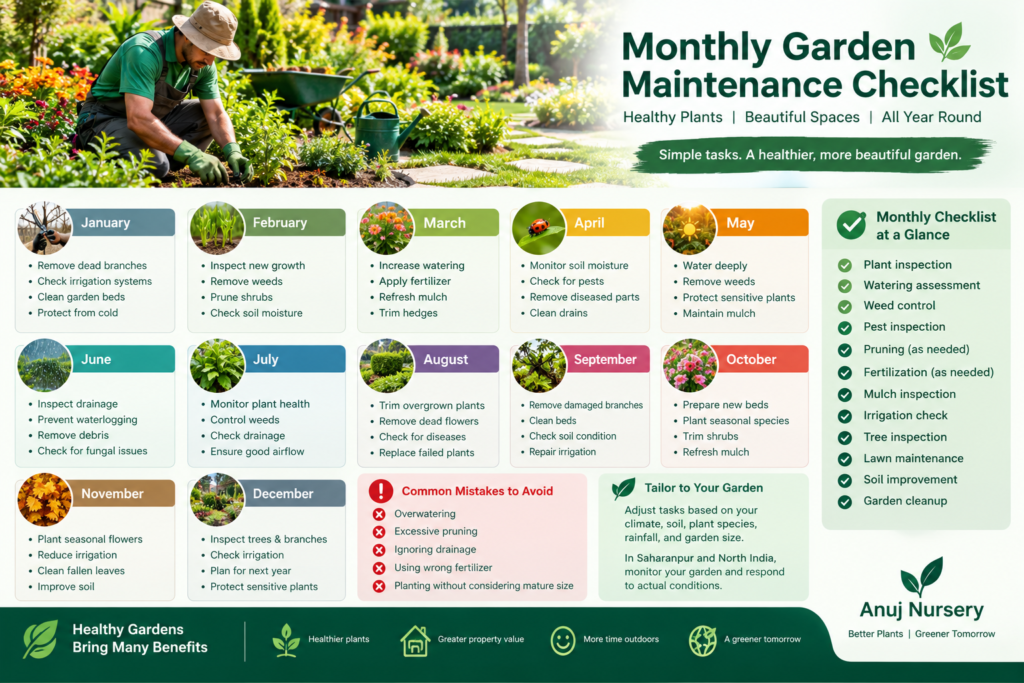
A healthy garden does not stay attractive by accident. Regular maintenance is what keeps plants growing well, soil productive, pathways clean, and outdoor spaces safe and functional. A monthly garden maintenance checklist helps homeowners and landscape managers divide garden work into manageable tasks instead of waiting until problems become expensive or difficult to fix.
From watering and pruning to pest inspection and soil care, each month brings different maintenance priorities. The exact schedule should also be adjusted according to local climate, plant species, soil conditions, and garden size.
What Is a Monthly Garden Maintenance Checklist?
A monthly garden maintenance checklist is a planned schedule of recurring garden tasks performed throughout the year. It helps track activities such as:
- Plant watering
- Pruning and trimming
- Weed removal
- Soil improvement
- Fertilization
- Pest and disease inspection
- Lawn maintenance
- Mulching
- Irrigation checks
- Cleaning and sanitation
- Seasonal planting
- Tree inspection
The objective is not to perform every task every month. Instead, the checklist helps identify what needs attention and when.
January Garden Maintenance
January is generally a good time to inspect the garden structure and prepare plants for the coming growing season.
Key tasks:
- Remove dead or damaged branches.
- Inspect mature trees for structural problems.
- Clean garden beds and pathways.
- Check irrigation systems for leaks.
- Remove persistent weeds.
- Add organic matter where soil needs improvement.
- Protect sensitive plants from unusually cold conditions.
- Review the garden’s planting plan.
Avoid aggressive pruning simply because a plant looks untidy. Always consider the species and its natural growth cycle before cutting.
February Garden Maintenance
As temperatures begin changing, plants may gradually become more active.
Key tasks:
- Inspect new plant growth.
- Check soil moisture regularly.
- Remove weeds before they establish.
- Prune suitable shrubs and ornamental plants.
- Prepare planting areas.
- Check drainage after irrigation or rainfall.
- Inspect plants for early signs of insects or disease.
This is also a useful month for reviewing which plants performed poorly during the previous season.
March Garden Maintenance
March can bring increased growth in many gardens, making maintenance more frequent.
Key tasks:
- Increase watering when required by weather conditions.
- Remove unwanted shoots and weeds.
- Apply suitable fertilizer based on plant requirements.
- Refresh mulch where necessary.
- Inspect newly planted trees and shrubs.
- Trim overgrown hedges.
- Check irrigation coverage.
Do not automatically increase fertilizer because plants are growing faster. Excess fertilizer can create nutrient imbalances and unnecessary vegetative growth.
April Garden Maintenance
Warmer conditions can increase water demand and pest activity.
Key tasks:
- Monitor soil moisture.
- Water deeply when appropriate rather than relying only on frequent shallow watering.
- Inspect leaves for pests.
- Remove diseased plant material.
- Maintain mulch around trees and shrubs.
- Clean drains and water channels.
- Check outdoor irrigation equipment.
Mulch should generally be kept away from direct contact with tree trunks and plant stems.
May Garden Maintenance
May can be a demanding month for gardens in hot regions.
Key tasks:
- Monitor plants for heat and water stress.
- Adjust irrigation according to weather and soil conditions.
- Provide appropriate protection for sensitive plants.
- Remove weeds regularly.
- Inspect leaves and stems for pest damage.
- Maintain mulch to reduce soil moisture loss.
- Avoid unnecessary heavy pruning during extreme heat.
Water requirements should be based on actual soil moisture and plant needs rather than following a fixed schedule blindly.
June Garden Maintenance
The arrival of monsoon conditions in many parts of India changes garden priorities.
Key tasks:
- Inspect drainage systems.
- Prevent prolonged waterlogging.
- Remove fallen leaves and debris.
- Check plants for fungal problems.
- Inspect tree stability.
- Control excessive weed growth.
- Clean blocked drains and irrigation channels.
Good drainage becomes particularly important during periods of heavy rainfall.
July Garden Maintenance
High humidity and rainfall can encourage rapid plant growth as well as pest and disease problems.
Key tasks:
- Monitor plants frequently.
- Remove damaged or infected leaves.
- Control weeds.
- Check drainage after heavy rain.
- Inspect trees for weak branches.
- Maintain pathways to prevent slippery surfaces.
- Avoid unnecessary watering when rainfall is sufficient.
Good air circulation around dense plants can help reduce some moisture-related problems.
August Garden Maintenance
August is a good time to maintain plant health while controlling excessive growth.
Key tasks:
- Trim overgrown hedges where appropriate.
- Remove dead flowers and damaged foliage.
- Inspect roots and soil around vulnerable plants.
- Monitor for fungal diseases.
- Check support systems for young trees.
- Keep garden paths and drainage areas clear.
- Replace plants that have failed because of unsuitable site conditions.
Plant replacement should focus on correcting the original problem rather than simply planting another specimen of the same type.
September Garden Maintenance
As intense monsoon conditions begin to reduce in many regions, gardens can require cleanup and recovery work.
Key tasks:
- Remove storm-damaged branches.
- Inspect trees and shrubs.
- Clean planting beds.
- Reduce excessive weed growth.
- Check soil condition.
- Repair damaged irrigation components.
- Assess plants affected by prolonged moisture.
This is also a useful time to review the overall landscape before the next major growing period.
October Garden Maintenance
October can be an excellent month for landscape improvement in many parts of India.
Key tasks:
- Prepare new planting beds.
- Add suitable organic matter to soil.
- Plant appropriate seasonal species.
- Trim selected shrubs.
- Remove dead and weak growth.
- Inspect irrigation systems.
- Refresh mulch.
- Clean garden structures and pathways.
Before adding new plants, check sunlight, drainage, mature size, and available space.
November Garden Maintenance
As temperatures become more moderate or cooler, garden maintenance can shift toward preparation and selective planting.
Key tasks:
- Remove dead annual plants.
- Plant suitable seasonal flowers.
- Inspect trees and shrubs.
- Reduce irrigation where weather and soil conditions allow.
- Add mulch where appropriate.
- Clean fallen leaves regularly.
- Improve compacted soil in planting beds.
Do not allow thick layers of wet leaves to remain against plant stems for extended periods.
December Garden Maintenance
December is a useful month for reviewing the entire garden and preparing for the next year.
Key tasks:
- Inspect trees and structural branches.
- Remove dead or damaged growth.
- Clean tools and storage areas.
- Check irrigation equipment.
- Record successful and unsuccessful plantings.
- Plan upcoming landscape improvements.
- Protect sensitive plants when necessary.
- Review the annual maintenance schedule.
A garden maintenance record can make future planning much easier.
Monthly Garden Maintenance Checklist at a Glance
| Maintenance Task | Recommended Frequency |
|---|---|
| Plant inspection | Weekly to monthly |
| Watering assessment | Weekly or as conditions require |
| Weed control | Weekly to monthly |
| Pest inspection | Monthly |
| Pruning | According to plant species |
| Fertilization | According to plant requirements |
| Mulch inspection | Monthly |
| Irrigation inspection | Monthly |
| Tree inspection | Monthly and after severe weather |
| Lawn maintenance | According to growth |
| Soil improvement | As required |
| Garden cleanup | Weekly to monthly |
Garden Maintenance Mistakes to Avoid
A checklist is useful only when the tasks are performed correctly. One of the most common mistakes is treating every plant the same way.
Avoid:
- Overwatering plants on a fixed schedule
- Applying fertilizer without understanding plant requirements
- Excessive pruning
- Ignoring drainage problems
- Planting without considering mature size
- Allowing weeds to become established
- Using contaminated pruning tools
- Ignoring early signs of pests and disease
- Covering tree trunks with thick mulch
- Choosing plants only for appearance
The biggest maintenance mistake is often poor plant selection. A plant that is unsuitable for the site’s sunlight, soil, drainage, climate, or available space can create maintenance problems for years.
Garden Maintenance for Saharanpur and North India
Garden maintenance should be adapted to local conditions. In Saharanpur and surrounding areas, seasonal temperature changes, summer heat, monsoon rainfall, soil conditions, and plant selection can all affect maintenance requirements.
A practical approach is to monitor the garden rather than relying entirely on a calendar. Check soil moisture, plant growth, rainfall, pest activity, and drainage before deciding what work is necessary.
For plant selection and landscape projects, Anuj Nursery can help homeowners and project planners consider plants according to their intended landscape use and growing conditions.
Frequently Asked Questions
How often should a garden be maintained?
Basic garden inspection should ideally happen weekly, while larger maintenance tasks can be organized monthly. Pruning, fertilization, irrigation, and pest control should follow the needs of individual plants.
What should be included in a monthly garden maintenance checklist?
A monthly checklist should include plant inspection, watering assessment, weed control, pruning where appropriate, pest monitoring, soil care, irrigation inspection, mulching, lawn care, and general garden cleanup.
Should plants be watered every day?
Not necessarily. Watering should depend on plant species, soil moisture, weather, rainfall, temperature, and drainage. Overwatering can be as damaging as underwatering.
When should trees be pruned?
Tree pruning depends on the tree species, its growth habit, age, condition, and purpose of pruning. Structural or safety-related pruning should be planned carefully rather than performed according to a generic monthly schedule.
How can garden maintenance costs be reduced?
Choose plants suited to the site, group plants with similar water requirements, improve soil before planting, maintain irrigation systems, control weeds early, and address small problems before they become expensive repairs.
Conclusion
A monthly garden maintenance checklist turns garden care from an irregular chore into a manageable system. Regular inspections allow you to identify watering problems, pests, diseases, weeds, drainage issues, and damaged plants before they become major concerns.
The most effective maintenance plan is not necessarily the one with the most tasks. It is the one that matches the garden’s plants, soil, climate, irrigation system, and actual use.
By combining regular observation with seasonal maintenance, homeowners and landscape managers can keep gardens healthier, more attractive, and easier to manage throughout the year.