A healthy garden needs the right amount of water at the right time. However, watering every plant in the same way can lead to water wastage, root problems, and uneven plant growth. Some plants need consistently moist soil, while others grow better when the soil dries slightly between watering sessions.
Garden watering zones help solve this problem by dividing a garden into separate areas according to plant water requirements, soil conditions, sunlight exposure, and irrigation needs. This approach makes garden maintenance easier and can improve water efficiency.
Whether you are planning a home garden, farmhouse, commercial landscape, or institutional green space, understanding watering zones can help you maintain healthier plants with less unnecessary watering.
What Are Garden Watering Zones?
Garden watering zones are separate sections of a garden that receive water according to the needs of the plants growing in each section.
For example, a lawn may need frequent, evenly distributed watering, while established drought-tolerant trees may need deeper but less frequent irrigation. Container plants can dry out faster than plants growing in open ground.
Instead of treating the entire garden as one unit, watering zones allow you to manage each area more appropriately.
A watering zone may be defined by:
- Plant type and water requirements
- Soil texture and drainage
- Sunlight and shade
- Slope and water runoff
- Irrigation equipment
- Plant maturity
- Seasonal weather conditions
1. Why Garden Watering Zones Matter
Dividing a garden into watering zones offers several practical benefits.
Better plant health: Plants receive water according to their individual requirements.
Reduced water waste: Avoid watering areas that do not need additional moisture.
Healthier roots: Appropriate watering helps maintain a suitable balance between soil moisture and air around the roots.
Easier maintenance: Separate zones make irrigation schedules easier to manage.
Improved landscape performance: Lawns, trees, shrubs, flower beds, and container plants can receive different watering treatments.
Proper zoning is particularly useful for large gardens and commercial landscaping projects where watering the entire property uniformly may be inefficient.
2. Main Types of Garden Watering Zones
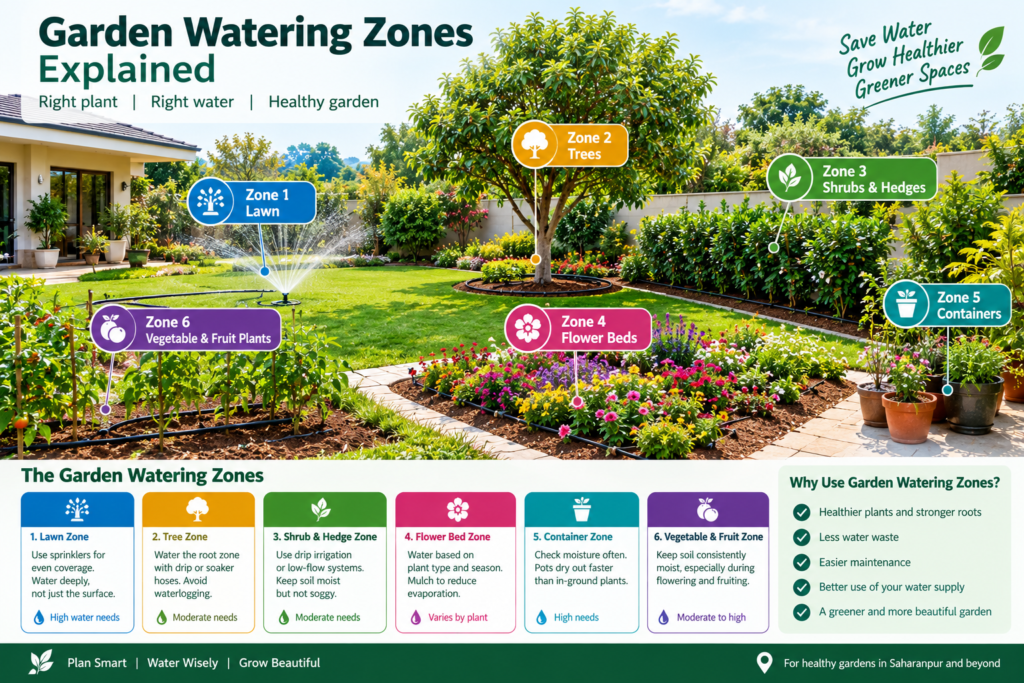
Lawn Watering Zone
Lawns generally need relatively uniform water distribution across the grass-covered area. The amount and frequency depend on grass species, soil, temperature, rainfall, and sunlight.
Sprinkler irrigation is commonly used for lawns because it can cover broad areas.
Avoid frequent shallow watering when it encourages weak root development. Where suitable for the grass species and soil, deeper watering followed by an appropriate drying interval can encourage stronger roots.
Tree Watering Zone
Trees need water that reaches the root zone rather than only wetting the soil surface around the trunk.
Newly planted trees usually require closer monitoring during establishment. Established trees may need less frequent irrigation, depending on rainfall, soil, and species.
Apply water over an appropriate portion of the root zone, not directly against the trunk. Avoid keeping the soil continuously waterlogged.
Shrub and Hedge Watering Zone
Shrubs and hedges can have different water requirements depending on species, spacing, and maturity.
A dense hedge may need a different irrigation arrangement from a group of widely spaced ornamental shrubs.
Drip irrigation can be useful for delivering water near the root zones of shrubs while reducing unnecessary wetting of surrounding areas.
Flower Bed Watering Zone
Flower beds often contain plants with similar moisture needs, making them suitable for a dedicated zone.
However, do not assume every flowering plant needs the same amount of water. Plants should be grouped according to their actual requirements.
Mulching can help reduce evaporation and moderate soil temperature.
Vegetable and Fruit Planting Zone
Vegetables and fruit plants may require regular moisture, especially during flowering, fruit development, or hot weather.
Water needs vary by crop, growth stage, soil type, and season. Separate irrigation control can help prevent overwatering less demanding plants while ensuring that moisture-sensitive crops receive adequate water.
Container Plant Watering Zone
Pots and containers often dry out more quickly than open-ground planting areas because they contain a limited volume of growing medium.
Place containers in a separate watering zone when practical. Check moisture individually because pot size, material, plant size, and sunlight can cause substantial differences in drying rates.
3. How to Divide a Garden Into Watering Zones
Follow these steps to develop a practical watering plan.
Step 1: Create a garden map. Mark the lawn, trees, shrubs, flower beds, vegetable patches, containers, pathways, and buildings.
Step 2: Group plants by water needs. Separate plants that prefer consistently moist soil from those that tolerate drier conditions.
Step 3: Check sunlight exposure. Sunny areas may dry faster than shaded areas.
Step 4: Examine soil conditions. Sandy soil usually drains faster, while heavy clay soil may retain water for longer. Compacted soil can create additional drainage problems.
Step 5: Choose an irrigation method. Select sprinklers, drip irrigation, or manual watering according to the zone.
Step 6: Check water pressure and flow. Irrigation equipment must operate properly to distribute water evenly.
Step 7: Establish a schedule. Adjust watering according to soil moisture, rainfall, plant maturity, and seasonal conditions.
4. Choosing the Right Irrigation Method
Different watering zones benefit from different irrigation methods.
| Irrigation Method | Best Suited For | Main Consideration |
|---|---|---|
| Sprinklers | Lawns and broad planting areas | Check coverage and water distribution |
| Drip irrigation | Trees, shrubs, hedges, and beds | Inspect emitters for blockages |
| Soaker hoses | Some beds and rows | Suitability depends on soil and layout |
| Manual watering | Pots and small gardens | Requires regular monitoring |
| Micro-sprinklers | Selected beds and planting groups | Match spray pattern to plant coverage |
No single irrigation method is ideal for every garden. The best arrangement depends on the layout, plant types, water supply, and maintenance requirements.
5. How Often Should Each Zone Be Watered?
There is no universal watering schedule that works for every plant or location.
Instead of relying only on a fixed number of watering days, check soil moisture and observe plant condition.
Consider these factors:
- Recent rainfall
- Air temperature
- Sunlight exposure
- Soil drainage
- Root depth
- Plant species
- Plant establishment stage
- Container size
Newly planted trees and shrubs often need more frequent monitoring than established plants. During hot weather, container plants may dry quickly, while shaded areas may retain moisture longer.
Water when the root zone needs moisture, and avoid unnecessary irrigation when the soil is already wet.
6. Seasonal Watering Zone Management in India
Water requirements change throughout the year.
Summer: Higher temperatures and evaporation may increase irrigation demand. Monitor sunny areas and containers more frequently.
Monsoon: Reduce irrigation when rainfall provides sufficient moisture. Check drainage to prevent prolonged waterlogging.
Winter: Water demand may decrease as temperatures fall and evaporation slows, although conditions vary by plant and location.
For gardens in Saharanpur and other parts of northern India, watering plans should respond to local rainfall, seasonal temperatures, soil conditions, and the needs of the selected plants.
7. Common Garden Watering Zone Mistakes
Avoid these common mistakes when planning garden irrigation.
- Watering every plant equally: Different species have different moisture requirements.
- Ignoring soil drainage: Excess water can deprive roots of oxygen.
- Using sprinklers everywhere: Some planting areas are better suited to drip irrigation.
- Ignoring rainfall: Continuing the usual schedule after substantial rain can cause overwatering.
- Watering only the soil surface: Larger plants may need moisture deeper in the root zone.
- Ignoring irrigation coverage: Poorly positioned equipment can leave dry patches.
- Failing to maintain equipment: Blocked emitters and leaking pipes waste water.
- Never reviewing the schedule: Plants and their water needs change as they mature.
8. A Simple Garden Watering Zone Plan
A small residential garden could use the following basic layout:
- Zone 1: Lawn with sprinkler irrigation.
- Zone 2: Trees and larger shrubs with targeted root-zone watering.
- Zone 3: Flower beds with suitable drip or low-flow irrigation.
- Zone 4: Vegetable and fruit plants with crop-specific irrigation.
- Zone 5: Containers that receive individual moisture checks.
This is a starting point, not a fixed design. Smaller gardens may combine compatible planting areas, while larger landscapes may require additional zones.
How Anuj Nursery Can Help
Planning garden irrigation alongside plant selection can make landscape maintenance more manageable. Anuj Nursery can help homeowners, landscapers, and property owners explore plants for residential gardens, commercial landscapes, farmhouses, and other green spaces in Saharanpur and nearby areas.
Before developing a watering plan, identify the plants, map the garden, assess drainage, and estimate available water supply. These details help determine suitable planting arrangements and irrigation requirements.
Conclusion
Garden watering zones make irrigation more practical by grouping plants according to their water needs, soil conditions, sunlight, and growing environment.
Start by mapping your garden, grouping compatible plants, choosing suitable irrigation methods, and monitoring soil moisture. Adjust the schedule as the seasons change and plants mature.
The goal is not to water more. It is to provide the right amount of water to the right plants at the right time.
A well-designed watering-zone plan supports healthier plants, more efficient irrigation, and easier long-term garden maintenance.