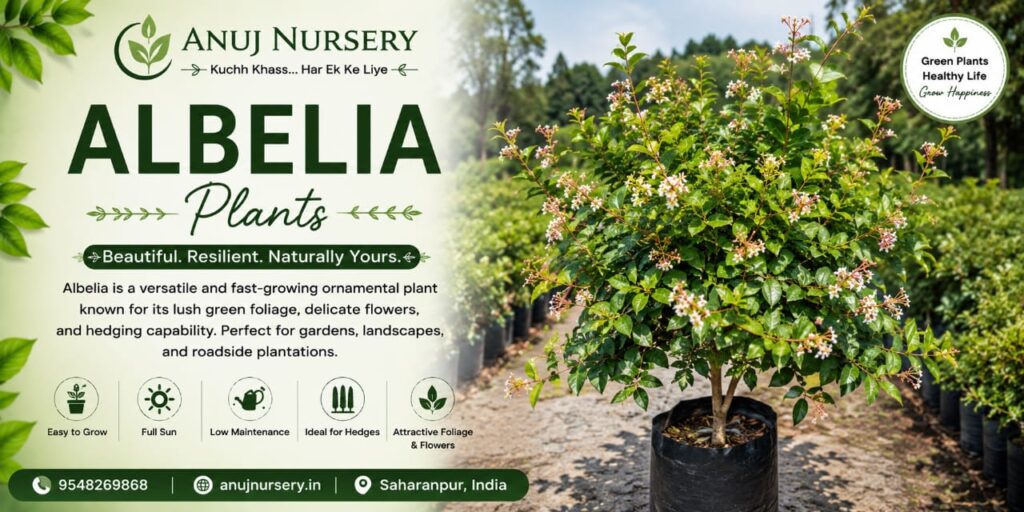
The Abelia Plant is an attractive ornamental shrub valued for its graceful branching, glossy foliage and delicate tubular flowers. Depending on the species or hybrid, Abelia can provide an extended display of flowers and attractive foliage, making it a useful choice for home gardens, borders, hedges, patios and professional landscaping.
Abelia belongs to the Caprifoliaceae family and includes several species and cultivated hybrids. Popular garden Abelias are often selected for their compact growth, flowering performance and attractive foliage.
For gardeners looking for a shrub that combines flowers, foliage and landscape versatility, Abelia can be an excellent addition to a suitable garden.
What Is an Abelia Plant?
Abelia is a group of flowering shrubs known for their arching branches, opposite leaves and small tubular flowers. Depending on the variety, foliage may remain green or develop attractive bronze, reddish or variegated tones.
The flowers are generally small but appear in clusters and can attract pollinating insects. The plant can be used as an individual ornamental shrub or planted in groups to create borders and informal hedges.
Because different Abelia cultivars can vary considerably in mature size and appearance, buyers should confirm the exact species or cultivar before purchasing.
Why Choose Abelia for Your Garden?
Abelia offers several ornamental advantages:
- Attractive glossy foliage
- Delicate tubular flowers
- Long flowering potential in suitable conditions
- Graceful arching growth
- Useful for borders and hedges
- Suitable for containers when appropriately sized
- Excellent for mixed shrub beds
- Attractive to pollinators
- Works well in residential landscaping
- Available in different foliage forms
- Relatively easy to maintain
Its greatest strength is versatility. Abelia can fit into both traditional gardens and contemporary landscape designs.
Abelia Plant Care
1. Sunlight
Abelia generally grows best in full sun to partial shade, depending on the variety and local climate.
Good sunlight encourages healthy growth and flowering. In extremely hot regions, some protection from harsh afternoon sunlight can help reduce heat stress, particularly for young nursery plants.
For gardeners in India, morning sunlight combined with some afternoon protection can be useful during periods of extreme summer heat.
Avoid deep shade if you want strong flowering and compact growth.
2. Watering
Newly planted Abelia plants need regular watering while their roots become established.
Once established, watering can be reduced according to rainfall, soil type and temperature. Allow the soil to dry slightly between irrigation rather than keeping it constantly saturated.
During India’s monsoon season, reduce additional irrigation when rainfall is sufficient.
Don’t water Abelia simply because it is a flowering plant. Check the soil first.
3. Soil Requirements
Abelia prefers fertile, well-drained soil. It can tolerate different soil types when drainage and organic matter are adequate.
Before planting, improve heavy soil with suitable organic material if necessary. Avoid locations where water remains stagnant after irrigation or rain.
For containers, use a quality potting mixture with good drainage and select a pot with drainage holes.
Fertilizer for Abelia Plant
Abelia generally benefits from moderate nutrition during active growth.
A balanced fertilizer or suitable slow-release fertilizer can be applied according to the product’s instructions. Organic compost can also help improve soil structure and fertility.
Avoid excessive nitrogen fertilizer because it can encourage excessive leafy growth while reducing the balance between foliage and flowering.
The correct approach is moderate feeding rather than aggressive fertilization.
Pruning Abelia
Pruning helps maintain the plant’s shape, size and overall appearance.
Remove dead, damaged or weak branches regularly. Light pruning can encourage fresh branching and help keep the shrub compact.
If you are growing Abelia as a hedge or border plant, pruning can be used to maintain a uniform form.
Avoid severe pruning unless the specific cultivar requires rejuvenation. Always use clean pruning tools to minimize the risk of spreading plant diseases.
Abelia Flowering
Abelia produces attractive small tubular flowers, often in shades of white or pink depending on the cultivar. The flowers are usually complemented by colorful sepals that can remain attractive after flowering.
Flowering performance depends on the variety, sunlight, temperature, plant health and pruning practices.
Providing sufficient light and avoiding excessive nitrogen fertilizer can help encourage better flowering.
Landscaping Uses of Abelia
The Abelia Plant is highly versatile and can be used in:
- Garden borders
- Informal hedges
- Shrub beds
- Home gardens
- Patios
- Courtyards
- Resort landscaping
- Hotel gardens
- Office landscapes
- Commercial properties
- Foundation planting
- Container gardens
Abelia can be planted as a single specimen or in groups. Combining it with contrasting foliage plants and ornamental grasses can create a layered landscape design.
Abelia Plant for Indian Climate
Abelia can be grown in suitable parts of India when its variety and local climate are considered.
For gardeners in Saharanpur, Uttar Pradesh, choose a location with good sunlight, fertile soil and proper drainage. During hot summer periods, young plants may benefit from protection from the harshest afternoon sun.
During the monsoon, avoid excessive irrigation and ensure that water drains away from the root zone.
Winter performance can vary depending on the Abelia species or hybrid, so selecting a variety appropriate for the local climate is important.
Buy Abelia Plant from Anuj Nursery
If you are searching for Abelia Plant for sale in India, Anuj Nursery can be considered for ornamental and landscaping plant requirements.
When purchasing an Abelia, check:
- Healthy green foliage
- Strong branching
- Active new growth
- No obvious pest infestation
- No severe leaf damage
- Healthy root system
- Correct variety identification
- Suitable mature size
For customers around Nagal, Saharanpur and Uttar Pradesh, select a healthy nursery-grown plant and choose its final planting position based on mature size and sunlight requirements.
Frequently Asked Questions
What is an Abelia Plant?
Abelia is a group of flowering ornamental shrubs known for arching branches, attractive foliage and small tubular flowers.
Does Abelia need full sunlight?
Abelia generally performs well in full sun to partial shade. More suitable sunlight usually supports better flowering.
How often should I water Abelia?
Water regularly while establishing, then adjust according to soil moisture, rainfall and temperature. Avoid keeping the soil permanently wet.
Can Abelia grow in pots?
Yes. Compact Abelia varieties can be grown in containers when provided with sufficient space, sunlight and well-drained soil.
Is Abelia good for hedges?
Yes. Depending on the variety, Abelia can be used for informal hedges and garden borders, with pruning used to maintain the desired shape.
Is Abelia suitable for Indian gardens?
Yes, suitable Abelia varieties can be grown in many Indian gardens. Local climate, cultivar selection, sunlight and drainage should be considered.
Final Thoughts
The Abelia Plant is a versatile ornamental shrub that combines attractive foliage, graceful branching and delicate flowers. It can add color and structure to residential gardens, borders, hedges, patios, resorts and commercial landscapes.
For healthy growth, focus on appropriate sunlight, well-drained soil, controlled watering, moderate fertilizer and timely pruning. Don’t choose an Abelia only because a photograph looks attractive—check the cultivar’s mature size and climate suitability before planting.
For gardeners in Saharanpur, Uttar Pradesh and across suitable regions of India, the right Abelia variety can become a reliable and attractive part of a long-term landscape.
Choose the right variety, give it good light and drainage, and Abelia can reward your garden with elegant foliage and beautiful flowering for years.